Turning a Work Corner Back into an Evening Living Space
Keep a shared room useful after work. Separate desk-task lighting from the light you want at the sofa, table or reading chair.
By Lumière Light Studio Editorial
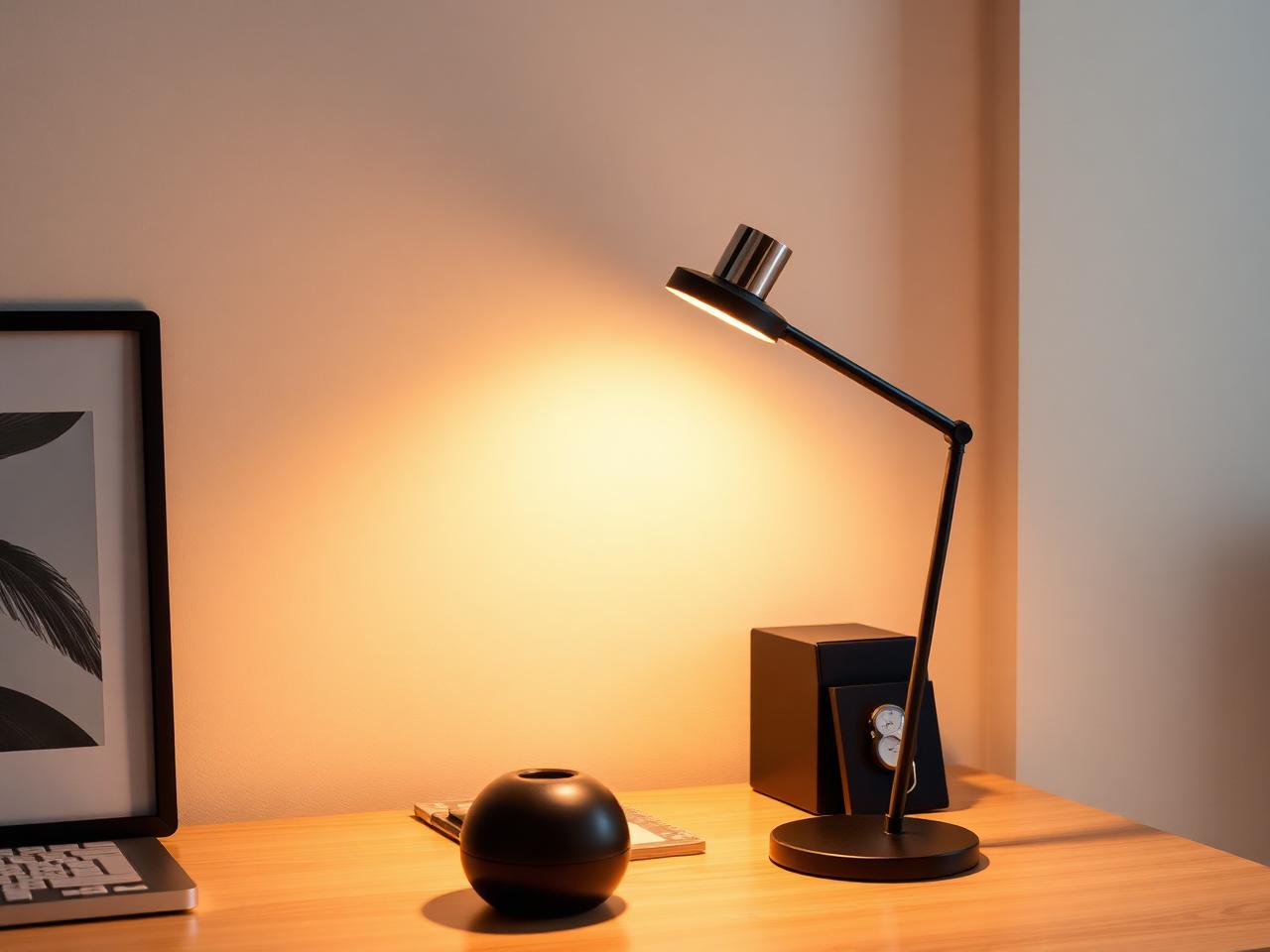
When the workday ends, a desk in the living room does not disappear. The monitor, papers and task lamp may still form the most noticeable corner of the room. Changing the evening arrangement is less about disguising the desk than deciding what the room needs to serve next.
Start with the next activity: sitting with someone, eating, watching a film or reading elsewhere. Each asks for light in a different place. An evening plan should support that activity without requiring the work surface to remain the visual centre of the room.
Give the desk light a defined stopping point
If the desk lamp serves paperwork, switch it off when that task is finished, provided the rest of the room remains adequately lit. If someone continues working, keep the light they need. The room can accommodate work and leisure at once without forcing both into one lighting setting.
Put loose papers into their usual storage and close the computer when it is no longer in use. This is a practical change to what remains visible, not a claim that a ritual will alter concentration or wellbeing. Leave equipment that still has a job where it belongs.
Avoid making the evening arrangement depend on moving a lamp between two distant surfaces each day. That can mean repeatedly rearranging cables and clearing objects. It may be more practical to leave the work light at the desk and use an existing source elsewhere.
Judge the room from the evening seat
Sit where the next activity happens. Look toward the desk and the rest of the room. A light useful over paperwork can appear exposed from a lower sofa seat. If it is no longer needed, switching it off may be enough; if it remains in use, compare positions that retain task coverage.
Turn on the light near the evening activity before reducing other lighting. Check that the table, book or route through the room remains visible. Less light at the desk does not mean the entire room should become dim.
For reading, assess the page separately from the surrounding atmosphere. A decorative glow across the room may look appealing while contributing little to the open book. Keep a suitable task source for the activity rather than asking background lighting to stand in for it.
Keep two arrangements simple enough to repeat
Think of a work arrangement and an evening arrangement, not a collection of elaborate scenes. The difference may be as modest as switching off the desk source and switching on a lamp beside the sofa. Fixed-output lamps can participate through ordinary on/off choices; adjustment is not essential to this approach.
If two people share the room, walk through both arrangements together. Check whether the working person's lamp is visible from the sofa and whether the evening light reflects in the working person's screen. Agree on locations before considering additional equipment.
Try the change on a normal evening with the furniture left in place. Note any repeated inconvenience, such as reaching behind the monitor or crossing the room for a switch. Solve that specific problem next. A successful transition is an arrangement that serves what happens after work, not a promise about what work or leisure should feel like.
The Editor's Notes
Get the Lumière styling notes
One quiet essay a month on layering light and shaping the atmosphere of a room. No noise. Unsubscribe anytime.
The Editor's Notes
One essay. One piece. Once a month.
Quiet dispatches from the studio. Unsubscribe anytime.
For the hour after
For the hour after the overhead light goes off
Shop lamps built for the quiet part of the evening.
Share this guide