A Desk Lamp for Home Work: Placement, Glare and Screen Reflections
Troubleshoot a visible light source, screen reflections and shadows separately. Adjust one position at a time, then check the desk from your usual seat.
By Lumière Light Studio Editorial
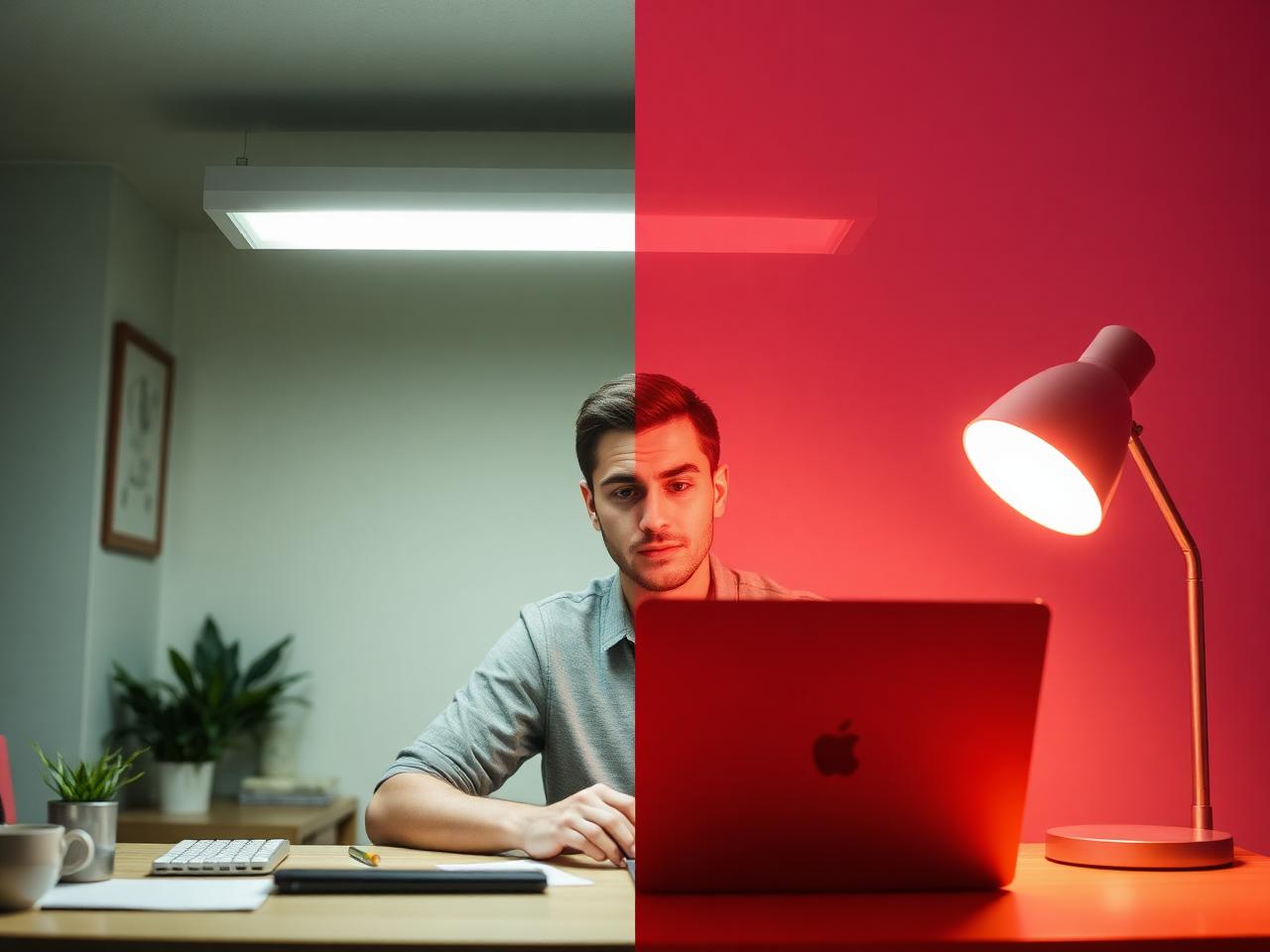
A bright patch on a monitor is not the same problem as a shadow over a notebook. Nor is either the same as having a lamp's light source directly in view. Separating these observations makes desk placement easier to work through without buying another light as the first response.
Begin from your normal working position, with the screen and chair where you use them. Keep the room's usual lighting on. A placement that works only when you lean sideways or pull the desk away from its everyday position is not yet a useful arrangement.
Identify what you are seeing before moving anything
A reflection is an image or bright patch appearing on a surface such as a monitor or glossy page. Direct glare, in everyday terms, is a light source appearing uncomfortably bright in your view. A shadow is a darker area where something blocks light from reaching the task.
Write down which of these is present and where. 'Lamp reflected near the middle of the monitor' is more actionable than 'bad desk lighting'. More than one issue can occur, but work through them separately so you can tell whether a change helped.
To identify a reflected source, switch the suspected lamp off and back on using its normal control. If the patch remains, look for another source, including a window. Do not assume the desk lamp caused every bright area simply because it is closest to the screen.
Move the source or the screen by a small amount
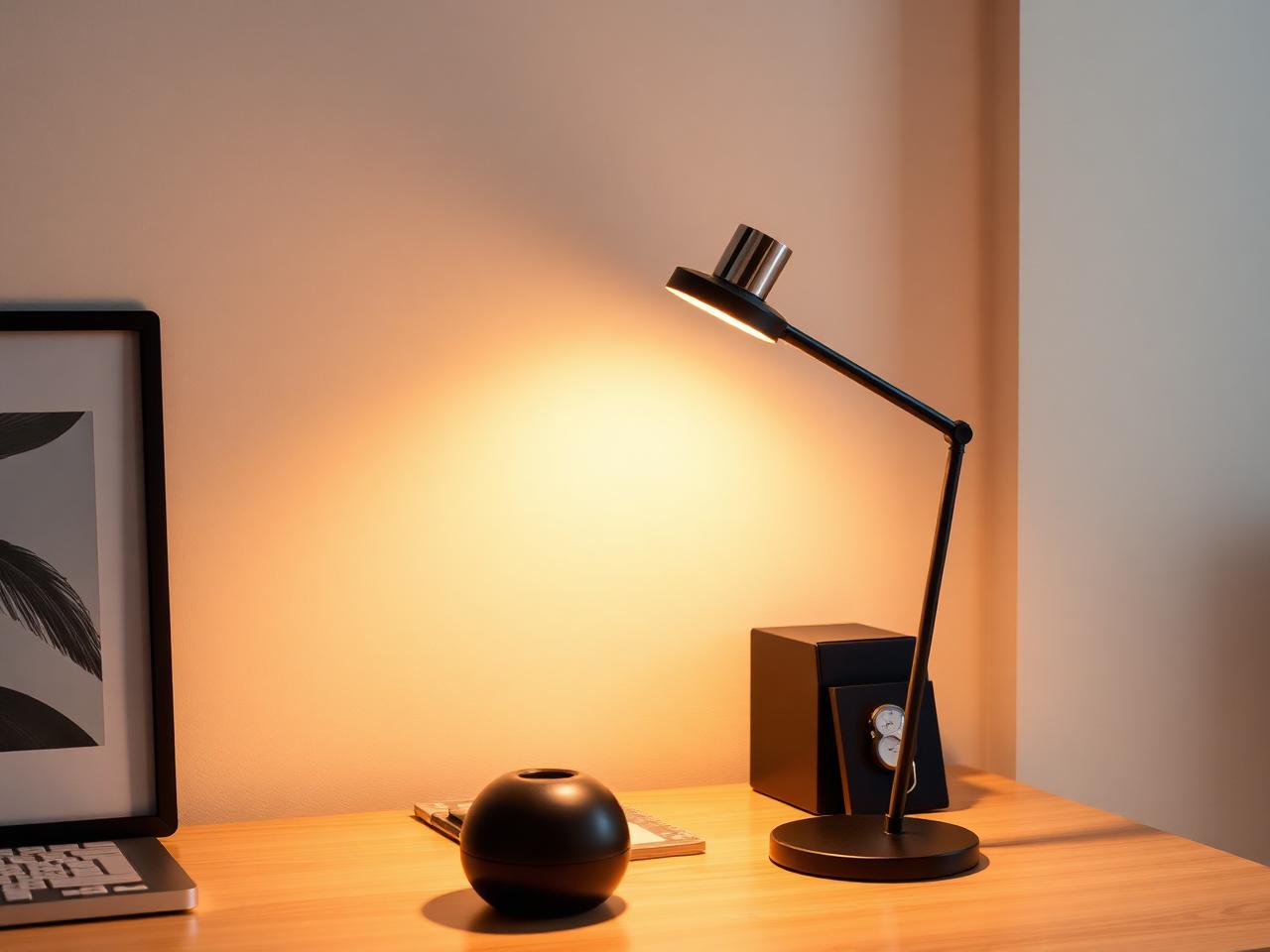
If the lamp is responsible, try a modest sideways move on the same suitable surface. Return to the chair and check again. If the lamp has intended directional adjustment, use it as instructed to direct light toward the work rather than toward the screen.
A small change in screen angle may also change what it reflects. Keep the screen in a usable position; removing a reflection by making the display awkward to read is a trade rather than a resolution. Check with your normal documents or application open, not just a blank screen.
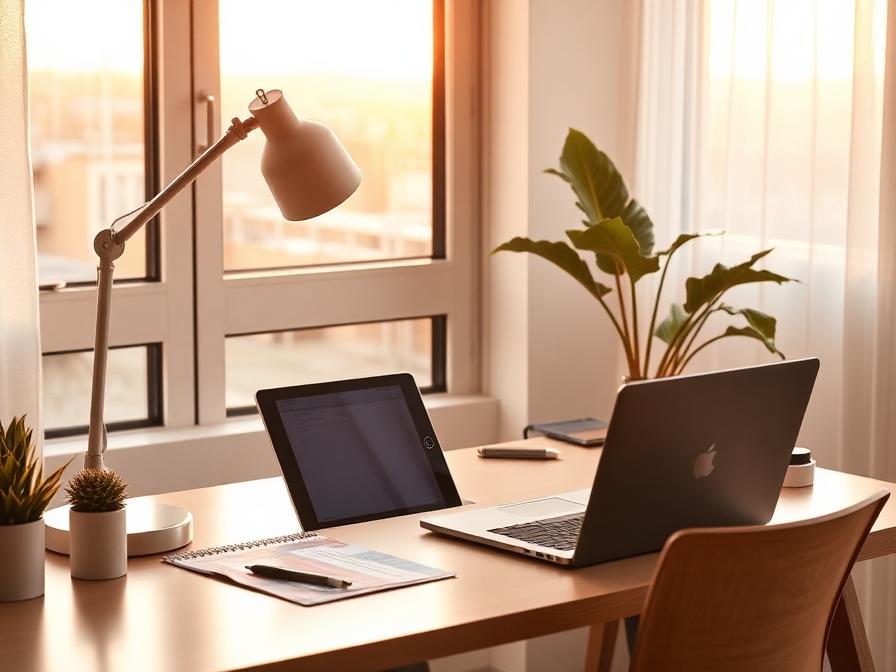
Where a window is the source, compare the arrangement with existing blinds or curtains adjusted. Recheck later if daylight changes noticeably. The aim is to understand which position or source creates the reflection, not to prescribe a permanently dark room.
Check the page after the screen
Now put paper where you use it and make a few ordinary writing movements. If your hand casts a shadow across the writing area, try placing the lamp on the other side. Opposite the writing hand is a useful starting position, not a universal answer for every desk layout.
Look up from the page. Can you see directly into the light source? A position that clears a hand shadow may expose the source from your seat. Reconsider the lamp's location or its intended adjustment rather than covering it or changing its parts.
Finish by returning all your usual objects to the desk. Check reach to the switch, space for the mouse and clearance when the chair moves. Record the position that works and revisit it in the evening. If the available lamp cannot light the task without introducing another problem, use that limitation to define the next lamp you consider.
The Editor's Notes
Get the Lumière styling notes
One quiet essay a month on layering light and shaping the atmosphere of a room. No noise. Unsubscribe anytime.
The Editor's Notes
One essay. One piece. Once a month.
Quiet dispatches from the studio. Unsubscribe anytime.
For the hour after
For the hour after the overhead light goes off
Shop lamps built for the quiet part of the evening.
Share this guide