Choosing a Desk Lamp for Paperwork and Everyday Home Work
Choose by the area you need to light, the available desk space and the controls you will use. Decorative appearance alone cannot establish task suitability.
By Lumière Light Studio Editorial
A desk lamp has to fit more than the corner left beside a laptop. It needs to serve the actual work surface, leave room for your hands and place its control somewhere useful. Choosing one begins with the work you put on the desk, not a promise about how much more you will accomplish.
A person who annotates large documents has a different lighting question from someone who only checks a screen. This guide is about choosing a lamp for physical desk tasks. Screen reflections and changing a work corner for the evening deserve their own decisions.
Define the working area before comparing lamps
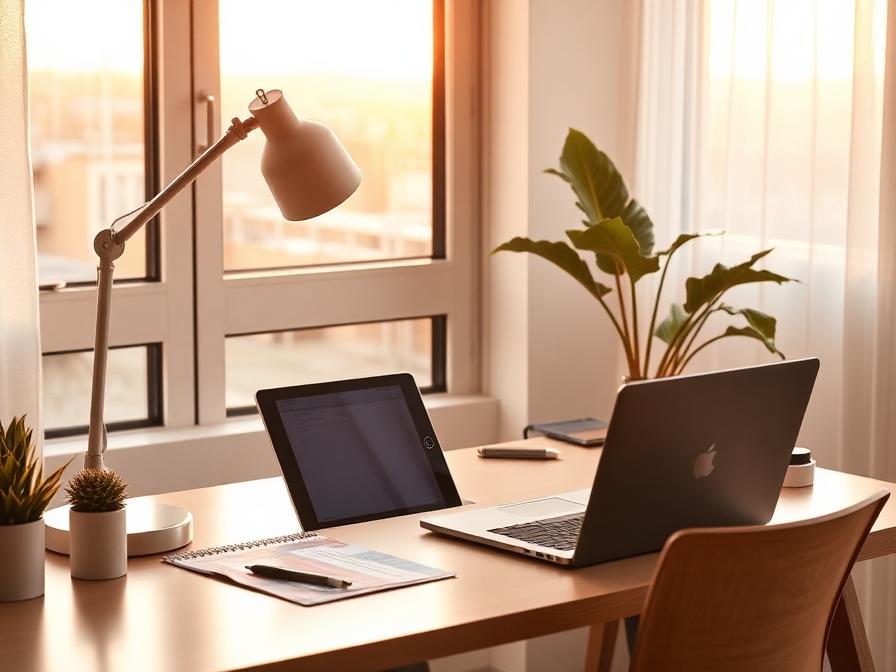
Put your usual materials on the desk. Include an open notebook, loose pages and any reference material you keep beside them. Mark the area that needs to remain available. The lamp's base and shade must fit around that working area, not replace part of it.
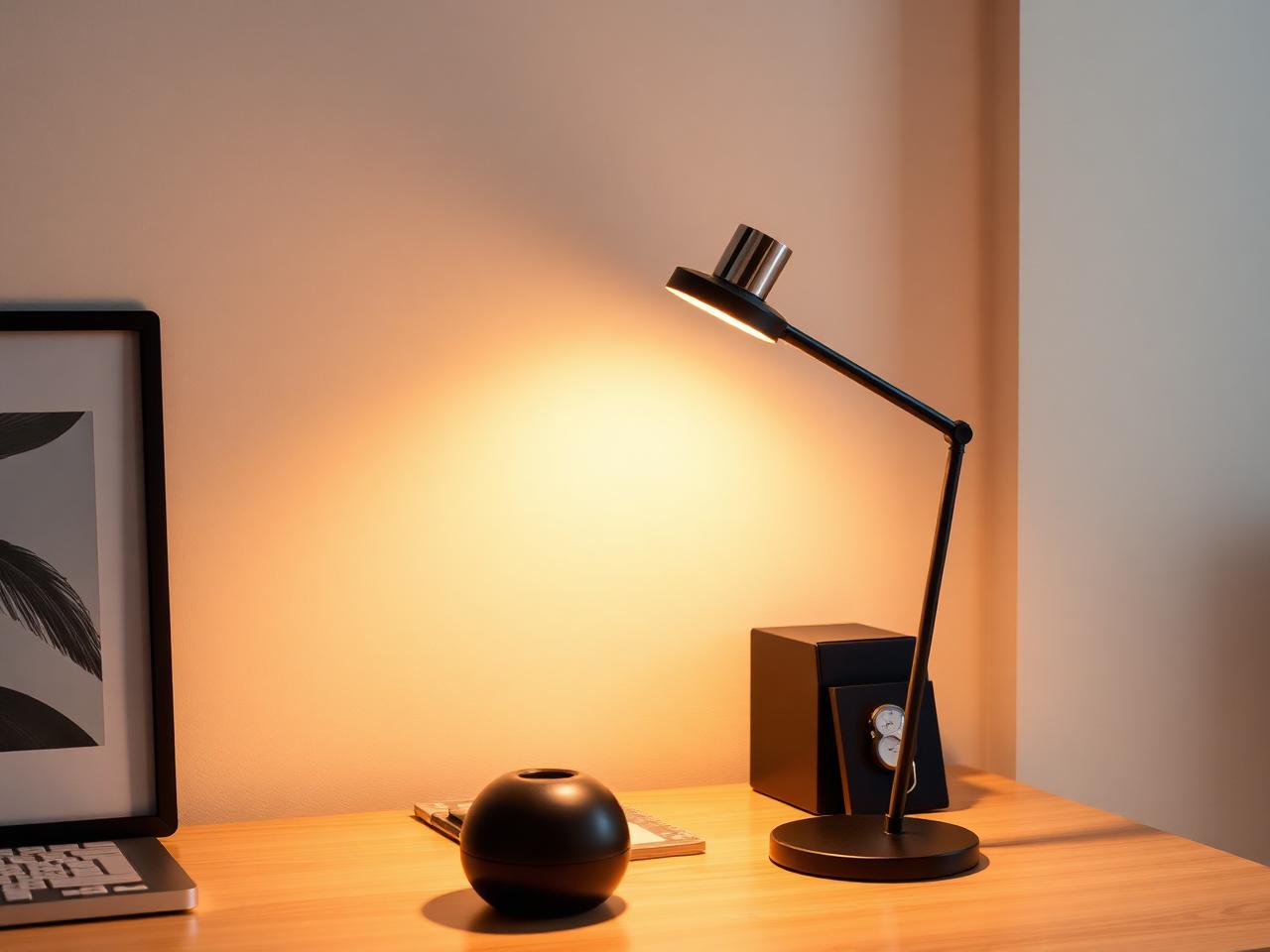
Consider whether the work stays in one spot. A fixed pool of light might suit a small writing pad, while larger sheets may call for light across a broader area. A close-up photograph of a glowing shade cannot tell you which of these situations a lamp will serve.
Next, measure the free surface and the space above it. Shelves and monitor arms can restrict the height or movement available. Record those limits before judging a lamp's silhouette. A compact base is not the whole footprint if the shade extends well beyond it.
Match useful features to a named task
Compare features only when they solve something specific. Directional adjustment may help if pages move between positions. An accessible switch matters if the lamp sits behind a monitor. Brightness adjustment may be useful when different activities need different settings, but it should be confirmed rather than inferred from appearance.
| Your desk task | What to check before choosing |
|---|---|
| Writing in one notebook | Coverage of the open pages and room for your hand |
| Comparing several documents | Coverage across the full spread, not just its centre |
| Using a shelf above the desk | Overall height and any movement clearance |
| Clearing the desk regularly | Base footprint and access to the control |
A feature list still does not establish how light will fall on your own desk. Shade shape, position and the surrounding room affect the result. Avoid treating a wattage figure or a photograph as proof of useful task coverage.
Keep unanswered specifications visible
Make a shortlist with three headings: confirmed facts, missing information and reasons the lamp might not fit. Put uncertainty in the second column rather than filling it with assumptions. If a listing does not explain a control or a dimension, ask before choosing.
For Lumière options, check the current specifications on the product page. A decorative lamp is not a proven task solution merely because it can stand on a desk. There is no need to force a styling choice to do work for which its suitability has not been established.
Your next step is a desk brief: the area occupied by your materials, the space available for a lamp and the feature that would serve your task. Use those three facts to narrow the choice. Keep appearance in the decision, but give it a practical arrangement to belong to.
The Editor's Notes
Get the Lumière styling notes
One quiet essay a month on layering light and shaping the atmosphere of a room. No noise. Unsubscribe anytime.
The Editor's Notes
One essay. One piece. Once a month.
Quiet dispatches from the studio. Unsubscribe anytime.
For the hour after
For the hour after the overhead light goes off
Shop lamps built for the quiet part of the evening.
Share this guide