Japandi Lighting: Translate a Style into Your Own Room
Use the Japandi label as a flexible reference for restrained shapes and considered placement, rather than a fixed set of cultural rules.
By Lumière Light Studio Editorial
Japandi is a contemporary interiors label combining references to Japanese and Scandinavian design. It can be useful when describing a restrained room with simple forms and tactile detail. It is less useful when it turns varied design traditions into a single required look.
For lighting, translate the reference into decisions rather than collecting symbols. Which lines should repeat? Where should the room remain visually quiet? What do you need to see from the chair you actually use? These questions give the style a practical purpose.
Restraint means fewer competing decisions
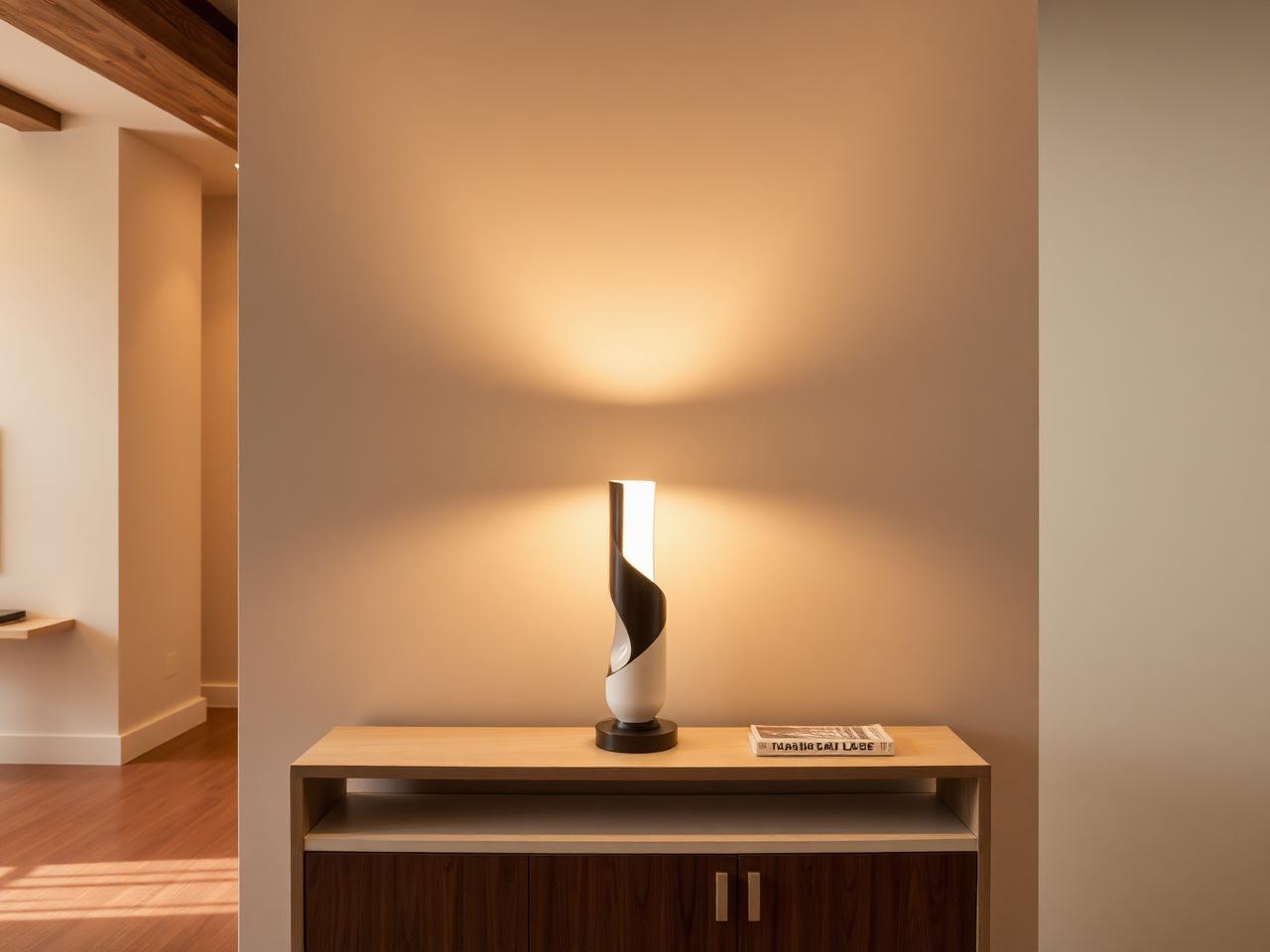
Begin with the furniture already in place. A room with rounded chair backs might suit a curved lamp, while a space of straight lines could carry a simpler geometric form. Either can work. The point is a readable relationship, not a ban on angles or ornament.
Choose a small number of visual connections. You might repeat a pale colour, a dark outline, or a curved profile. Repeating all of them in every object can make the room feel overly matched. Let one relationship do most of the work.
Then remove anything that occupies useful space without contributing much. This could mean moving a decorative object away from the lamp rather than purchasing a smaller lamp. Restraint should make the surface easier to use, not merely emptier in a photograph.
Surface appearance does not prove material or origin
A softly varied finish may suit the visual direction, but an image cannot establish composition, making method, or provenance. Treat descriptions of texture as observations about appearance unless the product information supports more.
Nor is a particular material compulsory. A reflective accent can sit within a quiet palette, while a matte object can still be visually dominant because of its size or shape. Compare the whole object against the room instead of assigning cultural meaning to its finish.
The same caution applies to imperfections. A variation in appearance is not automatically evidence of a traditional technique or an aesthetic philosophy. Choose it because you appreciate what you can see, without inventing a story about how it was made.
Place light around use before composing the view
Identify where people sit, pass through, and reach for things. Keep the lighting needed for those activities. Then consider whether a table or floor lamp could give a background surface more presence without shining directly into the seated view.
A warm-looking room is one possible preference, not a cultural obligation. Judge colour alongside the wall finish and furnishings at the time you use the space. Avoid deciding from a heavily edited image, which may not represent the actual light.
Check the full lamp dimensions, the available surface, and the cable route. Also check access to the controls. A visually restrained arrangement loses its usefulness if you need to reach behind several objects each evening.
Leave room for the things you already value
A favourite picture or patterned textile need not disappear to satisfy the label. Give it space and choose whether the lamp should support it or become a second focal point. A personal room can borrow a design reference without being an exact style exercise.
Before browsing, describe your intended result in ordinary words: a simple outline beside the chair, a quieter console, or less direct light in the seated view. Use that description to assess one possible lamp, and check the current specifications rather than relying on the style name.
The Editor's Notes
Get the Lumière styling notes
One quiet essay a month on layering light and shaping the atmosphere of a room. No noise. Unsubscribe anytime.
The Editor's Notes
One essay. One piece. Once a month.
Quiet dispatches from the studio. Unsubscribe anytime.
For the hour after
For the hour after the overhead light goes off
Shop lamps built for the quiet part of the evening.
Share this guide