Hygge Lighting: Make a Gathering Space Comfortable to Use
A considerate lighting approach for conversation and shared evenings, with room for individual preferences and the lamps you already own.
By Lumière Light Studio Editorial
When people gather around a sofa or table, the most useful lighting question is not how the room photographs. It is whether the people sitting there can see one another, find their things, and settle on an arrangement they enjoy.
Hygge is a Danish word associated broadly with cosiness and comfortable enjoyment. It can include shared everyday moments, but it is not a product category or a lighting formula. Homes and preferences vary. You can take the idea as an invitation to make a space considerate rather than as a checklist of cultural requirements.
Put the shared activity before the decorative effect
Decide what the gathering involves. Conversation may ask for a different arrangement from a game, a shared meal, or people reading separately. A small decorative glow can be part of the setting without being enough for the activity itself.
Look at the surfaces people will use. Can they identify an object on the table without leaning into one bright spot? Can they see the person opposite without a source shining directly into their view? These observations are more useful than a prescribed number of lamps.
Keep the light needed for movement and practical tasks. A room can include quieter areas without making the route to the door difficult to see. There is no requirement to remove ceiling lighting or make all sources equally low.
Start with what is already in the room
Try different combinations of your existing lights. One source may produce an irritating reflection while another makes the background more comfortable to look at. Use the combination that supports the activity, rather than turning on everything simply because it is available.
If a lamp can be moved to another suitable surface, compare the seated view before and after. Check stability, the manufacturer's placement guidance, and the cable route. Avoid moving a lamp to a crowded edge just to obtain a softer photograph.
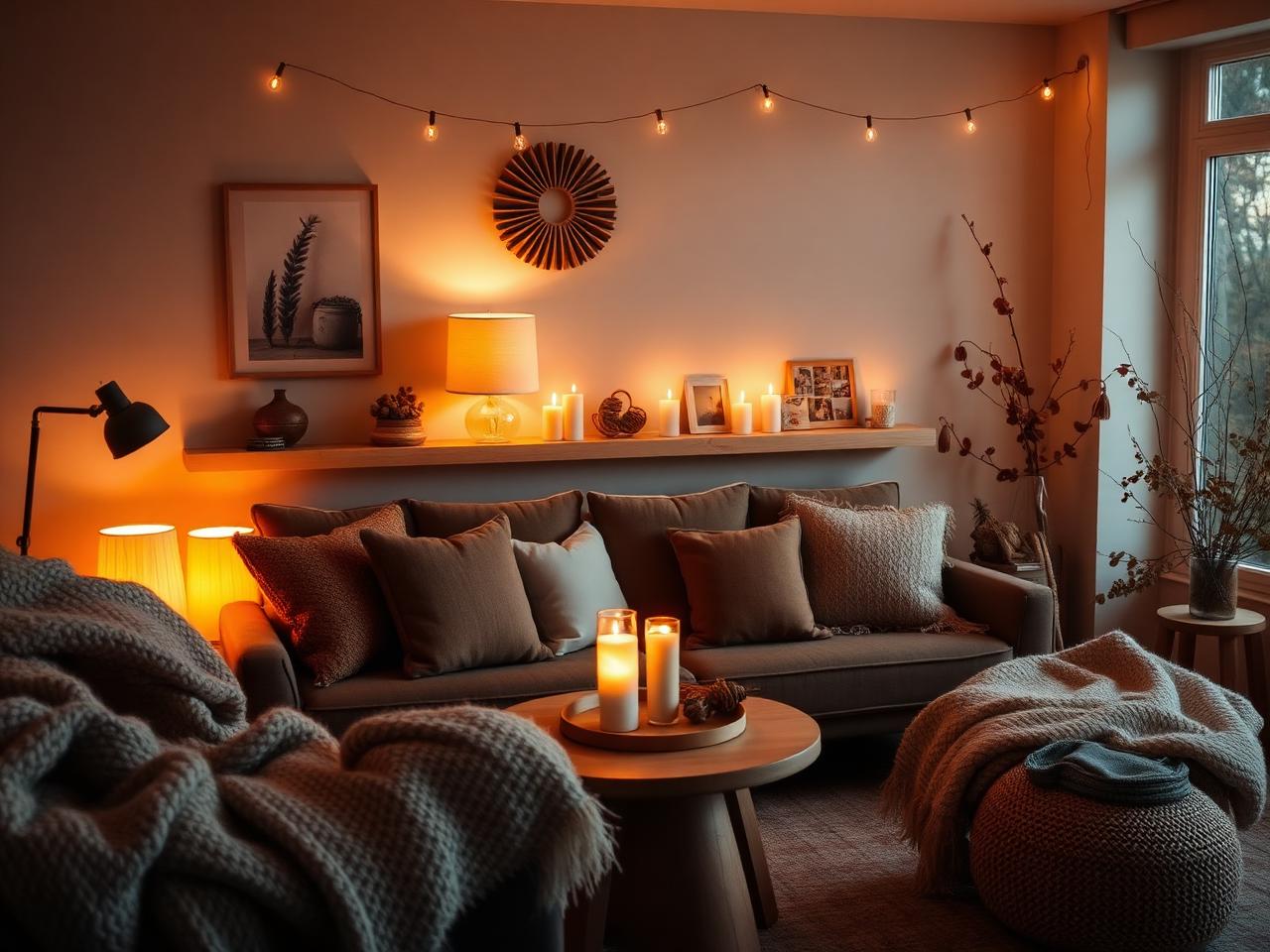
Warm light reads as cosier to many people, but preference is personal. Ask the people using the space rather than assuming that a warmer or dimmer appearance suits them. Lighting can support the setting without promising a particular emotional response.
Leave space for people rather than more props
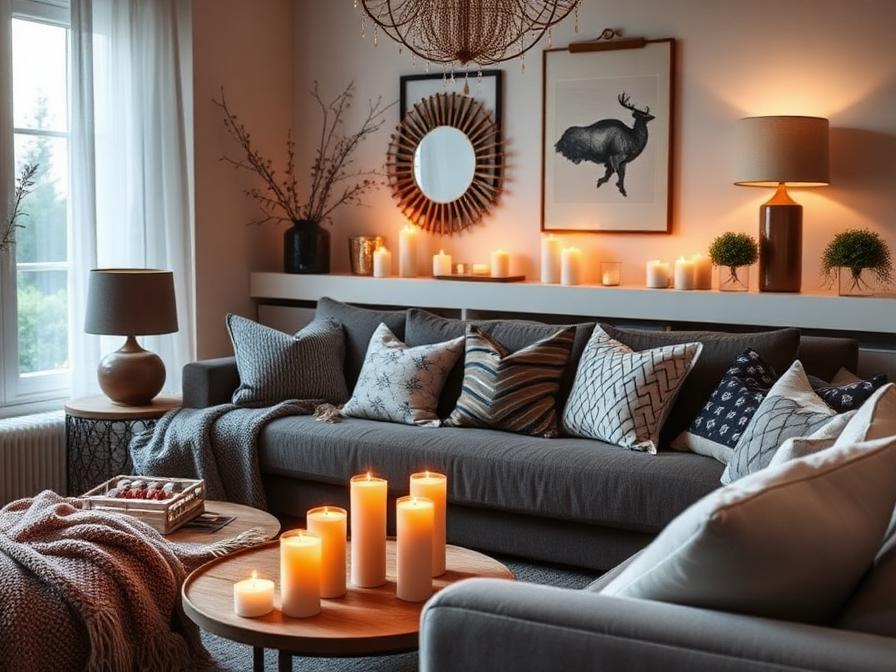
A table with room for ordinary belongings can be more welcoming than an elaborate display. Keep access to controls and useful surfaces clear. The lamp need not share its surface with several decorative objects to make the arrangement feel complete.
Textiles, books, and familiar objects may contribute to a comfortable setting, but no material establishes authenticity. Candles are optional, not an obligation attached to the word hygge. Electric lighting alone can form the arrangement you prefer.
Make it easy to change the setting when the activity changes. That might mean retaining a separate existing light rather than expecting a decorative accent to do every job. Verify any new lamp's functions in its current specifications instead of assuming its appearance tells you how it operates.
Let the people in the room judge the result
At the next shared evening, ask about one concrete thing: a reflection, a dark tabletop, or the position of a bright source. Adjust that issue without turning the whole gathering into a decorating exercise.
The next step can be small. Clear a useful patch of table, compare two existing lighting combinations, and keep the one that works better for the people and activity present.
The Editor's Notes
Get the Lumière styling notes
One quiet essay a month on layering light and shaping the atmosphere of a room. No noise. Unsubscribe anytime.
The Editor's Notes
One essay. One piece. Once a month.
Quiet dispatches from the studio. Unsubscribe anytime.
For the hour after
For the hour after the overhead light goes off
Shop lamps built for the quiet part of the evening.
Share this guide