Komorebi and Home Lighting: Working with Light and Shadow
What sunlight through leaves can teach us about placing lamps, leaving quieter surfaces, and judging shadow without copying an outdoor effect.
By Lumière Light Studio Editorial
A patch of sunlight on a wall can be more interesting than an evenly bright room. Its appeal may lie in the softer edges, the spaces between highlights, or the way it changes. Komorebi gives a name to a particular outdoor experience: sunlight filtering through tree leaves. It does not describe every patterned light, and a lamp does not reproduce the whole experience.
For an interior, the useful starting point is observation rather than imitation. Where does the light land? Which areas remain quieter? Can you see the room comfortably without making every surface equally bright? These questions translate an appreciation of natural light into choices you can actually make at home.
Komorebi describes an observation, not a decorating rule
The word belongs to the Japanese language; it is not evidence that Japanese homes share one lighting style. Nor does it establish a new design movement or a promise about wellbeing. Describing its general meaning is different from claiming that a lamp embodies a whole cultural tradition.
Sunlight through leaves involves a source, an irregular filter, and surfaces receiving the light. Outdoors, wind and changing daylight can alter the pattern. A stationary lamp has different conditions. It may cast a steady pool or a fixed shadow, and that can still be visually interesting without being labelled an exact recreation.
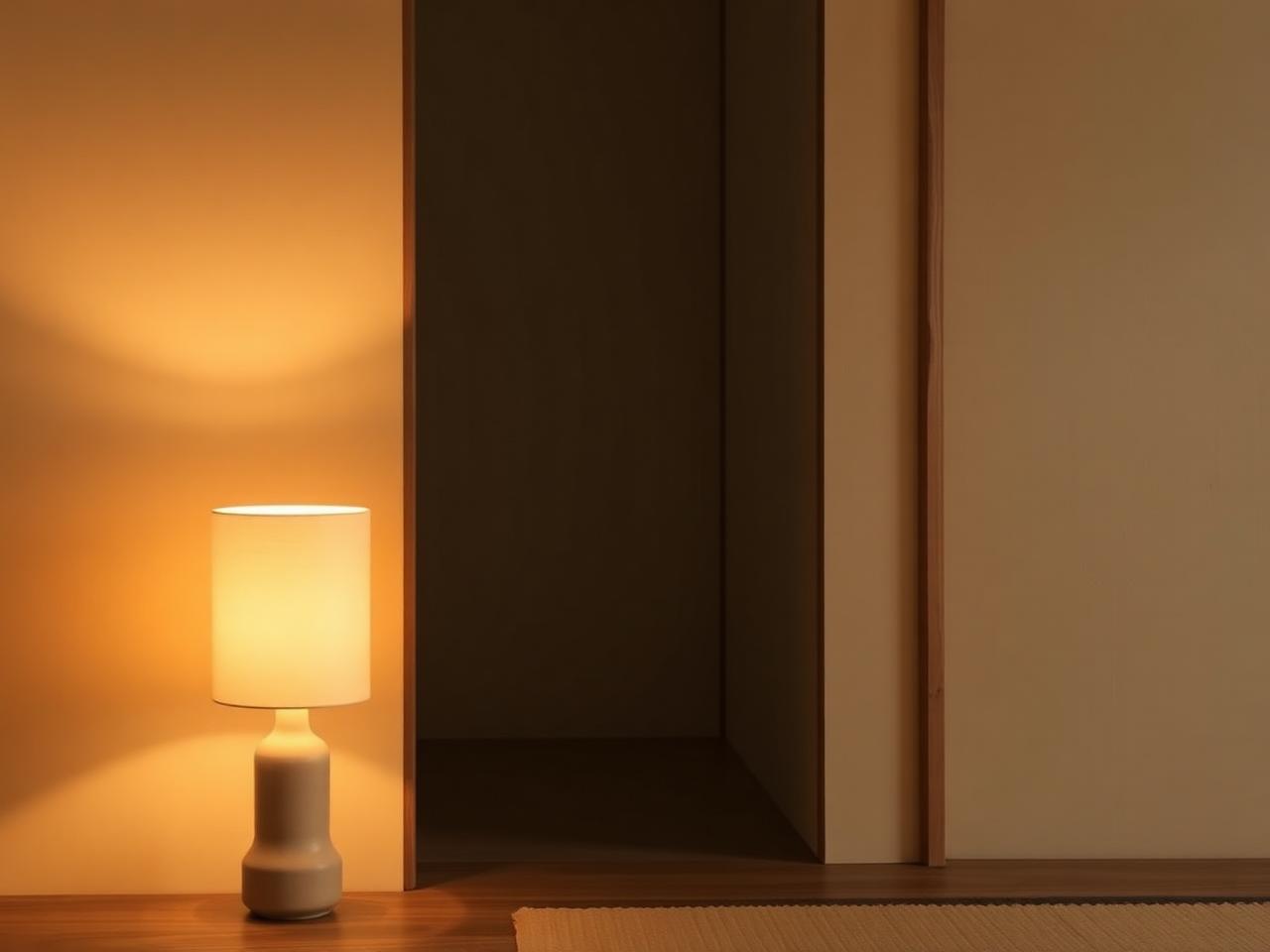
You also do not need a patterned shade. A softly lit wall beside a darker recess can create variation with very little decoration. The aim is a considered relationship between light and shade, rather than a room full of leaf-shaped projections.
Choose the receiving surface before choosing a lamp
Look from the place where you spend time, not only from the doorway. A wall beside an armchair, a curtain seen from the sofa, or the background behind a console might be a useful starting point. Choose a surface you would like to notice after dark.
Keep its existing detail in mind. A plain wall leaves room for a visible shadow. Artwork or a patterned textile may already offer enough variation. Adding a strong light pattern there could make the composition harder to read rather than more engaging.
Then identify what needs dependable visibility. A walking route, a book, and objects you reach for have different requirements from a decorative background. Preserve the lighting that serves those needs. Shadow is a visual choice, not a reason to make everyday use difficult.
Test position before seeking a special shade
- Start with a lamp you already own and a stable surface suitable for it. Follow its placement instructions and leave its shade and components unchanged.
- Observe where the existing light falls. If the location allows, compare a position nearer the wall with one farther away. Keep the cable clear of walking routes and check that it reaches without tension.
- Sit in the usual seat. Note whether the bright source is directly visible, whether the wall becomes distracting, and whether a nearby mirror repeats the glare.
- Change one thing at a time. Try a different suitable location, or remove a nearby decorative object that interrupts the light. Compare the result with your original arrangement.
- Leave the rest of the room usable. Turn on the other lights needed for movement or activities, then judge the composition again. A pleasing isolated effect may disappear when the room is used normally.
Do not drape fabric over a lamp or add foliage around its shade to manufacture a pattern. Work with the product as supplied and within its instructions. If its light does not suit the intended surface, choose another location rather than modifying it.
Judge shadows by their effect in your room
A shade's appearance does not establish the pattern it will cast. Texture, openings, the position of the source, and the surrounding room can all matter. A photograph of an illuminated shade may show no useful evidence of what happens on a wall. Look for images that include the receiving surface, while remembering that photographs also depend on exposure and other lighting.
If you are considering another lamp, separate what is visible from what remains unknown. You may like its silhouette without knowing how it distributes light. Check the current specifications and ask for clarification rather than assuming that a textured surface means dappled illumination.
A successful result might be modest: one gently lit background, a darker area beside it, and sufficient light where you sit. It need not look like a forest. Before choosing anything new, spend an evening observing one existing lamp from your normal seat and write down which surface, shadow, or reflection you would change.
The Editor's Notes
Get the Lumière styling notes
One quiet essay a month on layering light and shaping the atmosphere of a room. No noise. Unsubscribe anytime.
The Editor's Notes
One essay. One piece. Once a month.
Quiet dispatches from the studio. Unsubscribe anytime.
For the hour after
For the hour after the overhead light goes off
Shop lamps built for the quiet part of the evening.
Share this guide