A Triangle of Lamps Is a Sketch, Not a Lighting Rule
Use a simple plan view to compare possible lamp locations, then let seating, surfaces and access overrule the shape.
By Lumière Light Studio Editorial
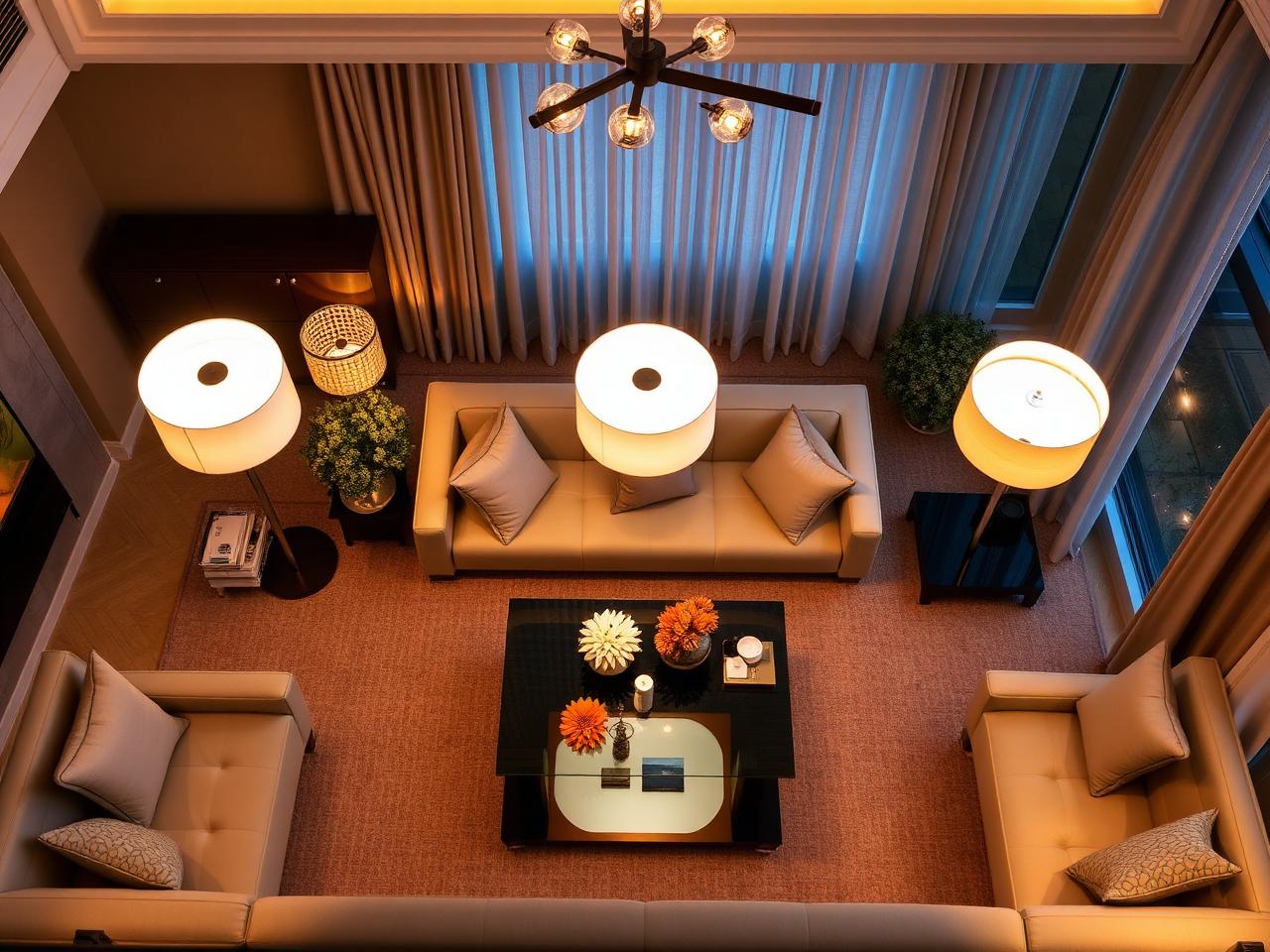
Joining three lamp positions on a room sketch can make their distribution easier to discuss. It does not establish that those positions will light the room well. A triangle is a drawing aid, not evidence that three lamps are the right number or that a room requires a particular visual pattern.
If you already have several lamps and their placement feels arbitrary, a simple plan view can still help. It shows where sources cluster, where furniture interrupts a route and which positions are close to the seats that use them. The value lies in the information on the sketch, not its geometry.
Draw the furniture before the points of light
Start with the room's outline, door openings and large furniture. Add the seats people use, including the ends of the sofa. Mark suitable supporting surfaces and existing outlets. A rough drawing is sufficient if it captures the relationships accurately enough to discuss them.
Only then mark the lamps. Connect three positions if that helps you see their spread, but keep other useful sources on the page. A ceiling fixture, an extra task light or a fourth lamp does not invalidate the drawing. The sketch should describe your room rather than force it into a pattern.
Look for clustering. Several lamps may be concentrated beside a single wall because that is where the surfaces happen to be. That observation is a prompt to inspect the other side of the room. It is not proof that the lamps must be distributed equally or moved to the farthest corners.
Test each proposed point on its own merits
A position earns its place by what it contributes. Check who uses it, what it helps illuminate and whether its control is accessible. If its only justification is completing the triangle, leave it out of the next trial and see whether anything useful is missing.
Do not create a third point on an unsuitable surface. A crowded mantel, narrow sill or unstable support is not improved by being geometrically convenient. Follow the manufacturer's placement guidance, allow the full lamp to fit and preserve access to curtains, storage and moving furniture.
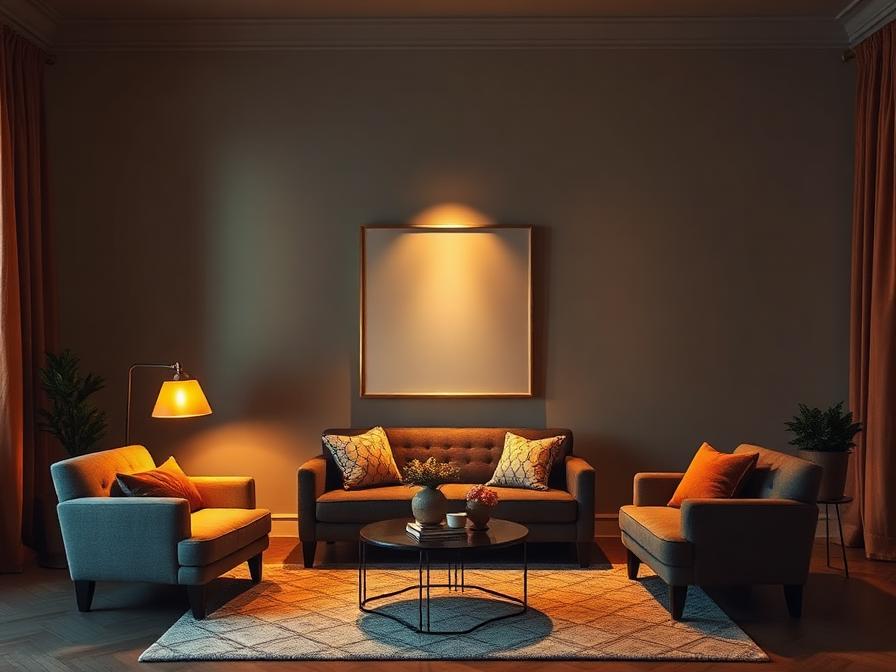
Varying height may produce an arrangement you enjoy looking at, but it is not a substitute for inspecting the light. Sit in the actual chairs. Check whether an exposed light source is distracting and whether the relevant table or page receives useful illumination. Height alone does not answer either question.
Keep the layout when it works without the diagram
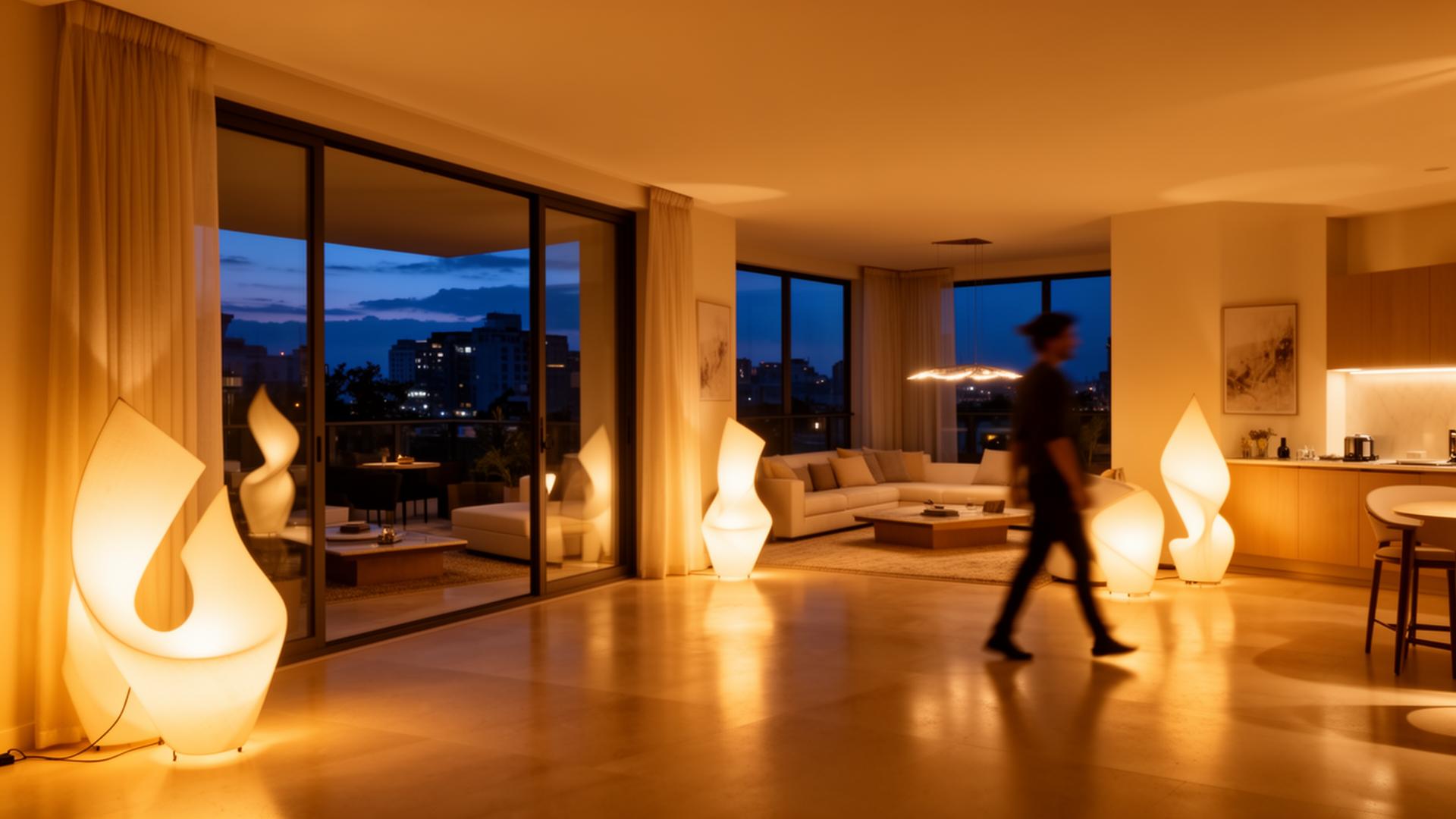
Use the room rather than the sketch to make the final decision. The doorway view is one perspective; the reclining sofa position is another. If a lamp reflects in a television or blocks a conversation sightline, changing its position is more important than preserving the drawing's shape.
There is no requirement for all the sources to look equally prominent. You may prefer a quiet background and one more visible focal point. That is a composition preference, not a universal account of how people perceive rooms.
Finish by erasing the connecting lines. If the remaining positions still make sense in terms of use, support and access, the sketch has done its job. Keep those reasons with the plan so later furniture changes can be assessed without trying to recreate an ideal triangle.
The Editor's Notes
Get the Lumière styling notes
One quiet essay a month on layering light and shaping the atmosphere of a room. No noise. Unsubscribe anytime.
The Editor's Notes
One essay. One piece. Once a month.
Quiet dispatches from the studio. Unsubscribe anytime.
For the hour after
For the hour after the overhead light goes off
Shop lamps built for the quiet part of the evening.
Share this guide