Where to Put a Lamp Beside a Sectional Sofa
Choose a position by comparing the sectional’s occupied seats, open ends and inner corner, not by centring the lamp on the sofa.
By Lumière Light Studio Editorial
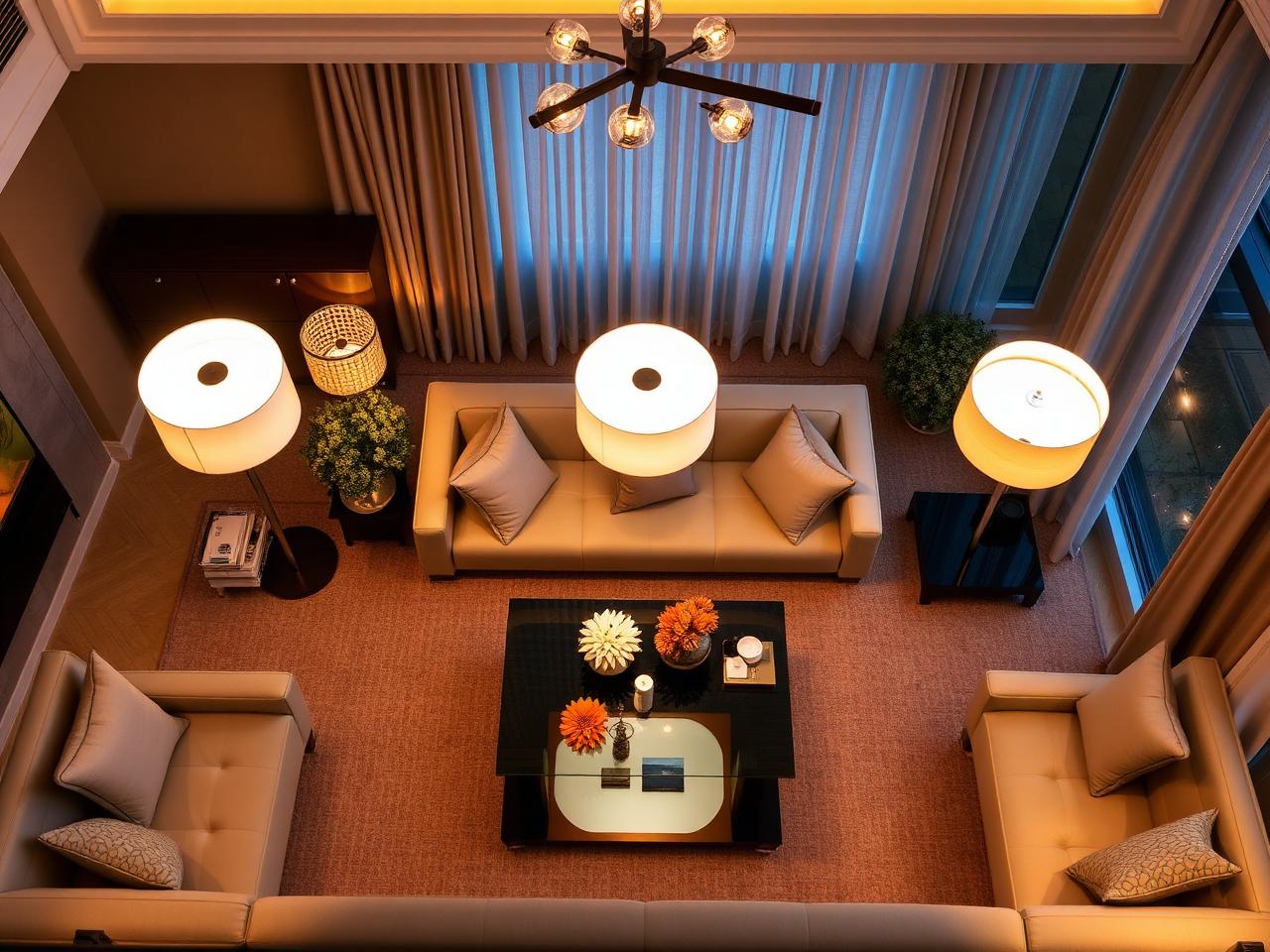
The inner corner of a sectional can look like the obvious home for a lamp. It is also where a source may be close to one person's face and far from another person's book. The sofa's L-shape creates different viewing directions, so the neatest position on a plan may not be the most useful one.
Start with the occupied seats, not the centre of the furniture. Mark where people usually sit, where they stretch out and which positions guests use. A sectional with one regularly occupied end asks a different question from one used along both arms every evening.
The open end and inner corner serve different seats
An end table beside an open arm often gives one person clear access to a lamp and its control. That can suit a local need. It does not establish that the far side of the sectional will receive the same useful light.
The inner corner may place a lamp between two seating directions. Compare it from each side rather than assuming that being central makes it shared. Look for a bright opening near either person's line of sight and check whether the sofa back obscures light from reaching a useful surface.
| Possible position | What to inspect first |
|---|---|
| Open end table | Reach from the neighbouring seat and visibility from the far arm |
| Surface at the inner corner | Views from both directions and room for everyday objects |
| Existing surface beyond the sectional | Whether it contributes to the seats or mainly the background |
These are options to compare, not a requirement to add furniture. A console behind the sofa raises its own depth and reach questions; assess those separately rather than treating it as the automatic solution to a missing end table.
Reclining changes the sightline
Try the normal sitting positions, including feet up on the chaise. A light source hidden when sitting upright may become visible when someone reclines. Keep the lamp clear of cushions and moving furniture, following its placement guidance.
Check conversation across the corner too. The full shade can interrupt the view between people even when its base fits comfortably on a table. Measure the widest part, not only the footprint. Keep room for the objects the table needs to hold each evening.
For reading, inspect the actual page in the seat where it will be used. A lamp's proximity to the sectional does not prove it is suitable for that task. One person's successful arrangement may still leave the other arm poorly served.
Choose the seat priority before the position
If only one viable location exists, decide which need it can realistically address. You do not need to make one lamp serve every seat equally. Keep general room visibility in view while acknowledging any local task that remains unresolved.
Finish with a sketch showing the occupied seats and the best feasible surface. Measure that surface, trace the cable route and repeat the sightline check from the chaise. Those observations will narrow the choice more usefully than centring a lamp on the sectional's overall outline.
The Editor's Notes
Get the Lumière styling notes
One quiet essay a month on layering light and shaping the atmosphere of a room. No noise. Unsubscribe anytime.
The Editor's Notes
One essay. One piece. Once a month.
Quiet dispatches from the studio. Unsubscribe anytime.
For the hour after
For the hour after the overhead light goes off
Shop lamps built for the quiet part of the evening.
Share this guide