How Many Lamps Does Your Living Room Actually Need?
Decide whether to add, move or remove a lamp by checking what each source contributes to the room.
By Lumière Light Studio Editorial
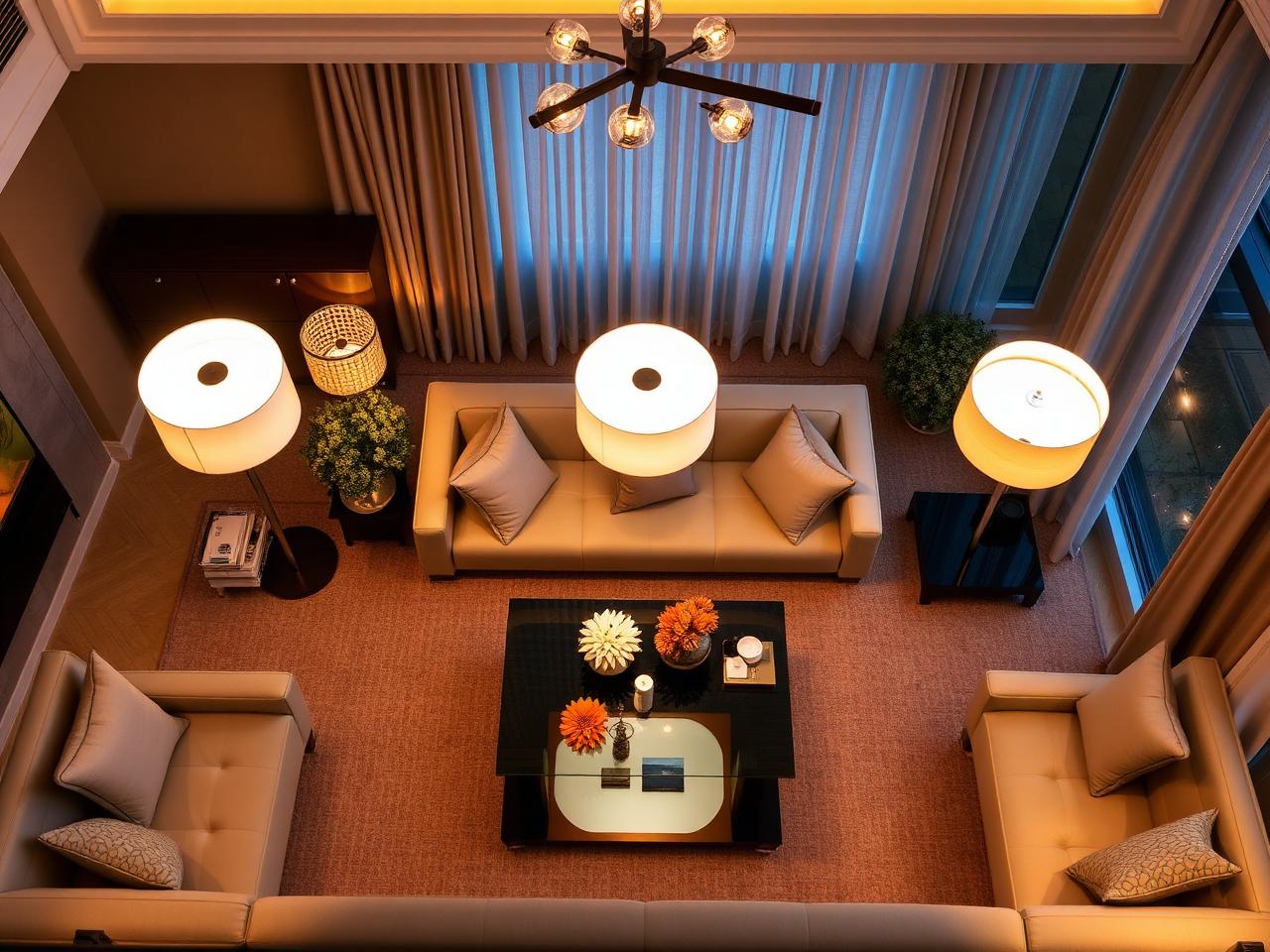
Three lamps may suit a living room, but the number itself tells you little. A compact room with useful existing lighting and one regularly occupied seat has different needs from a larger room used by several people at once. Count unresolved jobs before counting fixtures.
A more useful approach is to ask what changes when each lamp is switched on. Does it make a route clearer, serve a particular seat or create a view you value? If its contribution is hard to describe, adding another source of the same kind may not address the actual problem.
Count useful contributions, not decorative objects
Begin with the lights already available, including installed fixtures. Use the normal evening arrangement and identify the source that does most of the practical work. Then look at the remaining seats and surfaces. Separate a specific difficulty, such as a book in shadow, from a general wish for a different atmosphere.
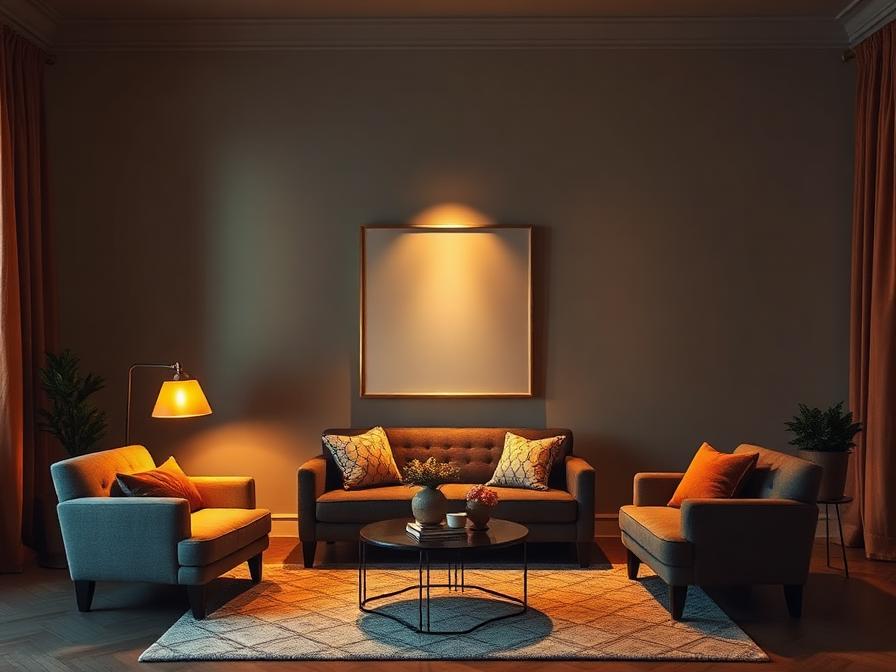
One source may serve more than one purpose. A lamp beside the sofa might make a side table visible and also contribute to the background light. Equally, two lamps on one console may serve much the same area. Neither observation is a verdict; it explains why fixture counts alone are unhelpful.
A decorative preference is a valid contribution if you name it honestly. You might enjoy seeing a lit object across the room even when it is not needed for a task. That does not make it essential in other rooms or mean an additional lamp will improve practical coverage.
Compare adding, moving and subtracting
If a seat is poorly served, first ask whether an existing source can move without losing an important function elsewhere. A lamp beside a rarely used chair might be more useful beside the seat occupied each evening. Confirm suitable support, control access and a clear cable route before trying the change.
If two sources appear to duplicate each other, compare the arrangement with one switched off. Observe what actually disappears: visibility on a table, light on a wall, or simply one bright object. This is a reversible check, not a recommendation to make the room darker regardless of its use.
An additional lamp makes sense when a useful result remains missing and there is a viable location for it. For detailed tasks, evaluate the actual work surface. Do not assume a decorative lamp will meet that need because its photograph looks bright or because it completes a matching set.
Let a reason determine the final count
There is no requirement for different heights, an odd number or a triangle. Those arrangements can be explored as visual preferences, but the room's routes and occupied positions take precedence. The number may also change when the furniture or household routine changes.
Write a short reason beside each lamp you intend to keep. If removing it would make a task awkward or eliminate a view you genuinely want, that is useful information. If the reason is only that a formula called for another point of light, reconsider it.
The next step is not to reach three. It is to identify one unresolved need and try the smallest practical change that could address it. Recount the lamps afterwards, if the number still matters to you.
The Editor's Notes
Get the Lumière styling notes
One quiet essay a month on layering light and shaping the atmosphere of a room. No noise. Unsubscribe anytime.
The Editor's Notes
One essay. One piece. Once a month.
Quiet dispatches from the studio. Unsubscribe anytime.
For the hour after
For the hour after the overhead light goes off
Shop lamps built for the quiet part of the evening.
Share this guide