Rental Lighting: Plan Changes You Can Take With You
Check your rental agreement, use existing surfaces and outlets, and make a lighting plan that can move with you.
By Lumière Light Studio Editorial
A rental lighting plan begins with permission and permanence. Some changes are ordinary furniture choices; others affect fittings, finishes, or the terms of the tenancy. Before planning a new lamp arrangement, separate what you can place from what you would need approval to change.
A room can feel personal without replacing its installed lighting. Freestanding lamps offer another layer, but they still need suitable surfaces, accessible controls, and a workable power connection. Start with those constraints rather than assuming the room needs a complete replacement scheme.
Read the agreement before altering the room
Check the tenancy agreement and any building guidance for rules affecting lamps, fixings, and alterations. If something is unclear, ask the responsible property contact before proceeding. Do not assume a small fixing or an adhesive accessory is permitted simply because it is sold as removable.
Leave installed fixtures intact. They may be useful for arriving home, cleaning, or finding something across the room. A lamp can supplement that light rather than compete with it. There is no need to disable a fitting to make an evening arrangement feel different.
If your plan depends on a wall-mounted piece, treat permission and installation requirements as separate questions to resolve before ordering. Choosing a freestanding alternative may be simpler, but check the actual product requirements rather than assuming that every lamp has the same setup.
Let outlets narrow the placement choices
Walk around the room and mark the outlets you can access. Then mark the stable surfaces and clear floor areas near them. The overlap gives you a more useful starting point than a photograph of someone else's apartment.
A surface is suitable only if the lamp fits without overhanging, the control can be reached, and normal use will not knock it. A narrow ledge or windowsill is not automatically a substitute for a side table. Check how windows, curtains, doors, and storage move nearby.
Keep cables out of walking routes and away from places where furniture can pinch them. If a position depends on stretching a cable across the room, choose another position. Use only the cable or adapter specified by the listing or manufacturer; ask support when the required connection is unclear.
Build a portable plan, not a fixed formula
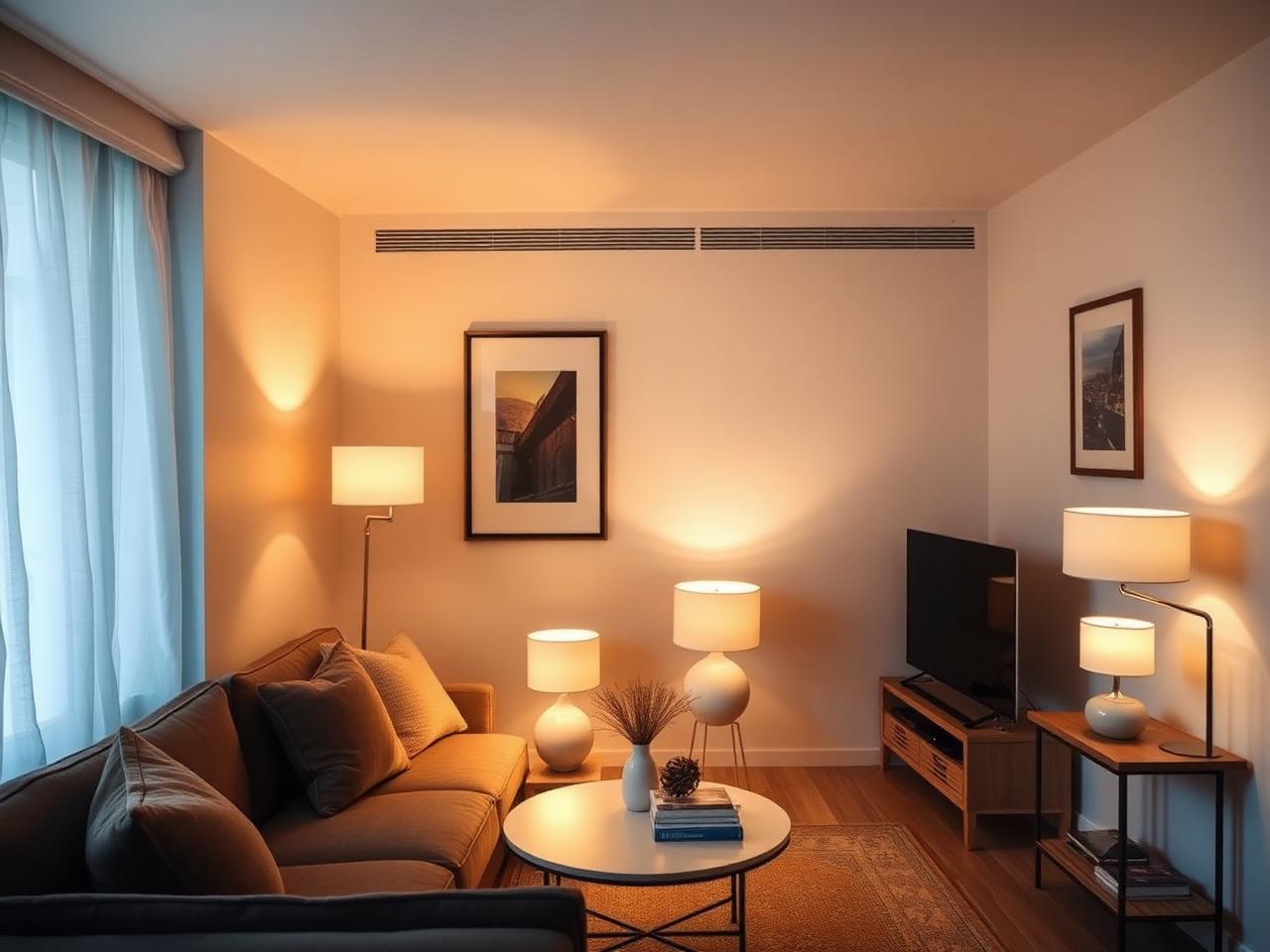
Choose a first location around a real activity, such as sitting beside the sofa. Try a lamp you already own there and check the view from the seat. Add light elsewhere only when you can name the remaining need. Different rooms will call for different arrangements and quantities.
Record each lamp's dimensions and the surface it currently uses. Keep its instructions and supplied parts together. Those details will help when the next home has different furniture or outlets, even if the lamp changes rooms.
Before making a change, ask three questions: is it permitted, does it work here, and can it leave with me without an alteration to the property? Begin with the location that satisfies all three. A rental plan can be modest and still be carefully considered.
The Editor's Notes
Get the Lumière styling notes
One quiet essay a month on layering light and shaping the atmosphere of a room. No noise. Unsubscribe anytime.
The Editor's Notes
One essay. One piece. Once a month.
Quiet dispatches from the studio. Unsubscribe anytime.
For the hour after
For the hour after the overhead light goes off
Shop lamps built for the quiet part of the evening.
Share this guide