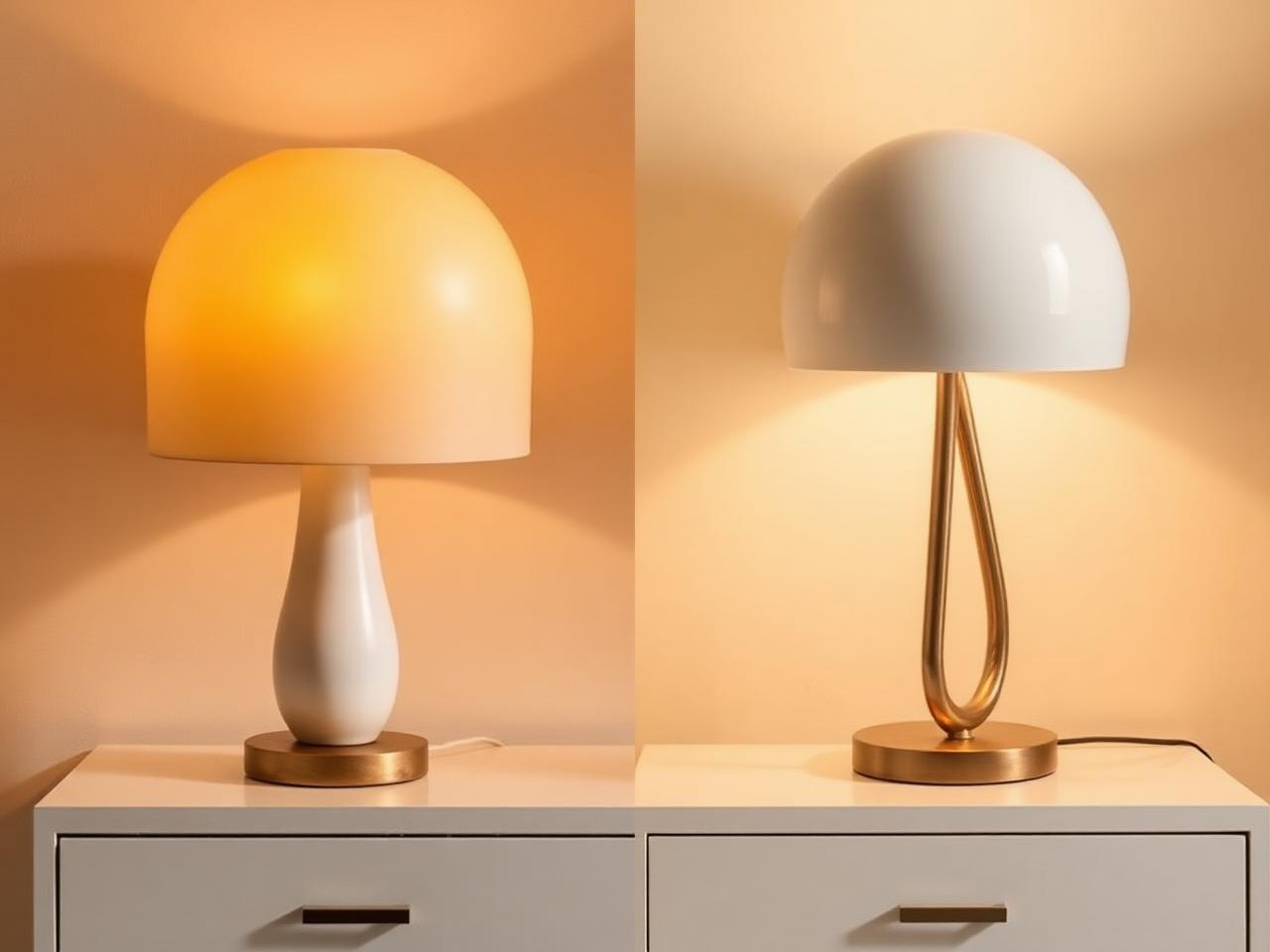
How to Choose the Right Size Lamp for an Entryway Console
Choose a console lamp by usable depth, overall span and reach. Test the real surface rather than using a fixed proportion rule.
By Lumière Light Studio Editorial
A console lamp has to share its surface with the things that arrive home with you. Keys, post and a bag set down briefly can make a generous-looking table surprisingly restricted. Choose the lamp's size around that real use, not around a photograph of an empty console.
This is a guide to selecting one lamp for an existing console. The broader arrival-light arrangement is a separate decision. Here, the aim is to establish whether a candidate fits, can be operated comfortably and looks proportionate from the places you see it.
Measure the space that remains in daily use
Clear the console, then return the items that genuinely belong there. Identify the area the lamp could occupy without displacing the landing space you need. Measure its usable width and depth, accounting for any raised edge or uneven section of the surface.
Compare both base dimensions and the lamp's overall span. The shade may project beyond the base, and a curved support may extend backwards towards the wall. The contact area fitting on the table does not mean the complete lamp fits the position.
Mark a proposed footprint on the tabletop while it is empty of the lamp. Put the key tray back beside it and practise setting down the objects you usually carry. This is a space-planning exercise, not a substitute for the manufacturer's placement requirements.
Choose height from actual views, not a formula
Stand in the doorway and at the point where you usually turn into the hall. Notice whether the proposed lamp would be visible or hidden behind other objects. Then consider the view from any nearby chair, where the underside of a shade may be more exposed.
Use the listed height to imagine the outline against a mirror or picture. It can overlap that background if you like the result; it does not have to reach a prescribed fraction of it. A full-size paper outline held in the proposed position can help you judge the composition before ordering.
A broad low form and a slender upright one can occupy a similar visual role while asking for different amounts of tabletop space. Compare both rather than assuming a larger entry needs a taller lamp.
Reach and cable placement can rule out a size
Locate the control in the product information. Consider whether you can reach it without leaning over objects or pushing the lamp aside. If its location is not shown, ask support rather than assuming a convenient touch point.
Check the route to the specified power connection. Keep the route away from normal foot traffic and moving doors, and use only the cable or adapter the listing or manufacturer specifies. If the position depends on an unconfirmed connection arrangement, resolve that before choosing the lamp.
Finish with three notes: the available base area, the overall outline you prefer and the control position you can reach. Those are more dependable than a fixed lamp-to-console ratio. Use them to narrow the options, then check the current specifications on the product page before making a choice.
The Editor's Notes
Get the Lumière styling notes
One quiet essay a month on layering light and shaping the atmosphere of a room. No noise. Unsubscribe anytime.
The Editor's Notes
One essay. One piece. Once a month.
Quiet dispatches from the studio. Unsubscribe anytime.
For the hour after
For the hour after the overhead light goes off
Shop lamps built for the quiet part of the evening.
Share this guide