How to Choose and Style a Table Lamp
Choose a table lamp by its purpose, dimensions, light source and controls, then plan its place on the surface.
By Lumière Light Studio Editorial
The most useful starting point for a table lamp is not a style name. It is a sentence about what the lamp needs to do. Perhaps it should light the wall behind a sofa, make a console feel complete, or provide light near a chair. Those are different requirements, even when the lamps look similar.
A decorative form can be part of a lighting plan without being a task solution. If seeing a page or a work surface is the priority, look for confirmed information about that use. A glowing shade in a photograph does not establish how much light will reach your book.
Measure the occupied space, not just the base
Record the usable width and depth of the surface after allowing for everyday objects. Then compare the lamp's overall height, widest shade dimension and base footprint. These are separate measurements. A narrow base can support a shade that takes up much more room than expected.
Check the view from the place you will actually sit. A lamp that looks balanced while standing may put a bright opening directly in your line of sight from a low chair. There is no single lamp-to-table ratio that settles both proportion and viewing comfort.
Use a simple paper outline to think through the footprint, and mark the proposed height nearby. This is a space-planning aid, not a substitute for confirmed dimensions. Keep doors, drawers and the objects you reach for in mind.
Choose the light source before choosing a bulb
Many lamps use integrated LEDs that are not user-replaceable. Others accept a replaceable bulb. Confirm which arrangement the exact variant uses before making plans to change its light. An included LED does not, by itself, tell you whether it can be replaced.
For a replaceable bulb, check the lamp's stated socket/base and the manufacturer's maximum, along with its other compatibility instructions. There is no universal bulb specification for every table lamp. Light appearance is a preference to consider after compatibility, not a reason to ignore it.
Check controls separately from light colour. A touch control may simply turn a lamp on and off. Adjustable light colour does not establish adjustable brightness. Read the stated operation rather than extending one feature into another.
Let materials and placement support the room
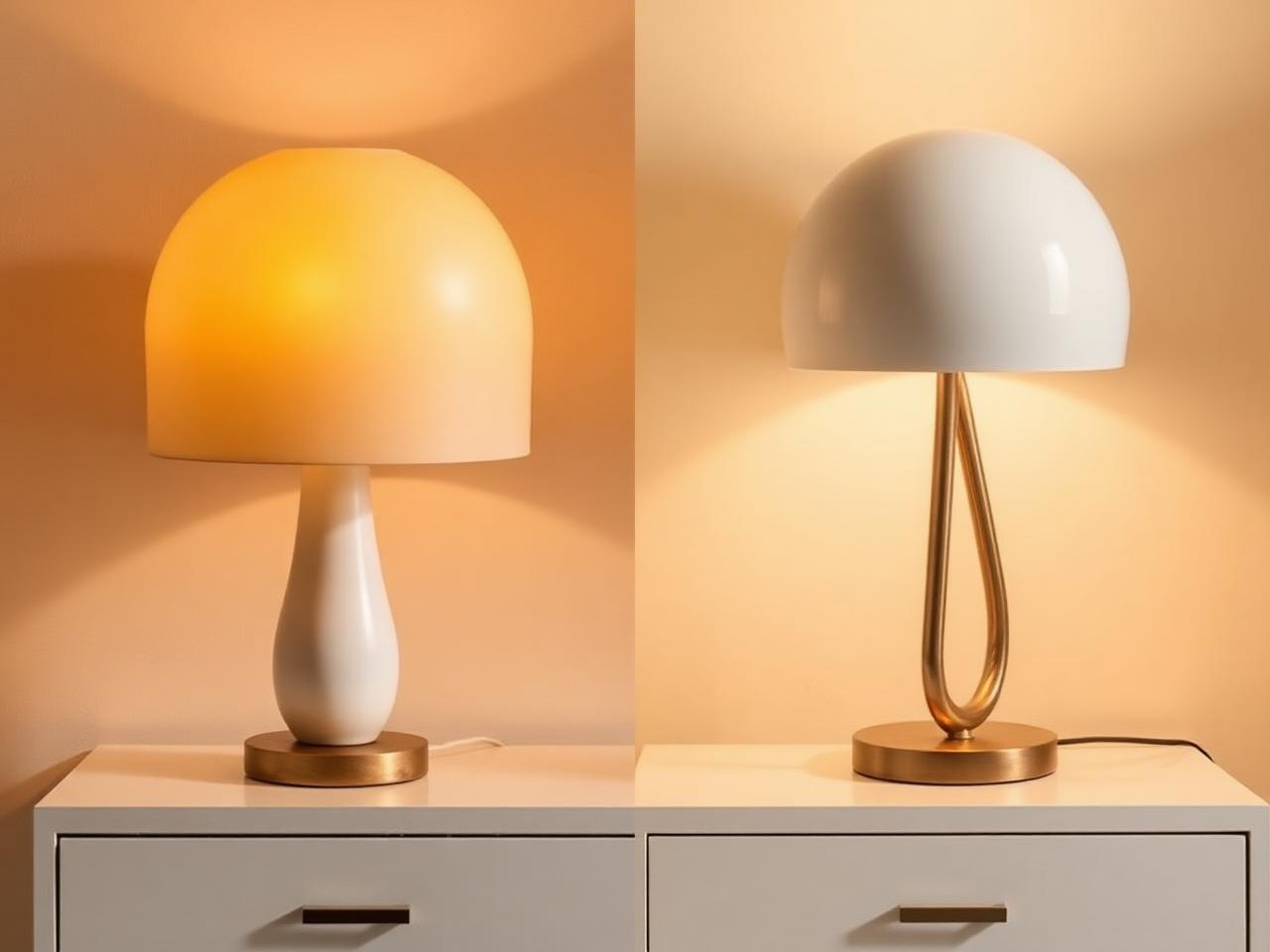
Consider the lamp while it is off as well as on. An opaque shade, a translucent shade and a reflective base present different visual surfaces. Photographs can help you judge the silhouette, but they cannot confirm output, composition or finish by themselves.
Leave room around the lamp for the surface's ordinary use. A bedside table still needs space for the things you put down at night. A console may need a clear landing area. Styling is more convincing when it does not require moving the lamp for every small task.
Resolve power and practical questions before ordering
Read the exact variant's power note and plan a route to the intended power source. Do not infer operation without a connection from a photograph with no visible cable. Use only the cable or adapter the listing or manufacturer specifies; ask support if the requirements are unclear.
For care, follow the supplied instructions for the particular materials rather than applying a general cleaning recipe. Check the current shipping and returns pages if those terms affect your decision. Start by measuring one surface and writing down one unresolved specification. That gives the next comparison a useful purpose.
The pieces referenced above. Check current specifications, delivery and return details on each product page before ordering.
The Editor's Notes
Get the Lumière styling notes
One quiet essay a month on layering light and shaping the atmosphere of a room. No noise. Unsubscribe anytime.
The Editor's Notes
One essay. One piece. Once a month.
Quiet dispatches from the studio. Unsubscribe anytime.
For the hour after
For the hour after the overhead light goes off
Shop lamps built for the quiet part of the evening.
Share this guide