How to Compare Two Lamps Without Relying on the Main Photo
Build a side-by-side record of confirmed facts, preferences and unknowns before choosing between two appealing lamps.
By Lumière Light Studio Editorial
When two lamps are equally appealing, scrolling between their main photographs can keep the decision circling around the same impression. A small comparison sheet changes the question. Instead of asking which image is nicer, ask which lamp has confirmed facts that fit your room.
Begin with one intended location. Comparing a possible bedside lamp with a possible console lamp is not a single decision yet. Describe the surface, the activity and the limits that matter there before collecting specifications.
Put the same questions beside both lamps
The blank sheet below is a template, not a comparison of actual products. Unknown means the fact has not been confirmed; it does not mean the lamp lacks the feature. Replace a cell only when you have information for the exact variant.
| Field to confirm | Lamp A | Lamp B |
|---|---|---|
| Exact variant | unknown | unknown |
| Overall height and widest dimension | unknown | unknown |
| Base footprint | unknown | unknown |
| Light-source arrangement | unknown | unknown |
| Required power connection during use | unknown | unknown |
| Included cable or adapter | unknown | unknown |
| Stated controls | unknown | unknown |
| Stated light appearance | unknown | unknown |
| Source of each fact | unknown | unknown |
Record units along with dimensions. A base diameter and an overall shade width are not interchangeable, even when both are labelled width in casual notes. If the listing is unclear about what was measured, keep the uncertainty visible.
Decide what must fit before scoring appearance
Separate requirements from preferences. Fitting on the surface may be a requirement. Having a particular silhouette may be a preference. If a lamp fails a requirement, a stronger preference score does not resolve the mismatch.
For a task requirement, seek explicit information that addresses that use. A luminous decorative shade is not evidence of useful light on a work surface. You may need further information rather than a winner between two insufficiently described options.
Compare controls by their stated operation. Touch on/off and adjustable brightness are different capabilities. Compare power by the exact variant's note, not by a cable you can or cannot see in the photograph.
Treat missing information as a question
Keep unknown cells in the sheet when you contact support. Identify the variant and ask for the particular missing fact, such as the widest dimension or whether the source is user-replaceable. This gives the answer a place to go and reduces repeated enquiries.
An omission should not quietly become a favourable assumption. It should not automatically count against the lamp either. What matters is whether the missing fact is essential to your decision. An unresolved requirement is a reason to pause, not to invent a specification.
Return to photographs for the questions they can help answer
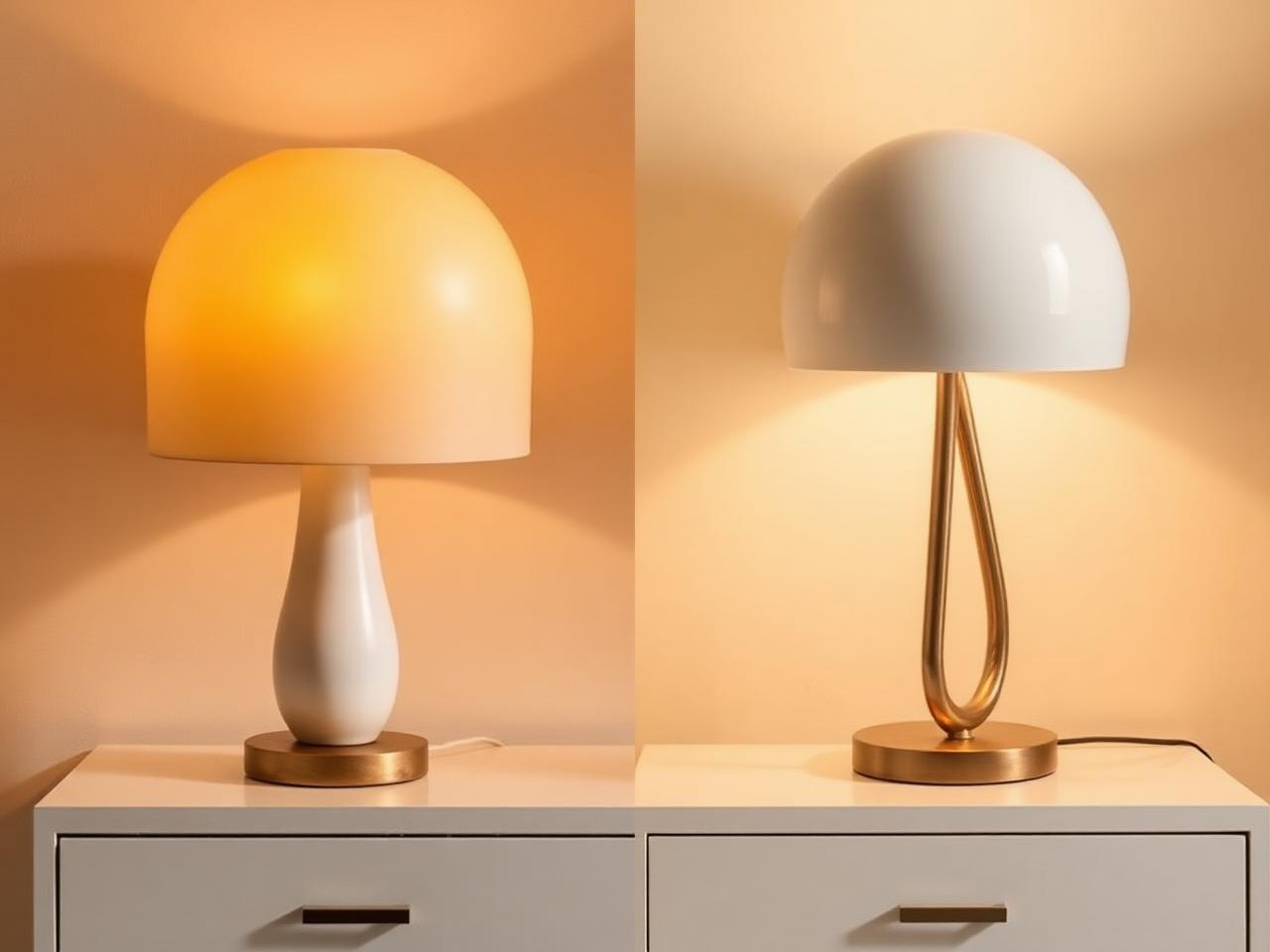
After checking fit and features, compare silhouette and visual relationships. Use a full view as well as a detail image. Consider the lamp when off, since it will remain part of the room without its light on.
Do not use different exposure or room conditions to rank brightness. Keep photo impressions in a preference section rather than entering them as measured performance. The sheet should distinguish what you know from what you like.
Your next step is to fill the requirements first. If one essential cell remains unknown, resolve it before deciding. If both lamps meet the requirements, choosing the form you prefer is a reasonable conclusion; the sheet does not need to turn taste into a numerical score.
The Editor's Notes
Get the Lumière styling notes
One quiet essay a month on layering light and shaping the atmosphere of a room. No noise. Unsubscribe anytime.
The Editor's Notes
One essay. One piece. Once a month.
Quiet dispatches from the studio. Unsubscribe anytime.
For the hour after
For the hour after the overhead light goes off
Shop lamps built for the quiet part of the evening.
Share this guide