How to Read Lamp Photos: Scale, Detail and Changing Appearance
Use wide views and close-ups for different questions, and understand why the same lamp may look different across images.
By Lumière Light Studio Editorial
A close-up can make a lamp feel substantial while telling you almost nothing about its place on a table. A room image can suggest scale while concealing the control you need to reach. The useful approach is to give each photograph a limited job rather than asking one image to answer everything.
Start by confirming that the images show the variant you are considering. Galleries may contain several colours or arrangements. If you cannot tell which photograph belongs to the selected option, ask before comparing details.
Wide views show relationships, not measurements
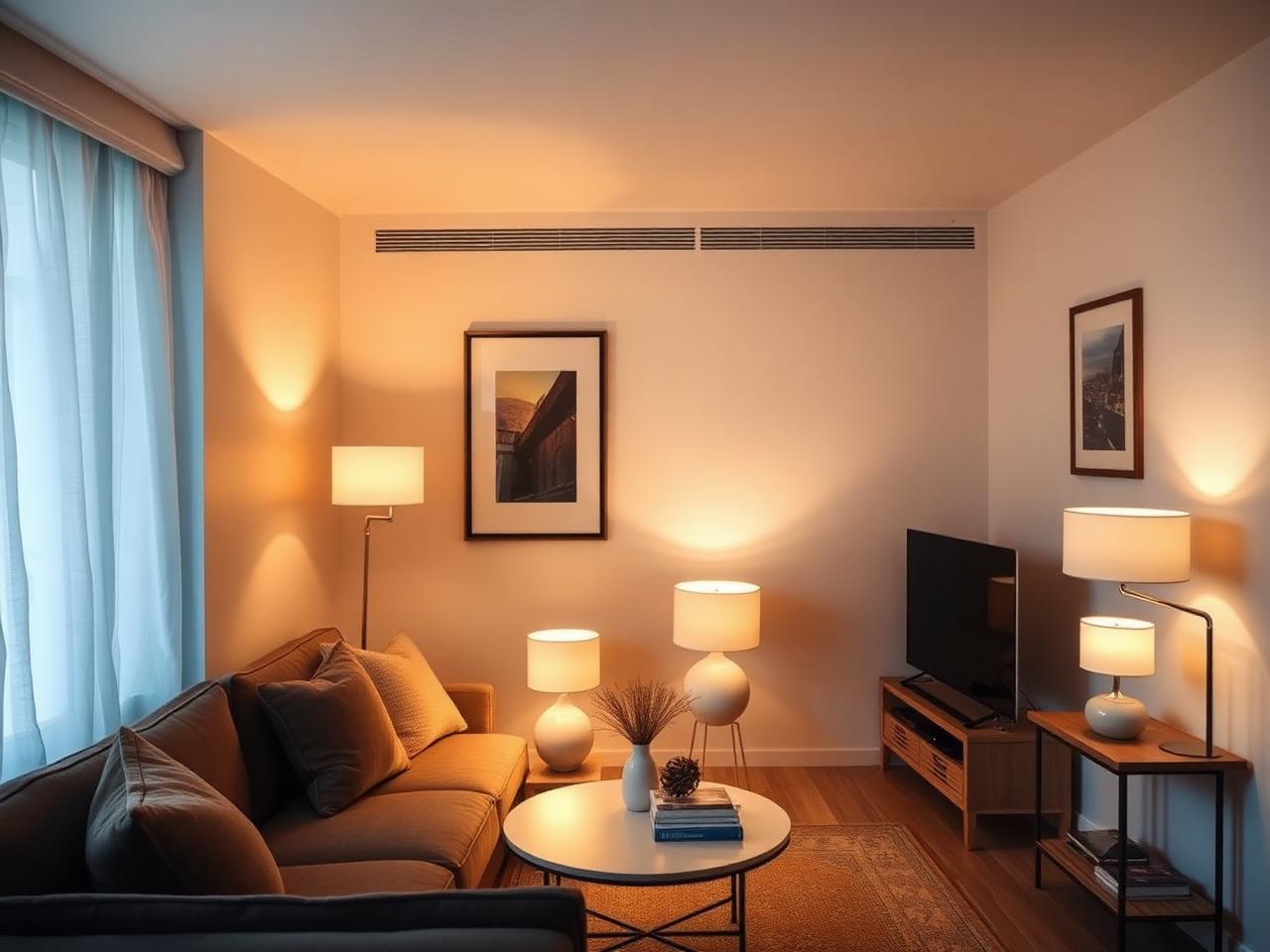
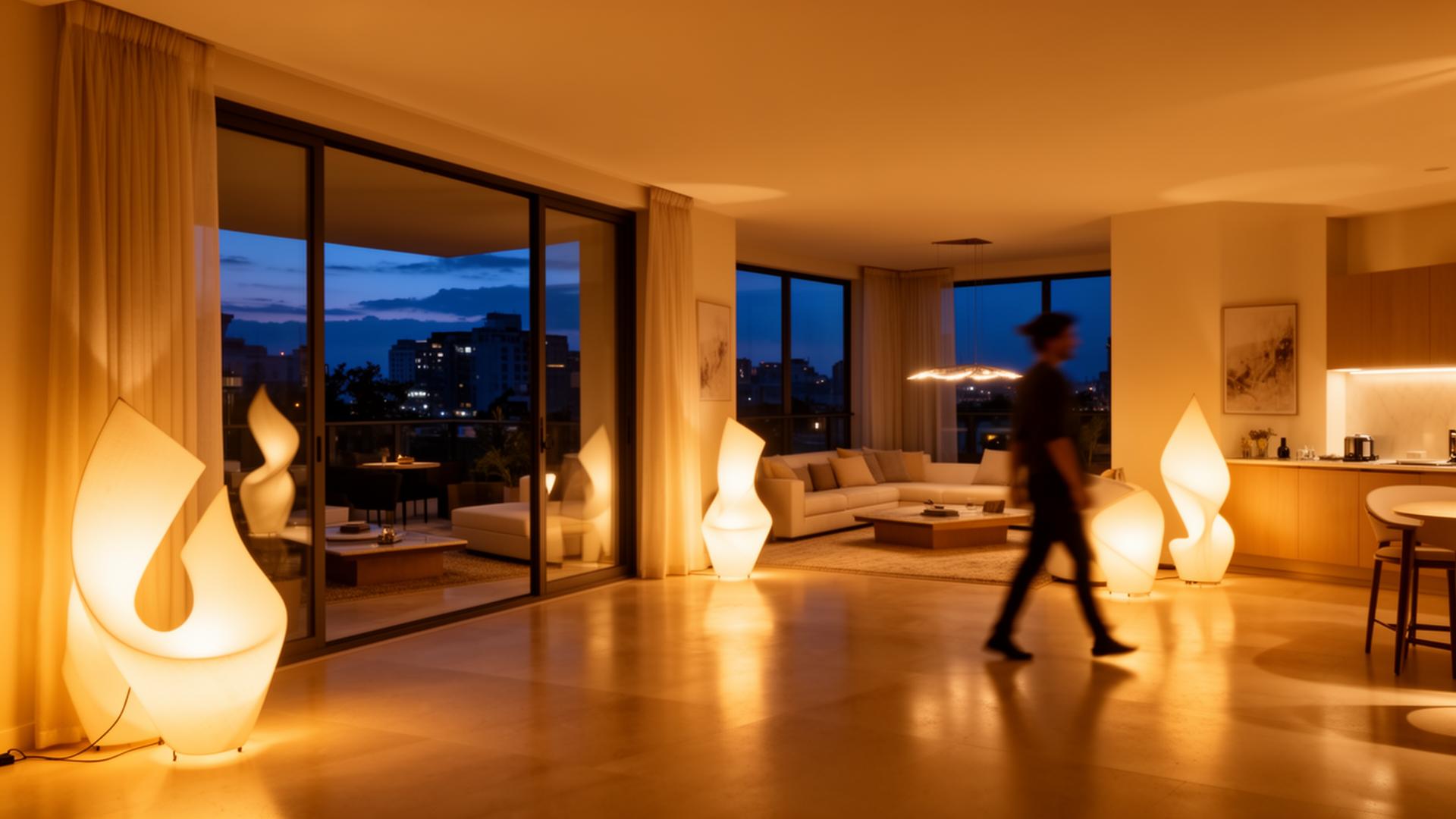
A full-room view helps you see how the lamp relates to furniture, the wall behind it and the surrounding objects. Look at the shade's span as well as the base. Notice whether the lamp occupies a corner of the surface or dominates its whole composition.
A familiar object can provide a rough scale reference, but it is not a ruler. Tables, books and chairs come in different sizes. Camera position and perspective also affect apparent proportions. Use the stated dimensions for fit and the image for context.
Try to imagine the view from your actual position. A standing photograph may not show the opening visible from a low seat. If that view matters, ask for a lower-angle image rather than assuming the lamp looks the same from every direction.
Close-ups answer narrower questions
A detail image can show the visible cable exit, control position or surface appearance. It cannot confirm a hidden mechanism or tell you what a control does. A touch point in a photograph is not proof of brightness adjustment.
Likewise, surface appearance does not establish material composition or construction. Look for the written description when a material matters to your choice. A polished reflection, texture or translucent area is a visual clue, not a technical specification.
Ask for a full view if the gallery consists mainly of details. Ask for a control detail if wide room photographs hide that part. The aim is to fill a specific gap, not to collect more versions of the same attractive angle.
Different images may use different conditions
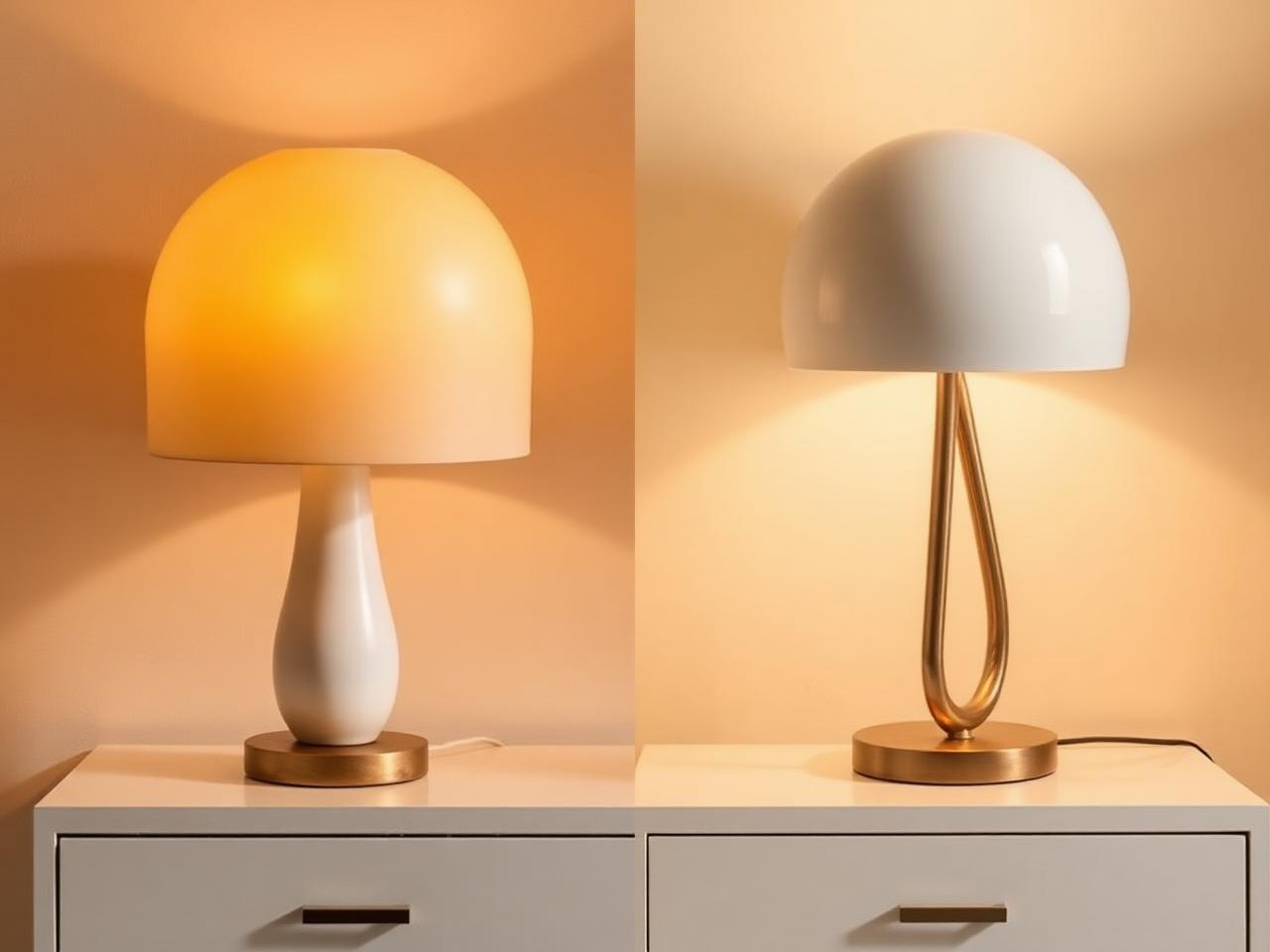
The same lamp can look warmer, paler, brighter or darker across photographs. Surrounding light, camera exposure, white balance and the display used to view the image can affect its appearance. A difference between pictures does not establish a defect or a change in the product.
An illuminated image and an unlit image answer different styling questions. The unlit view helps show how the form sits among other objects. The lit view suggests an appearance under those photographic conditions; it does not measure output in your room.
If differences are confusing, ask whether both images show the same variant and whether their lighting conditions can be described. A matched on-and-off pair under stated conditions is more informative than unrelated images, but it still is not a brightness test.
Request the missing view and verify the missing fact
For an uncertain choice, a useful request might be a full view with a stated size reference, an image of the cable exit, or a view from seated height. Explain what you are trying to judge so the answer can address it.
Use specifications for dimensions, power and controls. Use photographs for visible form and relationships. Before deciding, name the one question your favourite image leaves unanswered, then ask for the view or written fact that could actually answer it.
The Editor's Notes
Get the Lumière styling notes
One quiet essay a month on layering light and shaping the atmosphere of a room. No noise. Unsubscribe anytime.
The Editor's Notes
One essay. One piece. Once a month.
Quiet dispatches from the studio. Unsubscribe anytime.
For the hour after
For the hour after the overhead light goes off
Shop lamps built for the quiet part of the evening.
Share this guide