Bedside Lamp Ideas for Small Nightstands
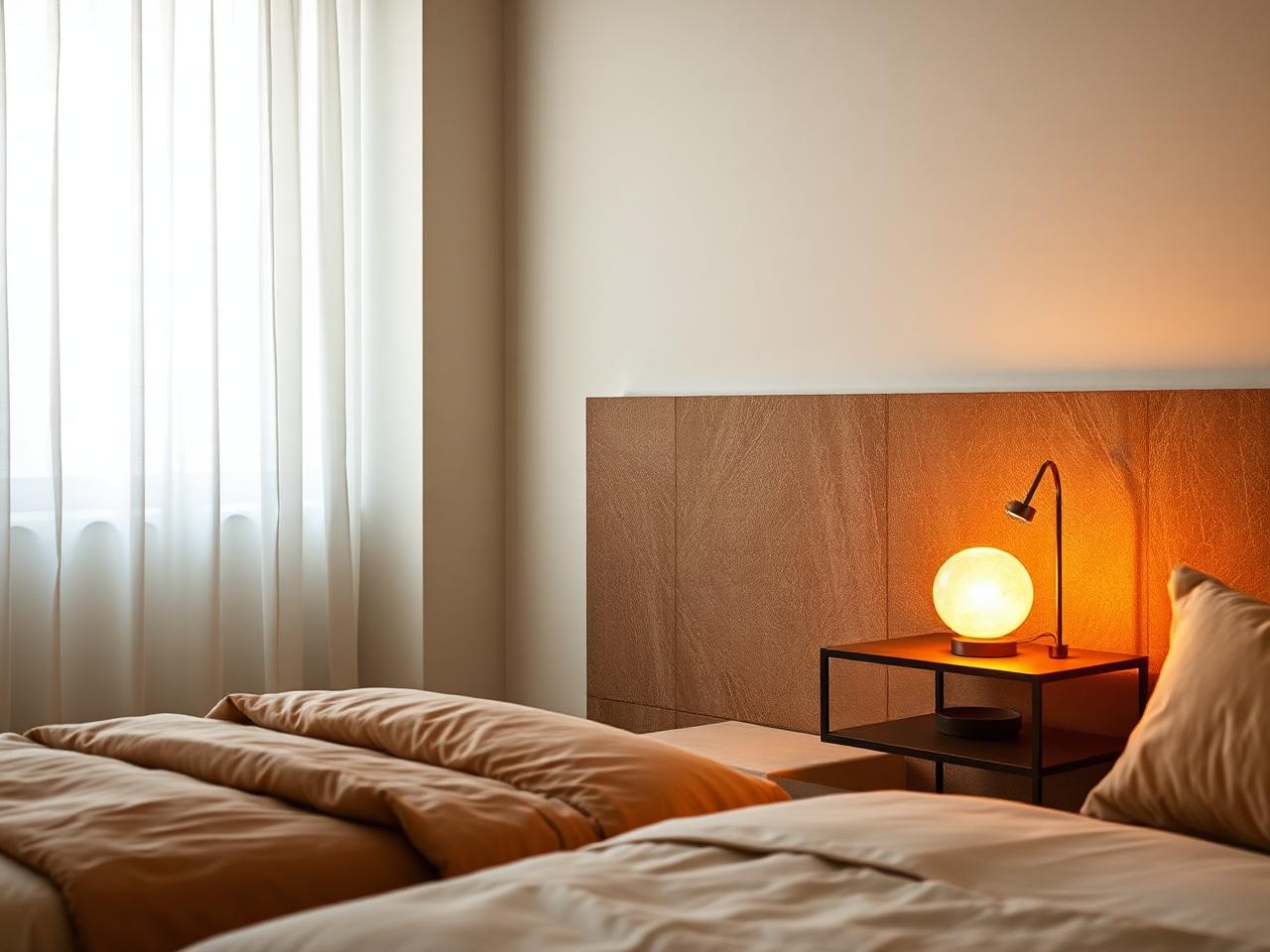
Plan a narrow bedside surface around supported placement, usable space and the view from bed. A smaller base alone does not establish a good fit.
By Lumière Light Studio Editorial
On a narrow nightstand, the most useful space is often the empty patch where a hand lands. Filling that patch with a lamp can make an otherwise tidy arrangement difficult to use. Start by keeping enough room for the things you actually put down and pick up, rather than treating the entire tabletop as available for lighting.
A lamp should rest directly on a stable surface that suits its instructions. A pile of books is not a way to correct its height. If a proposed lamp needs a makeshift platform, or its base would sit partly over the edge, reconsider the lamp or the location instead.
Count the space you can use, not the space you can see
Measure the nightstand's width and depth, then identify what reduces those dimensions in practice. A raised edge, a wall behind the table and a headboard projecting over it may all change where a lamp can go. Include any opening drawer and the space your hand needs beside it.
Compare the complete lamp with that space. Its base occupies the surface, while its shade or globe may extend above surrounding objects. A small listed diameter is not necessarily a base diameter. If the listing does not distinguish them, ask for clarification rather than assuming the widest part will clear the bed.
Leave room to set an object down without threading it beneath a shade. A layout that works only when everything is aligned precisely may be too crowded for daily use. Reducing decorative objects can help, but it is reasonable to need a book or glasses within reach.
Check the seated and reclining views separately
The table's height matters in relation to your mattress and posture. There is no fixed lamp height that settles this for every room. Sit against your normal pillows and consider where the light source would be; then lie back and check again. A lamp can look proportionate from the doorway but be directly in view from the pillow.
If reading is the main purpose, assess the actual page rather than the glow around the lamp. Keep a useful task light if the decorative option does not do that job. Changing the room's appearance and lighting a book are separate decisions, even when both happen beside the bed.
Change the location if the surface is already full
Check the control position and cable route before choosing a model. The switch needs to remain accessible without moving the lamp. Cables should not be pinched by furniture or run across the route beside the bed. Follow the product's placement and power instructions, and ask support about missing information.
If supported placement, access and everyday objects cannot coexist, a table lamp may be the wrong category for this spot. A suitable existing surface elsewhere can hold decorative light. A wall fixture may be another option, with qualified installation according to its instructions. Neither option requires squeezing a lamp onto a surface that cannot accommodate it.
Keep the next step small: clear the table, restore the essentials, then mark the remaining usable area. Choose within that area, or change the lighting location before adding anything.
The pieces referenced above. Check current specifications, delivery and return details on each product page before ordering.
The Editor's Notes
Get the Lumière styling notes
One quiet essay a month on layering light and shaping the atmosphere of a room. No noise. Unsubscribe anytime.
The Editor's Notes
One essay. One piece. Once a month.
Quiet dispatches from the studio. Unsubscribe anytime.
For the hour after
For the hour after the overhead light goes off
Shop lamps built for the quiet part of the evening.
Share this guide