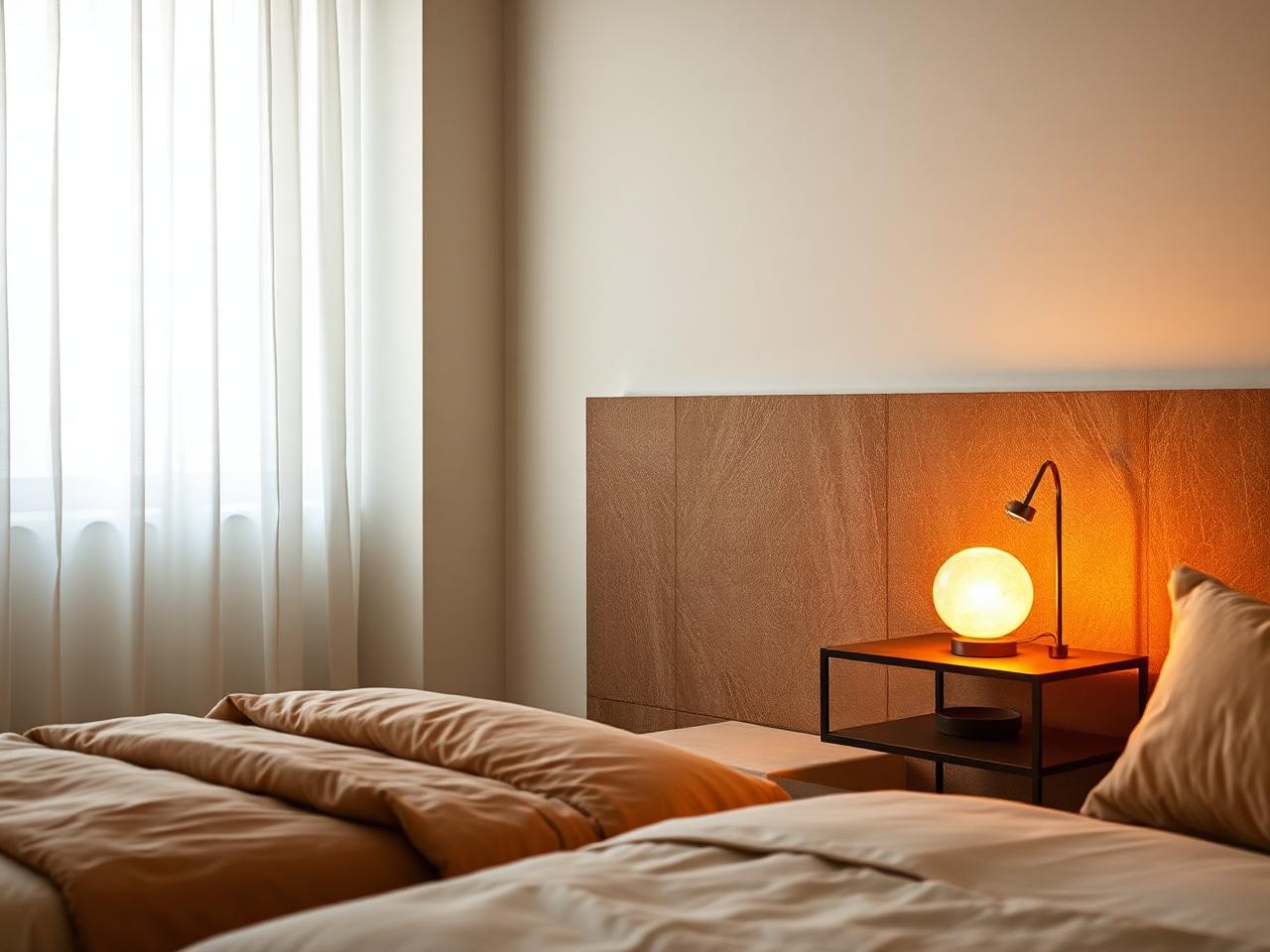
Bedroom Without Nightstands: Where Can the Light Go?
Compare existing furniture, floor space and professionally installed wall fixtures without inventing a bedside stand.
By Lumière Light Studio Editorial
Without a nightstand, separate two questions: where can a lamp stand properly, and where can you operate it conveniently? The nearest horizontal surface is not necessarily suitable. A good arrangement needs supported placement, an unobstructed route and controls that work from the position where you will use them.
There is no need to reproduce a conventional bedside pair. A room can have decorative light elsewhere while retaining its existing functional lighting. The right category depends on the space and permissions available, not on a requirement to place a lamp next to each pillow.
Existing furniture works only when its ordinary use still works
A stable dresser may offer a place for decorative light if the product instructions permit that location. Check its full surface and the way you use its drawers. The lamp should not need to be moved each time you reach for clothes, and its cable should not interfere with opening furniture.
A distant dresser does not automatically provide useful reading light at the bed. Assess that job separately. If a source is mainly there for atmosphere, describe it that way and keep whatever task lighting is needed. Distance and position matter more than a pleasing photograph of the arrangement.
Reject improvised stands such as book piles, stools used for sitting or precarious narrow ledges. A surface is not suitable merely because the base fits on it. Follow the lamp's placement instructions and consider ordinary movement around the bed, including making it and opening nearby storage.
Floor space is available only if the route stays clear
A floor lamp may avoid the need for a table, but it still occupies space. Compare the complete base and upper dimensions with the route beside the mattress. Include the space needed to get in and out of bed, use wardrobe doors and reach drawers.
Plan the power connection before committing to a position. A cable crossing the walking route is not a problem to conceal later with decor. Use only the specified cable or adapter, and ask support if the power requirements or supplied parts are unclear. Do not stretch a connection to reach an otherwise appealing corner.
Check the view from both upright and reclining positions. A floor lamp that looks unobtrusive while standing may expose its light source at pillow height. Also confirm that the actual control can be operated conveniently; height alone does not tell you where the switch is.
Wall fixtures exchange surface space for installation requirements
A wall fixture may be worth considering where no suitable floor or furniture position exists. It needs qualified installation according to its instructions, along with any permissions required for the room. Do not treat an empty patch of wall as proof that any fixture can go there.
Decide the intended role and operating position before discussing placement with the installer. Include the bed's actual position and whether the furniture layout is likely to change. Ask about the specific fixture rather than assuming that all wall lights have the same mounting or control arrangement.
Sketch one workable option in each available category, then remove anything that blocks access or depends on an improvised support. If none remains, keep the existing lighting and seek qualified advice rather than forcing a lamp into the bedside gap.
The Editor's Notes
Get the Lumière styling notes
One quiet essay a month on layering light and shaping the atmosphere of a room. No noise. Unsubscribe anytime.
The Editor's Notes
One essay. One piece. Once a month.
Quiet dispatches from the studio. Unsubscribe anytime.
For the hour after
For the hour after the overhead light goes off
Shop lamps built for the quiet part of the evening.
Share this guide