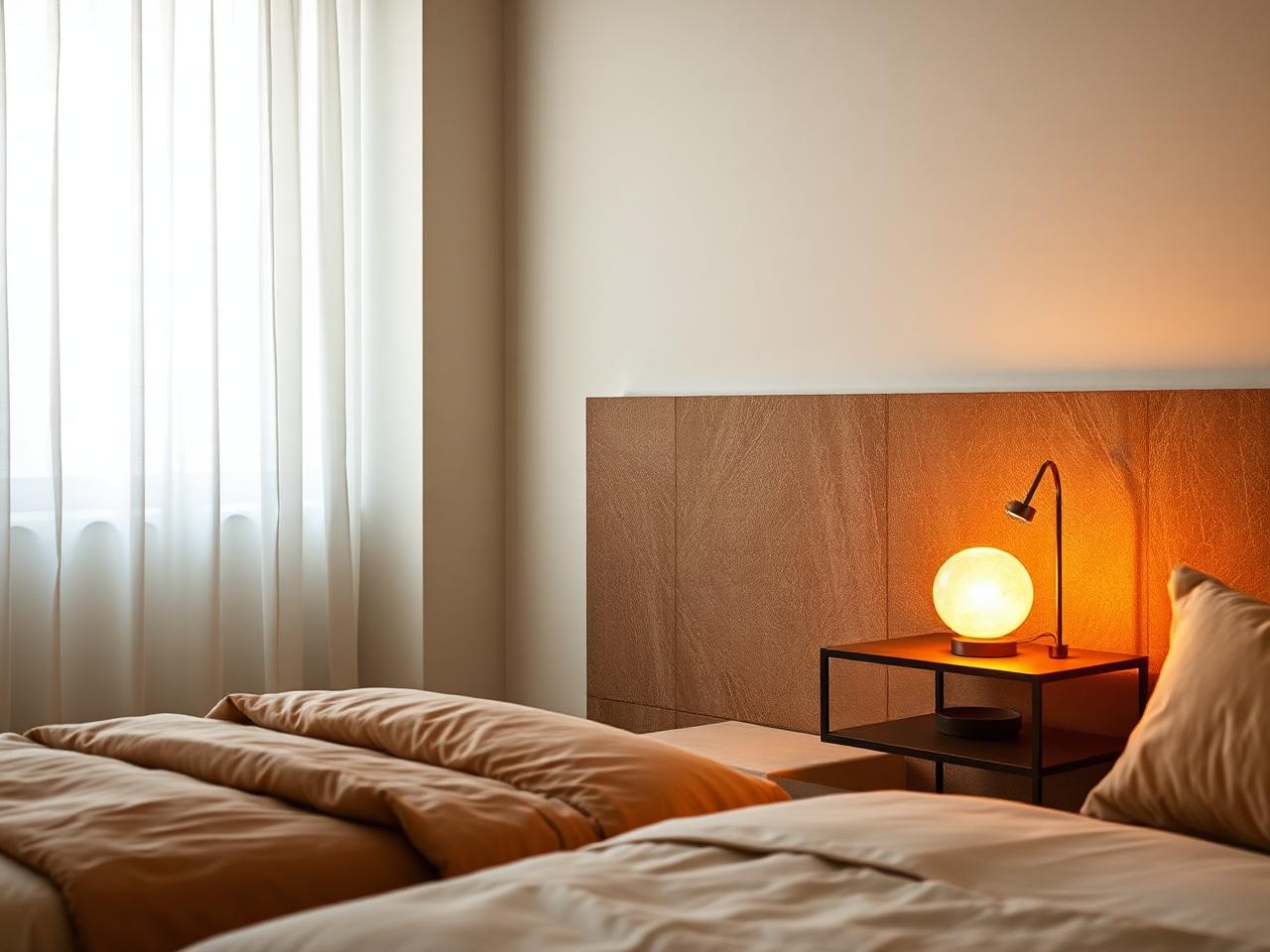
Where Should a Bedside Lamp Switch Be? Test Your Reach
Confirm the exact control position, then rehearse reaching it from the posture in which you will use the lamp.
By Lumière Light Studio Editorial
A switch is convenient only from the position where you need it. A lamp can be easy to operate while standing beside the bed and awkward once you are leaning against the pillows. Before choosing a model, identify the control itself and rehearse the movement needed to reach it.
The word touch does not establish where to put your hand, and a photo of a lamp's front may not show an inline switch. The useful information is the location and ordinary operation of the exact control, not a general impression that the lamp looks simple.
Confirm the control before planning around it
Read the listing and instructions for the exact model. Look for whether the control is on the base, elsewhere on the lamp or along its cable. If that location is unclear, ask for a description or relevant photograph. Do not infer an unseen switch from a similar-looking product.
Separate switching from adjustment. A touch control may operate on and off without adjusting brightness. Other controls may change settings, but those functions need confirmation. Decide what you actually need to do from bed, then check whether the listed operation supports it.
If the control is on the cable, ask where it lies relative to the lamp where that detail matters. A photograph with the cable folded away does not establish whether the switch will sit beside the table, behind it or farther toward the connection point. Leave unknowns unresolved rather than assuming a favourable position.
Rehearse the movement without moving the lamp
Sit against your ordinary pillows and mark the proposed control position on the empty furniture using a small piece of paper. Reach toward the mark without leaning on a lamp or pulling any cable. Repeat while reclining if that is how you expect to switch it off.
Restore the things normally on the table and repeat. A reachable position on an empty surface may be blocked by a book or glasses during use. Check that the route of your hand does not pass around the shade or require you to shift another object first.
For a shared bed, each person should check their own side. Different table heights and postures can make the same control arrangement work differently. Avoid assuming that a matching pair will feel equally convenient to both people.
Adjust the position or choose a different arrangement
A modest change in position may help if it remains within the lamp's placement instructions and leaves the base fully supported. Do not bring the lamp to the edge or leave the cable under tension to make the switch reachable. A convenient control does not justify unsuitable placement.
If the reach remains awkward, compare another model with a confirmed control position or reconsider the lighting location. Do not add unverified control accessories or alter the lamp. For questions about compatible operation, ask support rather than assuming an accessory will work.
Finish by describing the movement in one sentence: from your usual posture, your hand can reach the confirmed control without moving the lamp. That is a more useful test of convenience than how tidy the cable looks in a styled image.
The Editor's Notes
Get the Lumière styling notes
One quiet essay a month on layering light and shaping the atmosphere of a room. No noise. Unsubscribe anytime.
The Editor's Notes
One essay. One piece. Once a month.
Quiet dispatches from the studio. Unsubscribe anytime.
For the hour after
For the hour after the overhead light goes off
Shop lamps built for the quiet part of the evening.
Share this guide