Unequal Nightstands: Plan Each Lamp Before Matching the Pair
Different tables do not require identical lamps. Compare each side’s furniture height, usable space and view from bed first.
By Lumière Light Studio Editorial
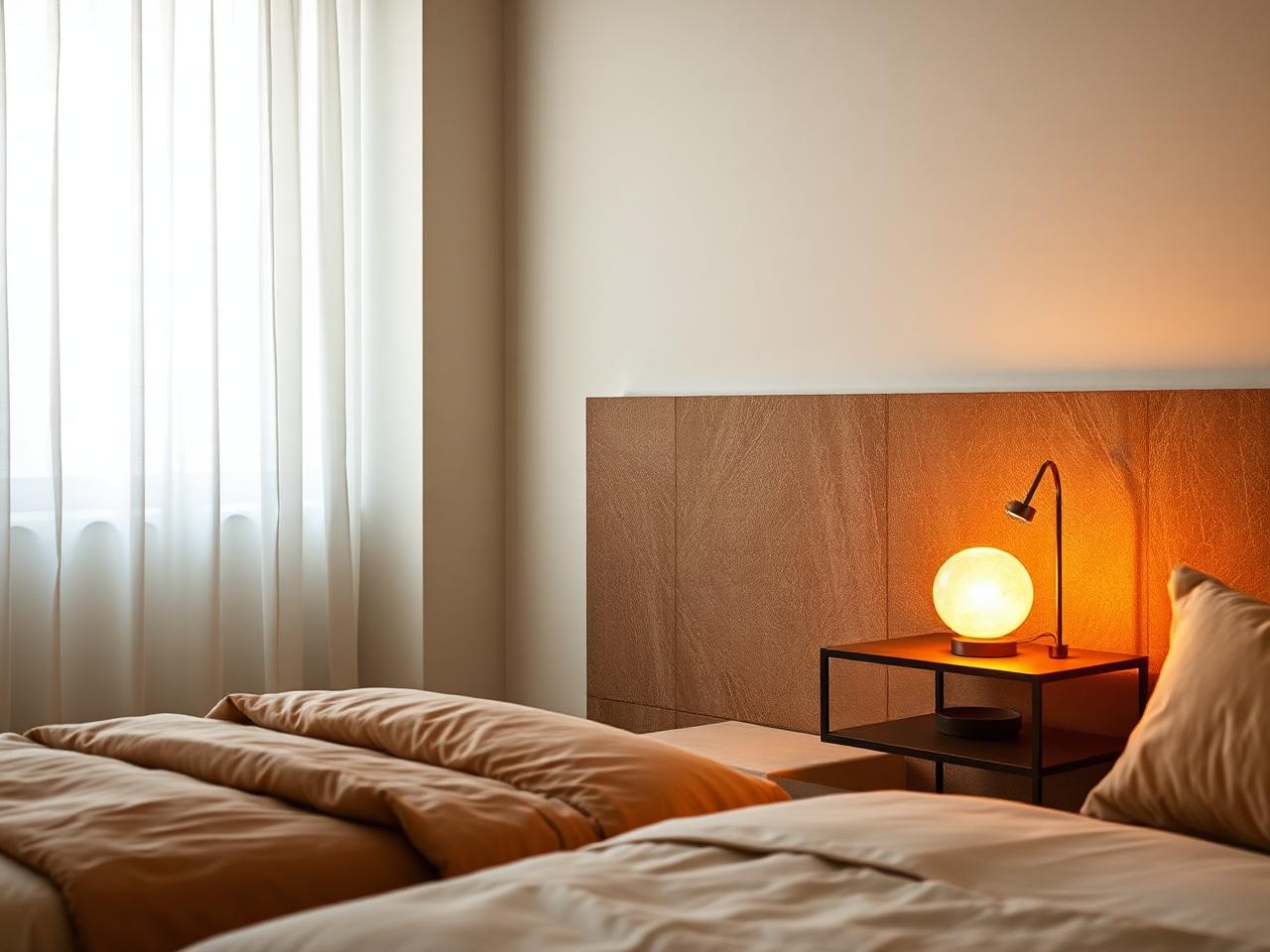
Two different nightstands create two different starting points, even when they frame the same bed. Matching lamps may look appealing, but the same lamp can sit at different heights and occupy a different share of each surface. Plan both sides independently before deciding how much visual repetition you want.
The aim is not to disguise the furniture difference. It is to make each side usable and choose a relationship between them that you like. Identical tops, equal lamp heights and matching silhouettes are possible preferences, not requirements for a considered bedroom.
Compare the two sides on the same sheet
Record each table's height, width and depth. Add the mattress height and note any raised edges or projecting headboard parts. Then list what each person actually keeps nearby. The smaller table may have fewer objects, while the larger one may already carry several essentials.
Compare available space rather than overall furniture size. A broad chest can have little usable room once its ordinary contents are present. A modest open tabletop may offer more flexibility. Include the clearance needed to open drawers and place a hand beside the lamp.
Sit on each side as it is normally used. The combination of table height and lamp height determines where the source appears, but posture changes the view too. Two identical lamps do not guarantee identical views. Keep reading needs separate from the appearance of the pair.
Choose which visual feature to repeat
If the same lamp works practically on both tables, repetition can give the bed a clear frame. Check the fit on the more constrained side first. Do not assume that success on the larger table establishes suitability for the other one.
If identical lamps do not work, consider repeating one visible feature instead: a related outline, a finish or a similar degree of visual simplicity. These are styling options rather than rules. Different overall heights may look intentional when each lamp belongs comfortably on its own furniture.
Avoid correcting unequal furniture by raising a lamp on books or an unstable stand. Keep each lamp directly on an appropriate stable surface according to its instructions. If one side cannot hold a lamp properly, a different fixture category may be more useful than forcing a matched arrangement.
Let operation be different when needs differ
Confirm the control location and power arrangement for each proposed model. One person's convenient reach may not be the other's. A table with drawers or a taller edge can also make a control harder to access, even when the lamp itself fits.
Check the two lamps together after dark if possible. One source may be more visible from the opposite pillow than from its own side. A visual pair should not prevent either person from using the bed or seeing the task in front of them.
End with a short decision for each side: suitable surface, suitable lamp role and reachable control. Then view the bed from the doorway and decide whether the relationship looks right to you. Matching is the final styling choice, not the first practical requirement.
The Editor's Notes
Get the Lumière styling notes
One quiet essay a month on layering light and shaping the atmosphere of a room. No noise. Unsubscribe anytime.
The Editor's Notes
One essay. One piece. Once a month.
Quiet dispatches from the studio. Unsubscribe anytime.
For the hour after
For the hour after the overhead light goes off
Shop lamps built for the quiet part of the evening.
Share this guide