A Bedside Table Shared with a Charger and Books
Plan the movements around charging and reading before allocating the remaining surface to a lamp.
By Lumière Light Studio Editorial
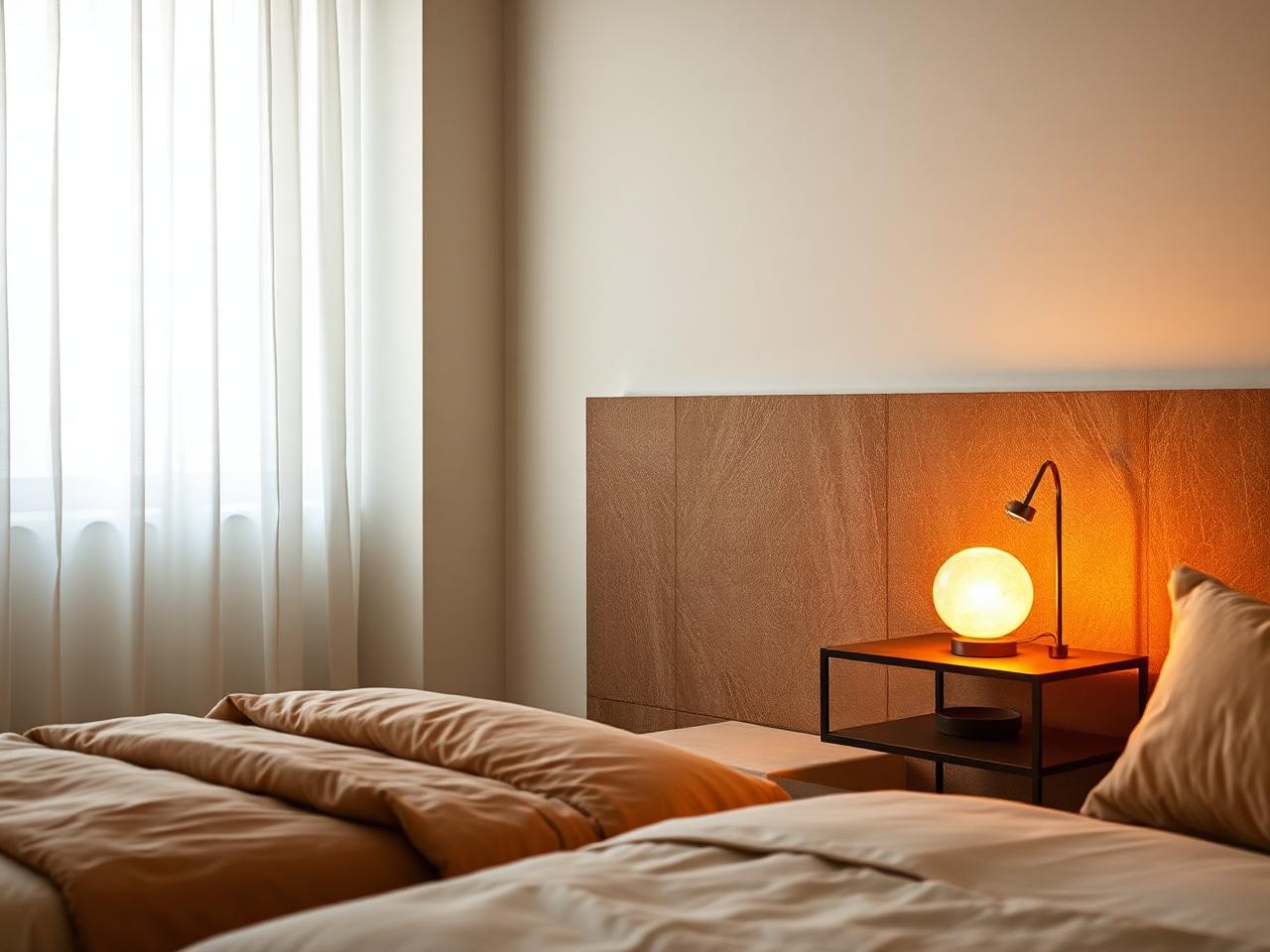
A bedside table can look spacious until the phone is charging and the book is open. The problem is not simply the number of objects. It is the space those objects need while being used, including the route your hand takes between them. Plan that moving arrangement before choosing a lamp for the remaining area.
This approach starts with a working surface rather than a styled still life. Keep the things you genuinely use nearby, but distinguish those from items that could live elsewhere. The lamp should coexist with ordinary actions without becoming an obstacle you shift several times each evening.
Give the book and charger their working space
Put your usual book on the table, both closed and open as you normally leave it. Include reading glasses if you use them. Notice whether the book projects into the space a lamp would occupy or whether reaching for it would pass under a shade.
Place the phone and its charger in their normal configuration. Follow the charger's own placement and clearance instructions; do not hide it beneath books or assume a decorative tray is suitable. Include the cable's connection point and the room needed to pick up the phone without tugging it.
Separate the lamp's power arrangement from the phone's charging arrangement. A lamp should not be assumed to include a phone-charging feature or a useful spare connection. Check each product independently, and use only the cable or adapter its listing or manufacturer specifies.
Reserve access before assigning the lamp a corner
Rehearse three actions: putting the book down, lifting the phone and operating the light. Start from your normal posture in bed. If your arm crosses the proposed lamp position during any of them, that corner may not be available even if the base fits.
A lamp's widest point matters above the surface too. A globe or shade may occupy the space through which the book is lifted. Compare the complete dimensions rather than just a base outline. Keep the base fully supported and follow any stated clearances.
Keep the lamp control exposed and reachable in both the reading and charging arrangements. A switch that disappears behind the open book is inconvenient even though it looked accessible on an empty table. Avoid solving this by moving the lamp closer to the edge.
Change the storage or lighting role when the actions conflict
Move occasional books to another appropriate storage location if that suits your routine. Keep the current book accessible rather than trying to accommodate an entire reading pile on the same small surface. The purpose is to preserve useful access, not to enforce a sparse aesthetic.
Do not use books as a lamp pedestal to create space beneath or beside it. If the essentials and a properly supported lamp cannot coexist, reconsider the lighting category or use a suitable existing surface elsewhere. Wall fixtures need qualified installation according to their instructions.
Leave the table in its ordinary evening state for the final check. The useful next step is to repeat those three actions without touching or shifting the lamp. If they work only in an unusually tidy arrangement, revise the plan before choosing a product.
The Editor's Notes
Get the Lumière styling notes
One quiet essay a month on layering light and shaping the atmosphere of a room. No noise. Unsubscribe anytime.
The Editor's Notes
One essay. One piece. Once a month.
Quiet dispatches from the studio. Unsubscribe anytime.
For the hour after
For the hour after the overhead light goes off
Shop lamps built for the quiet part of the evening.
Share this guide