Measure a Bedside Lamp in Your Room, Not in the Photo
Read the listed dimensions, make a paper plan and check the complete lamp against furniture, everyday objects and your view from bed.
By Lumière Light Studio Editorial
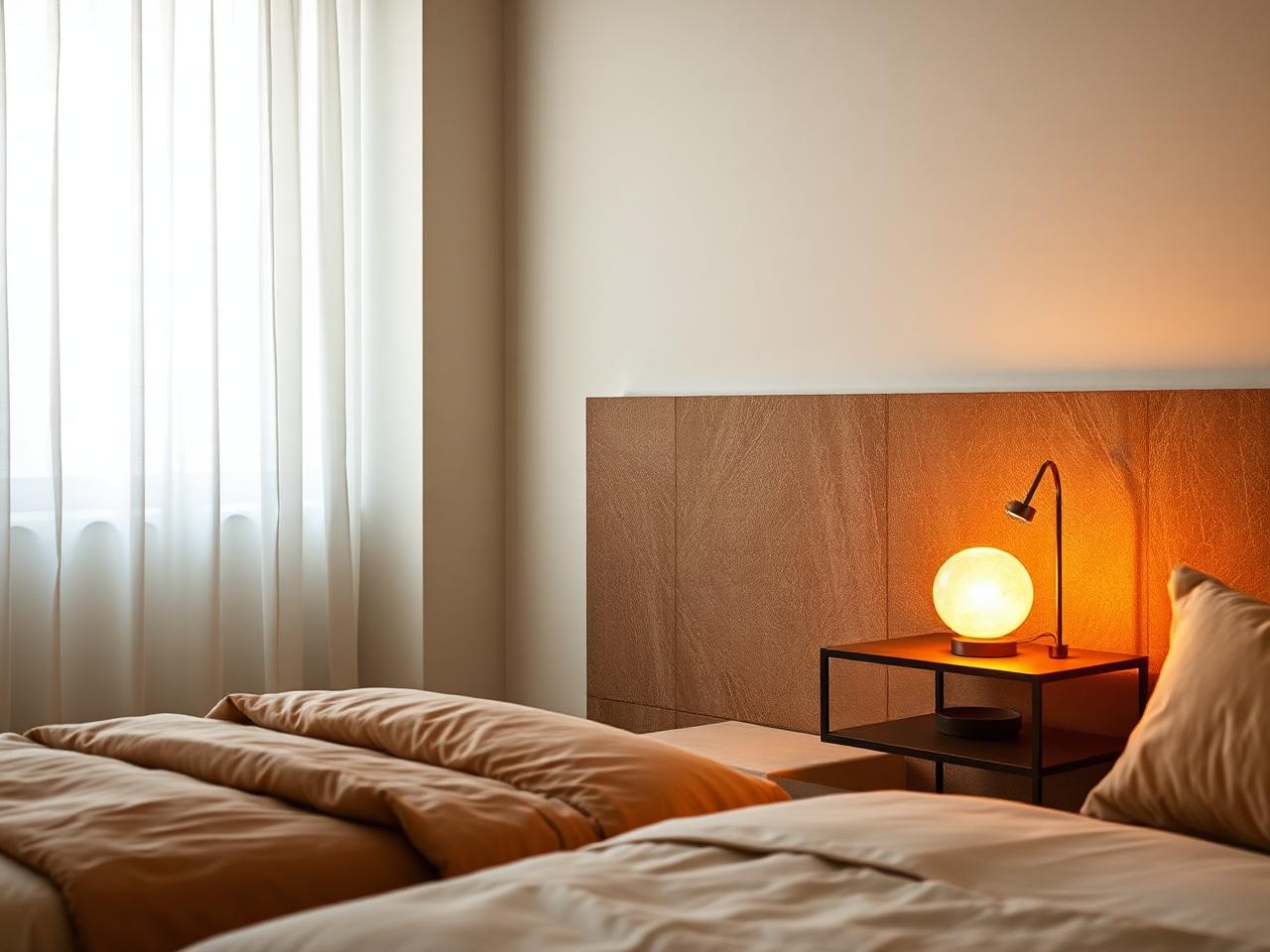
A product photograph shows a composition, not a measurement of your bedside area. Before deciding that a lamp looks small enough, translate its listed dimensions into your own room. A paper plan can expose a crowded layout, but only if you distinguish the base from the lamp's widest point and overall height.
Treat this as a fit exercise rather than a demonstration of light output. Paper cannot tell you whether a shade will be bright in view or whether a page will be well lit. It can show where the object would occupy space and which measurements still need clarification.
Read each dimension as a different boundary
Overall height describes the lamp from its bottom to its highest point. Base width describes the part standing on the furniture, when the listing specifically identifies it. Shade width, globe diameter or maximum width may describe a broader part above the surface. Do not treat these terms as interchangeable.
| Listed measurement | What to check in the room |
|---|---|
| Base width and depth | Supported space on the furniture |
| Shade or globe width | Clearance beside bedding and nearby objects |
| Overall height | Position relative to headboard and view from bed |
| Unspecified diameter | Ask which part of the lamp it describes |
For an illustrative example, a lamp with a 12 cm base and a 24 cm shade occupies more overhead space than its base outline suggests. Those are invented example dimensions, not measurements of a Lumière product. If only one diameter is listed, do not invent the other.
Make two outlines when two widths are known
Measure the usable tabletop, including raised edges and anything that projects above it. Draw the known base outline on paper at actual size and lay it on the surface. Leave the lamp's base fully inside the supported area rather than aligning it precariously with the edge.
Make a separate outline for the widest stated part. Keep this on the tabletop as a planning reference, not suspended on an improvised stand. It shows the area above which the shade or globe may project; the lamp's actual shape still determines the details.
Restore the book, glasses and other essentials. Rehearse picking them up and putting them down around the outlines. Then check drawers, nearby doors and the route beside the bed. A footprint that fits an empty table can still interfere with ordinary use.
Check height separately and record the limits
Use a tape measure from the tabletop to locate the listed overall height. Have another adult hold the measure if helpful rather than building a model on a loose stack of objects. Look from your usual seated and reclining positions and compare with the headboard.
Overall height alone does not locate the bottom of a shade or reveal whether the source will be visible. Record those unknowns and ask for further dimensions or a useful view when they matter. Do not use the paper exercise as proof of glare control or reading suitability.
The final result should be a short fit record: known base space, known maximum width, overall height and unanswered questions. Check the current product specifications before deciding. Keep the paper plan only as a spatial reference, and resolve missing dimensions instead of measuring apparent proportions in the photograph.
The Editor's Notes
Get the Lumière styling notes
One quiet essay a month on layering light and shaping the atmosphere of a room. No noise. Unsubscribe anytime.
The Editor's Notes
One essay. One piece. Once a month.
Quiet dispatches from the studio. Unsubscribe anytime.
For the hour after
For the hour after the overhead light goes off
Shop lamps built for the quiet part of the evening.
Share this guide