Lumens, Lux and Watts: Three Different Lighting Questions
Separate emitted light, light arriving on a surface and electrical power, with a hypothetical example that shows why the numbers are not interchangeable.
By Lumière Light Studio Editorial
A watt figure is not a brightness verdict. It tells you about electrical power, while a lumen figure describes emitted visible light. Neither directly tells you how much light will arrive on the page, table or wall you want to see. Those are different questions with different units.
Separating them makes a product description easier to read. It also helps identify what is missing. A listing can provide a power figure and still leave the useful light at your chosen surface unknown. That gap should remain visible rather than being filled with a guessed conversion.
Each unit describes a different quantity
| Unit | Standard definition | The question it answers |
|---|---|---|
| Lumen | Total visible light emitted | How much visible light is emitted? |
| Lux | Lumens per square metre arriving on a surface | How much light arrives per unit of surface area? |
| Watt | Electrical power used | How much electrical power is used? |
A lumen figure is not a guarantee about any particular surface. Light may spread in several directions, and only some of it reaches the area you care about. A lux value belongs to a surface and a particular arrangement, rather than being a free-standing promise about an entire room.
Watts cannot be converted into lumens by a single rule that applies to every lamp. They describe a different quantity. Avoid selecting a decorative light as a task solution simply because its power figure resembles a lamp you already use.
A hypothetical example separates emission from arrival
Imagine that, in a hypothetical arrangement, 200 lumens arrive evenly across a surface of two square metres. The illuminance is 100 lux: 200 lumens divided by two square metres. These are illustrative values, not measurements of a Lumière product or a recommended level for an activity.
Now imagine the same 200 lumens arriving evenly across four square metres. The result is 50 lux. This arithmetic only works because the hypothetical example specifies the light arriving and assumes an even spread. It does not establish what any real lamp will deliver from its emitted output.
If a source emits 200 lumens, it would be a mistake to assume all 200 arrive on your table. Some may go elsewhere. The example is a way to understand the units, not a method for predicting room performance from a product photograph.
Distance and shade change the useful result
Changing the distance between a source and a surface changes the way its light spreads across that surface. A shade can redirect or limit where light goes. Surrounding walls and objects also affect the arrangement. For this practical comparison, there is no need to pretend those relationships yield a precise result without measurement.
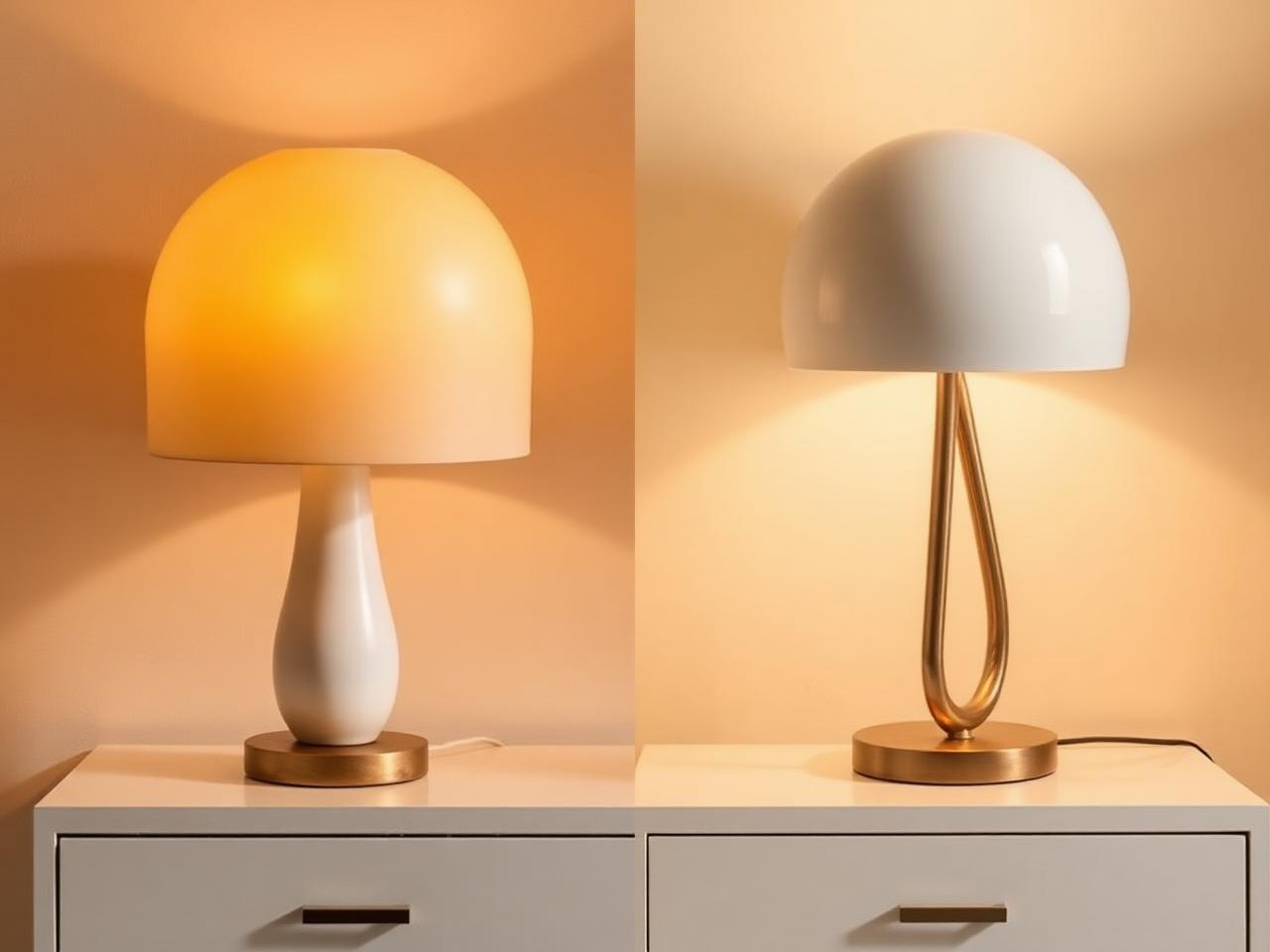
A lamp that looks bright as an object may provide little useful light on a nearby page. Another arrangement may put more light on the page while showing less of the source. Assess the intended surface and visible glare, not just the glow of the shade.
Missing output information calls for an in-room comparison
Lumière listings do not publish verified lumen output, so compare in the room rather than inferring output from watts or imagery. This limitation also means a decorative lamp should not be presented as a proven reading or task solution.
Name the surface you need to see and note what your existing arrangement leaves unresolved. Check the current product specifications, ask about missing information, and keep any performance judgment tied to the actual placement. Understanding the units should make uncertainty clearer, not disguise it.
The Editor's Notes
Get the Lumière styling notes
One quiet essay a month on layering light and shaping the atmosphere of a room. No noise. Unsubscribe anytime.
The Editor's Notes
One essay. One piece. Once a month.
Quiet dispatches from the studio. Unsubscribe anytime.
For the hour after
For the hour after the overhead light goes off
Shop lamps built for the quiet part of the evening.
Share this guide