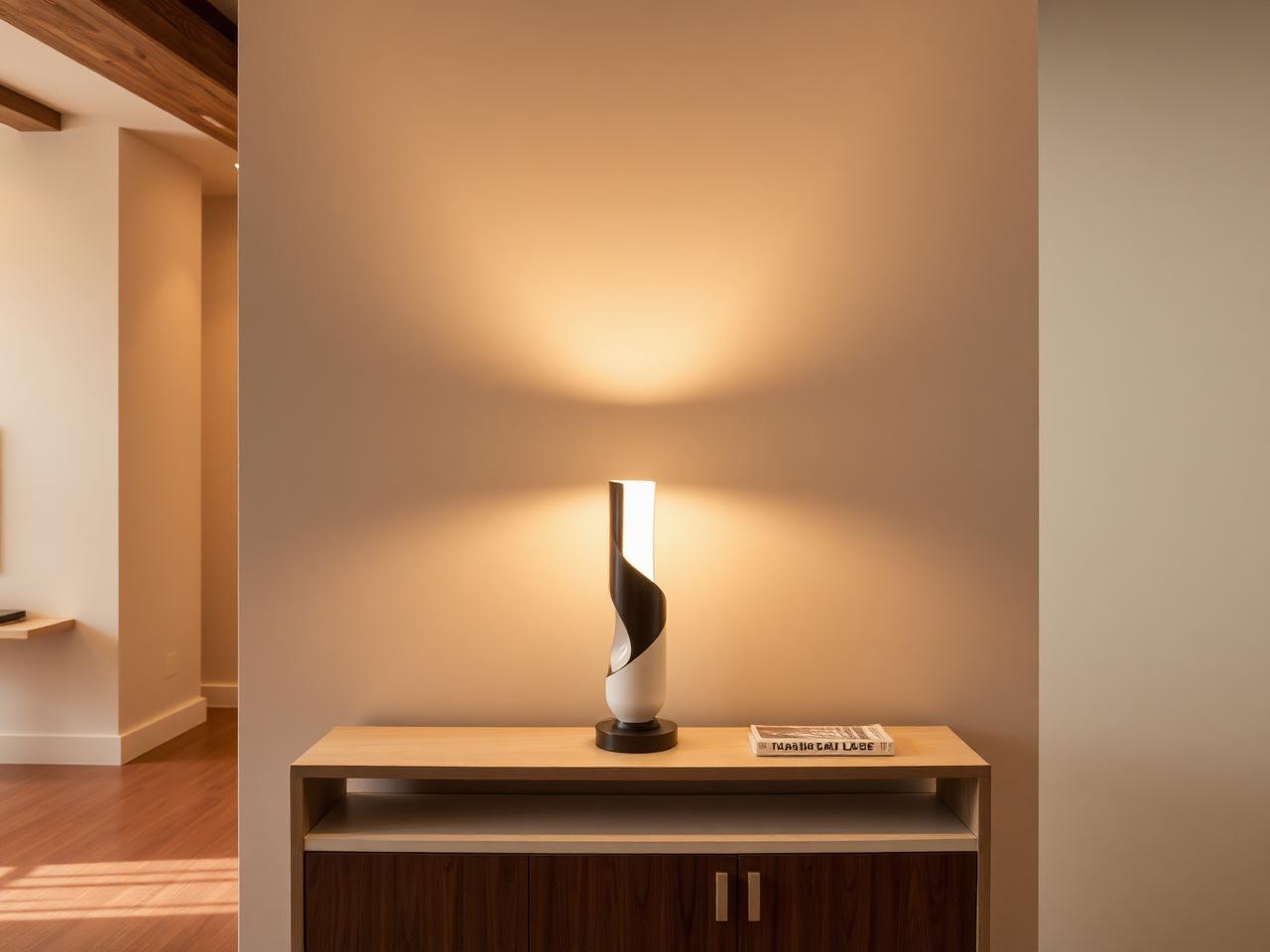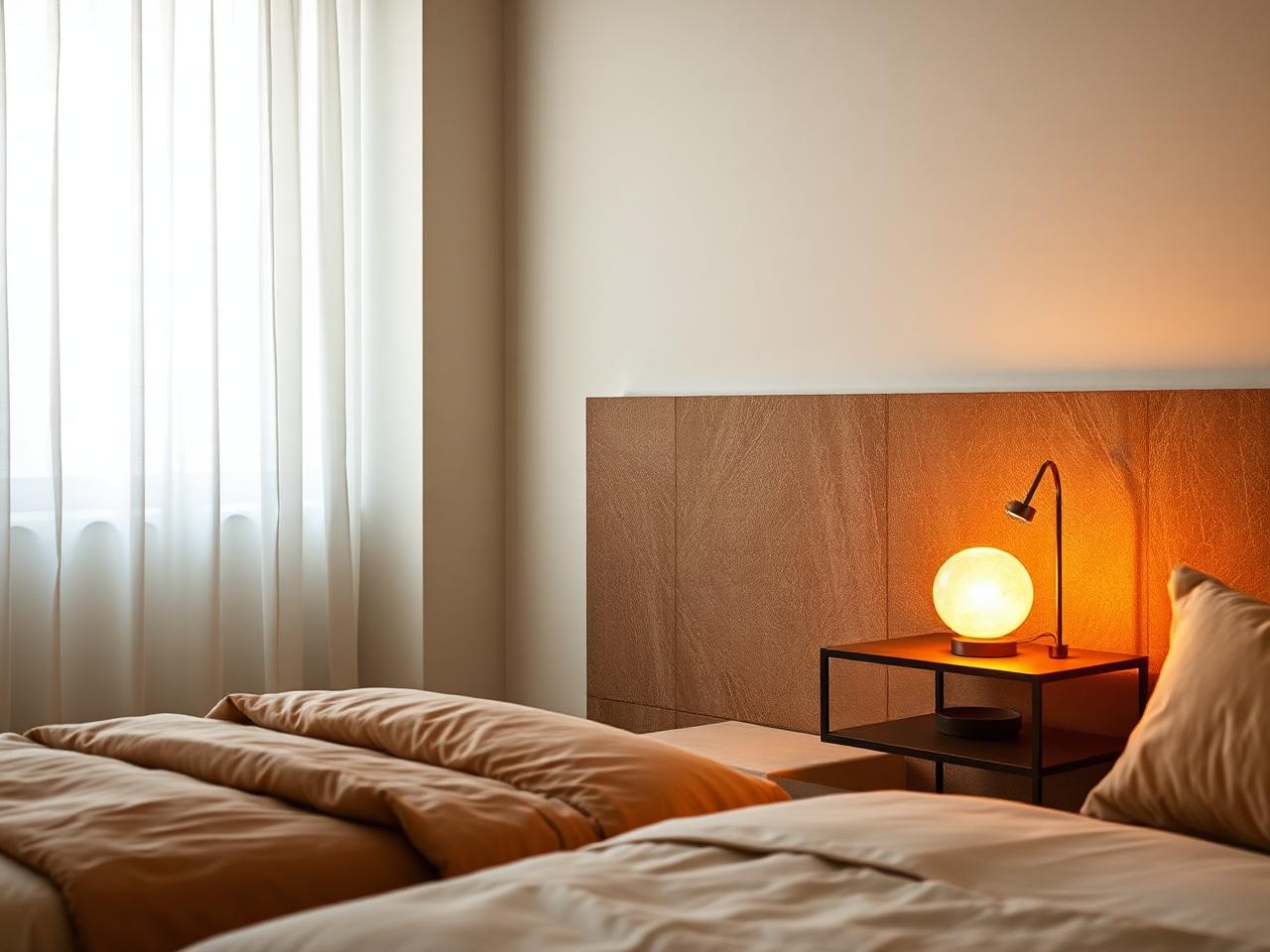
Warm or Cool Light in the Bedroom: Compare What You Prefer
Separate light colour from brightness, then compare the appearance of your bedroom under the sources you actually use.
By Lumière Light Studio Editorial
A warm lamp beside a cool ceiling light can look deliberately contrasting or simply mismatched. The difference is partly personal and partly about how the sources are used together. Choosing bedroom light colour is not a test with one correct answer, and a colour label does not tell you how bright the room will be.
Warm and cool describe the appearance of white light. Colour temperature is commonly expressed in kelvin: lower values describe warmer-looking white light, while higher values describe cooler-looking white light. This is different from brightness. A warm source can look bright, and a cool source can be dim.
Compare colour and brightness as separate choices
If the room feels too stark, first describe what you are noticing. Is the colour too cool for your taste, the source too bright in view, or the light concentrated in the wrong place? These are different problems. Changing colour alone will not necessarily remove a visible reflection or put light onto a page.
Use the listing's stated colour information rather than inferring a value from a photograph. A description such as warm white is broader than an exact specification. If a particular value matters to your choice and is not listed, ask for it. Do not assign a number based on how amber a shade appears online.
A lamp with adjustable colour may offer useful choice, but only if that feature is confirmed for the exact model. Adjustable brightness does not by itself establish adjustable colour. Check what the control changes and how you select each setting before planning different configurations around it.
Judge the room with its ordinary materials in place
Look at the bedding, curtains, wall paint and visible furniture under your existing lighting. Notice which combinations you prefer. Warm light may suit your preferred view of wood and textiles; cooler light may be a deliberate choice elsewhere. Neither preference proves that a source will render every colour accurately.
For getting dressed, inspect the actual clothes rather than assuming that a warm or cool label guarantees colour accuracy. Daylight and other rooms can make the same fabric look different. A colour-temperature number alone is not a complete account of how objects will appear.
Compare at the time the bedroom is usually used. Daylight can make the contrast between sources less apparent than it becomes after dark. Include your usual curtains or blinds and look from both the bed and the doorway. Photos can record the arrangement, but they are not a reliable substitute for seeing the room yourself.
Coordinate sources that will be on together
Matching light colours is a straightforward aesthetic option when several lamps share one view. Contrast is also possible if you like the result. Consider the combination you will actually use, rather than demanding that every fixture in the room have an identical label.
Avoid changing several things at once if you are trying to identify a preference. Try a different available setting first, then compare the same furniture and viewing position. For replaceable light sources, follow the fixture's compatibility instructions rather than choosing solely by colour or increasing wattage to chase brightness.
Your next step is to write down whether you want a warmer appearance, a cooler appearance or simply less visible brightness. That distinction makes the next specification worth checking much clearer.
The pieces referenced above. Check current specifications, delivery and return details on each product page before ordering.
The Editor's Notes
Get the Lumière styling notes
One quiet essay a month on layering light and shaping the atmosphere of a room. No noise. Unsubscribe anytime.
The Editor's Notes
One essay. One piece. Once a month.
Quiet dispatches from the studio. Unsubscribe anytime.
For the hour after
For the hour after the overhead light goes off
Shop lamps built for the quiet part of the evening.
Share this guide