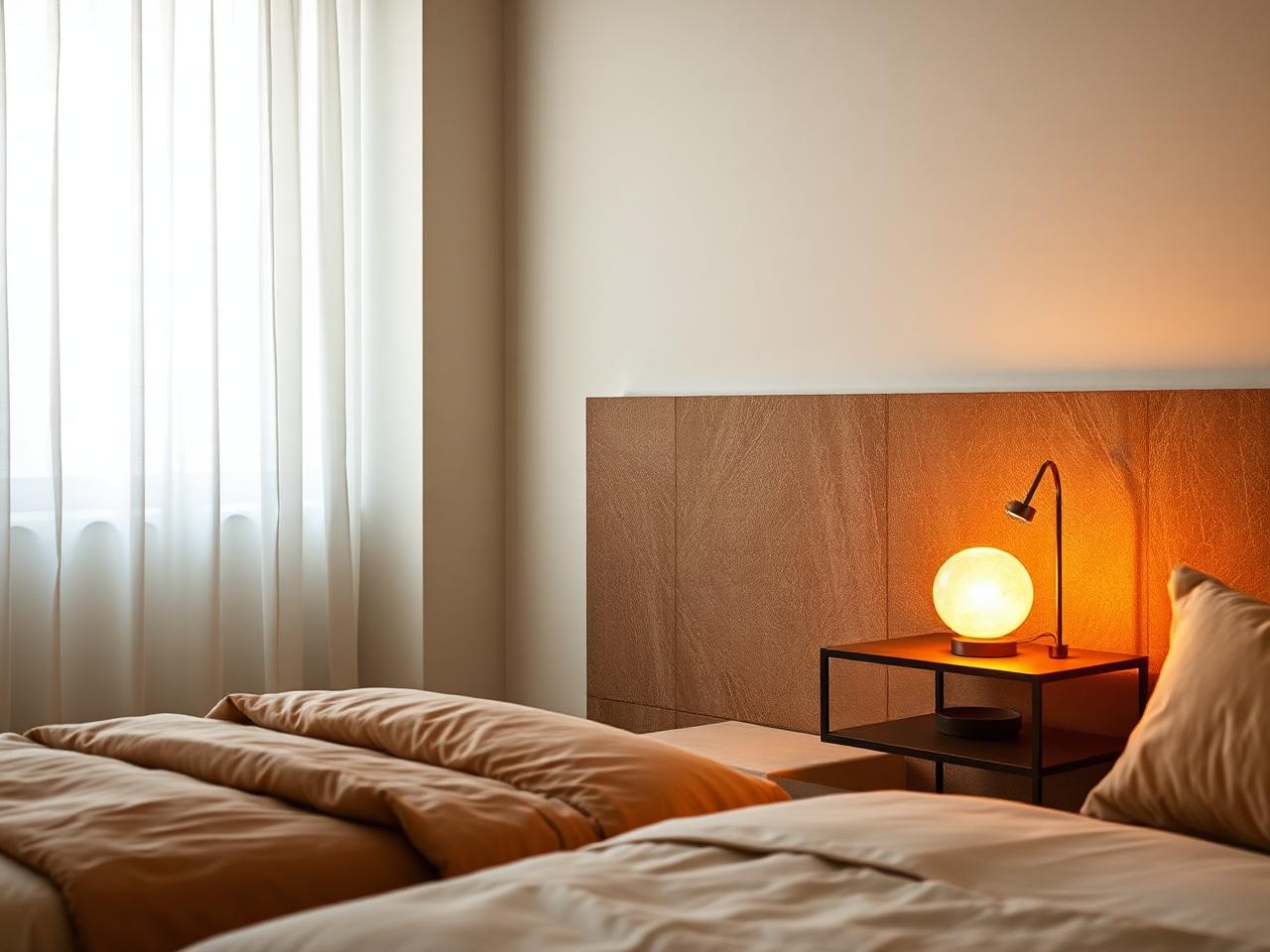
Bedroom Lighting for the Evening: Choose a Setup, Not a Deadline
Build an evening lighting arrangement around what you do in the bedroom, without a fixed switch-off time or a promise about sleep.
By Lumière Light Studio Editorial
Seven o'clock is not a lighting specification. Some people are dressing for work then; others are reading, tidying or already using the bedroom for a quiet evening. A useful lighting plan responds to those activities rather than asking the room to follow a universal deadline.
The aim here is a room that looks and works the way you prefer after daylight fades. Warm, lower light reads as calmer to many people, but that is a description of atmosphere, not a promised result. You can prefer a brighter room, use a ceiling fixture or change your mind between activities.
Keep the light that serves the current activity
Start with the things that require clear visibility: choosing clothes, finding objects, reading and moving around furniture. Keep the lighting needed for those tasks. A decorative lamp is an addition to the plan, not proof that every other source can be switched off.
Then identify where you would like a gentler visual background. A lamp on an appropriate stable dresser may light a different part of the room from a bedside lamp. The point is not to own a prescribed number of lamps. It is to avoid relying on one source for jobs it cannot cover.
From the bed, look toward the wardrobe and the door. From the door, look back toward the bed. A setup can be attractive from one position and awkward from another. Keep the route through the room visible rather than lowering the light purely to achieve a photograph-like effect.
Adjust the arrangement before adding another lamp
An existing lamp may work differently in another permitted position. Check its instructions, clearances and cable route before moving it. Use the furniture's own stable surface, not a bench used for sitting or a stack of objects. Give the lamp enough room to remain undisturbed during ordinary use.
Evaluate the illuminated room, not just the shade. A bright reflection in a mirror or bare window may attract attention from bed. Compare the view with your normal curtains or blinds in place. Moving a lamp within a suitable surface may change the reflection without requiring another purchase.
If a lamp has adjustable brightness, try the settings it actually provides. If it does not, decide whether its fixed output suits the intended role. Dimming is an option, not a requirement for every bedroom, and a decorative lamp should not be assumed to have it.
Make the setup easy to repeat
Choose controls that the person using each light can reach. A plan that requires crossing the room several times may be less appealing in practice than a simpler arrangement. Shared bedrooms also need agreement about which sources stay on during different activities.
Think of the evening setup as one available configuration, alongside the brighter configuration for practical tasks. It can change with the season, the furniture layout or the people using the room. There is no need to defend a fixed hour or a strict ban on overhead light.
Try the arrangement during an ordinary evening and note one thing that still feels visually awkward or inconvenient. Adjust that detail first. A bedroom plan becomes useful through clear choices about visibility, placement and access, not through a rule on the clock.
The pieces referenced above. Check current specifications, delivery and return details on each product page before ordering.
The Editor's Notes
Get the Lumière styling notes
One quiet essay a month on layering light and shaping the atmosphere of a room. No noise. Unsubscribe anytime.
The Editor's Notes
One essay. One piece. Once a month.
Quiet dispatches from the studio. Unsubscribe anytime.
For the hour after
For the hour after the overhead light goes off
Shop lamps built for the quiet part of the evening.
Share this guide