Putting a Lamp Near a Mirror: Test the Actual Sightlines
Check the reflected source from the doorway and your usual seat before choosing a centred or offset arrangement.
By Lumière Light Studio Editorial
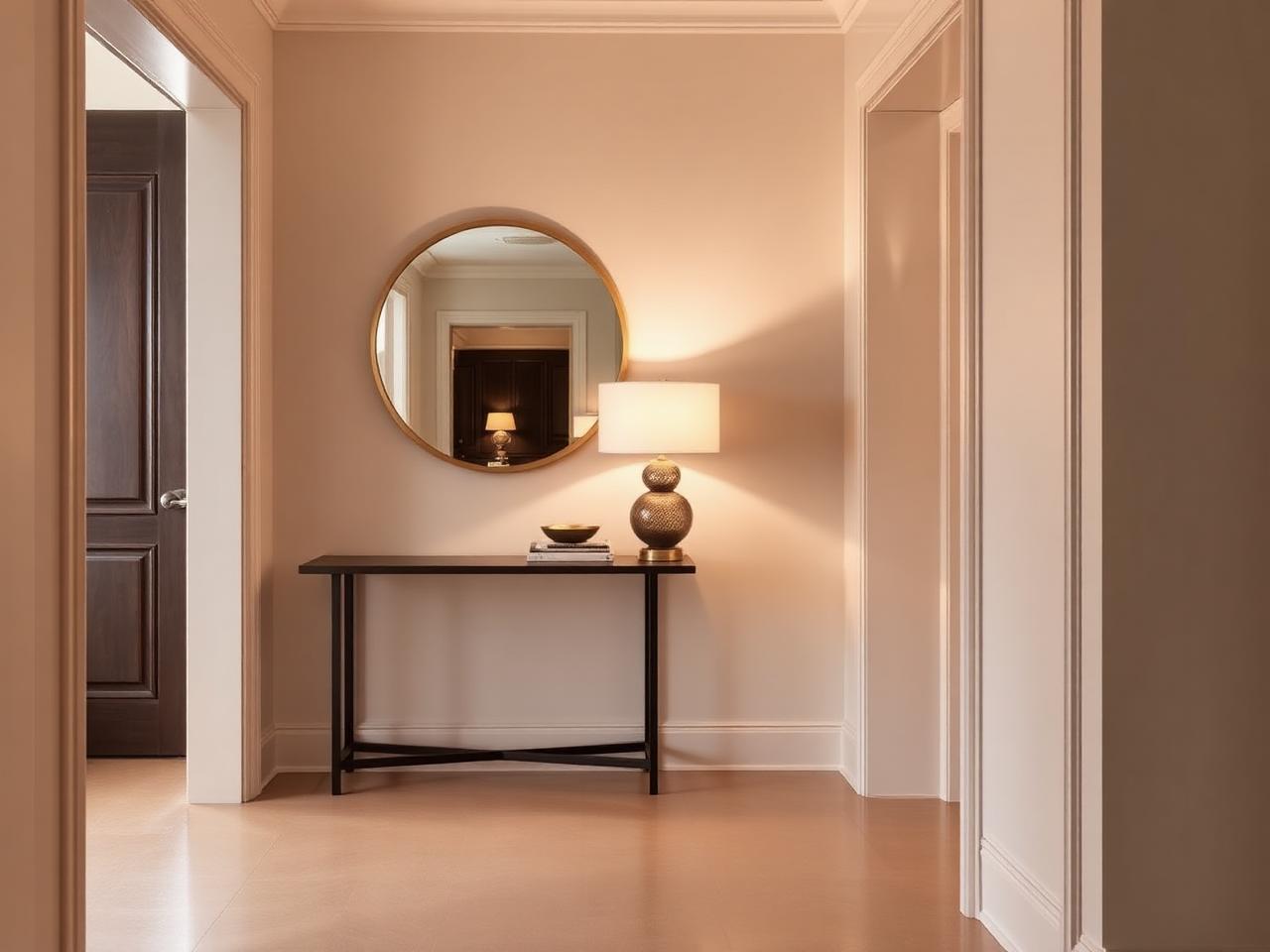
A lamp beside a mirror creates two views of the same object: the direct view and the reflected one. An arrangement that looks balanced from straight ahead can put a bright source into view from a nearby chair. Before deciding whether the lamp should be centred, check the positions from which you will actually see it.
This is a placement exercise, not a way to calculate output. The reflected image is not a second light source. A mirror can redirect some light, but a pleasing reflection does not establish that a surface or route is adequately illuminated.
Begin where you stand and sit
With the mirror in its intended position, look towards it from the doorway. Notice whether you see the shade, the exposed source, the support or the room behind you. Then repeat the observation from the place where you put things down or use the surface.
If there is nearby seating, sit in it rather than estimating that view while standing. Different eye heights can reveal openings under a shade that were hidden from the doorway. Move between the normal positions rather than choosing the single angle that makes the arrangement look best.
Use your usual evening lighting for the illuminated check. Daylight is useful for judging the outline and background, but it may disguise a reflected bright area that becomes more noticeable after dark. There is no need to stare into a source; simply notice whether it intrudes on the view.
Compare centred and offset positions within the usable surface
A centred lamp may create a clear repeated outline in the mirror. That can suit a simple composition, but it may also obscure the part of the reflection you actually use. An offset position can leave a clearer central view or place the reflected lamp beside another element.
Neither option is a universal improvement. The mirror's width, the lamp's overall span and the viewing position all affect the relationship. Judge the complete reflection rather than only the lamp's base alignment.
If you try another position, disconnect power before moving the lamp and follow its handling instructions. Keep the whole base supported and preserve the manufacturer's placement requirements. Do not tilt, cover or modify the lamp to hide a bright reflection.
Keep the useful arrangement if the reflection cannot be resolved
An attractive reflected image is secondary to a usable surface and a suitable cable route. If moving the lamp blocks the key tray or pushes it towards the edge, the composition is asking too much of that location. Consider a different supported position or a lamp elsewhere rather than forcing the pairing.
If the mirror is used for a detailed activity, evaluate that activity separately. Decorative light appearing in the reflection does not demonstrate useful light on the person or object being viewed.
Finish the check from the doorway, the landing position and any nearby seat. Choose the arrangement that works across those ordinary views, not only in a front-facing photograph. If none works well, separating the lamp and mirror is a reasonable outcome, not a failed styling exercise.
The Editor's Notes
Get the Lumière styling notes
One quiet essay a month on layering light and shaping the atmosphere of a room. No noise. Unsubscribe anytime.
The Editor's Notes
One essay. One piece. Once a month.
Quiet dispatches from the studio. Unsubscribe anytime.
For the hour after
For the hour after the overhead light goes off
Shop lamps built for the quiet part of the evening.
Share this guide