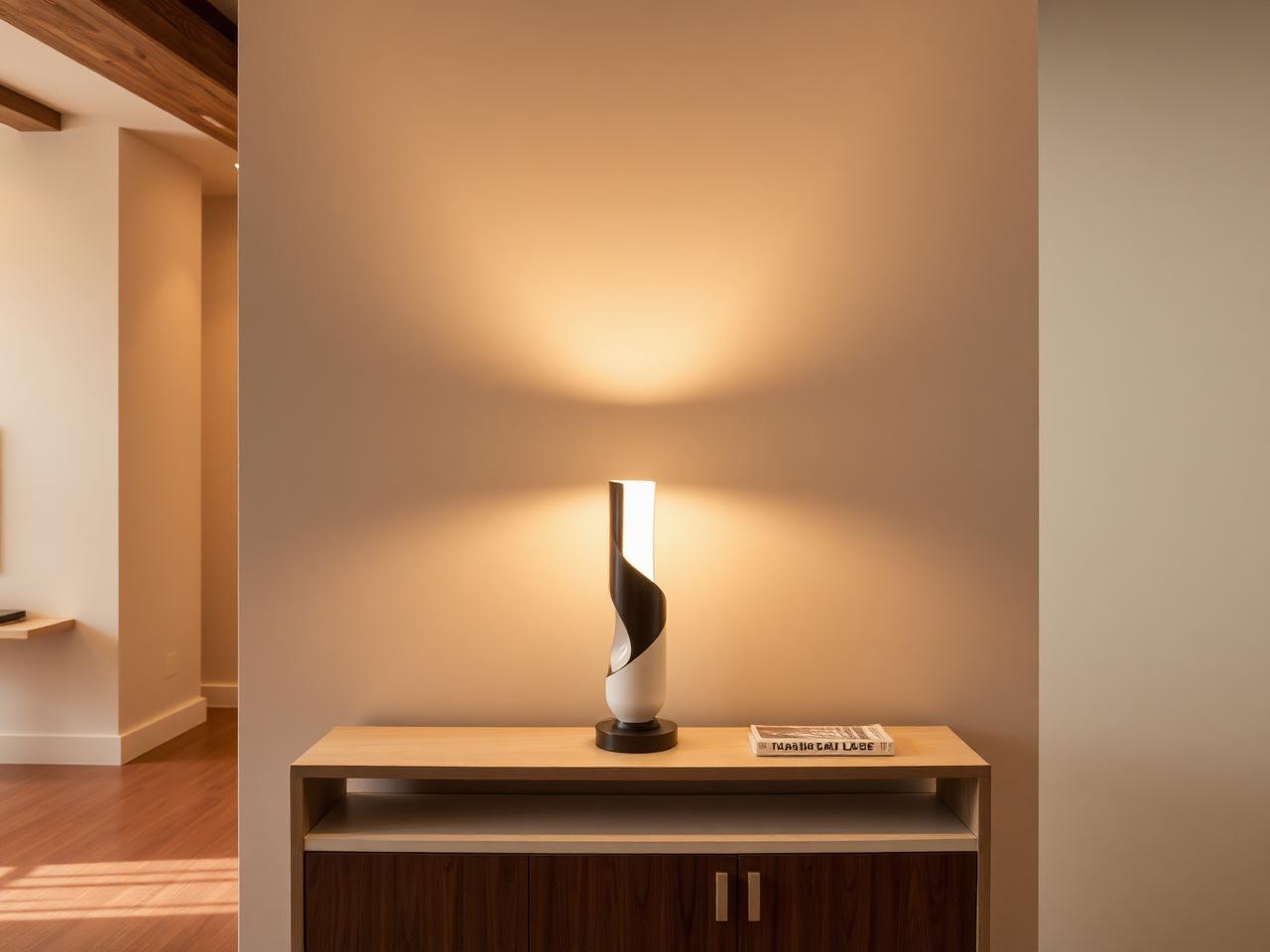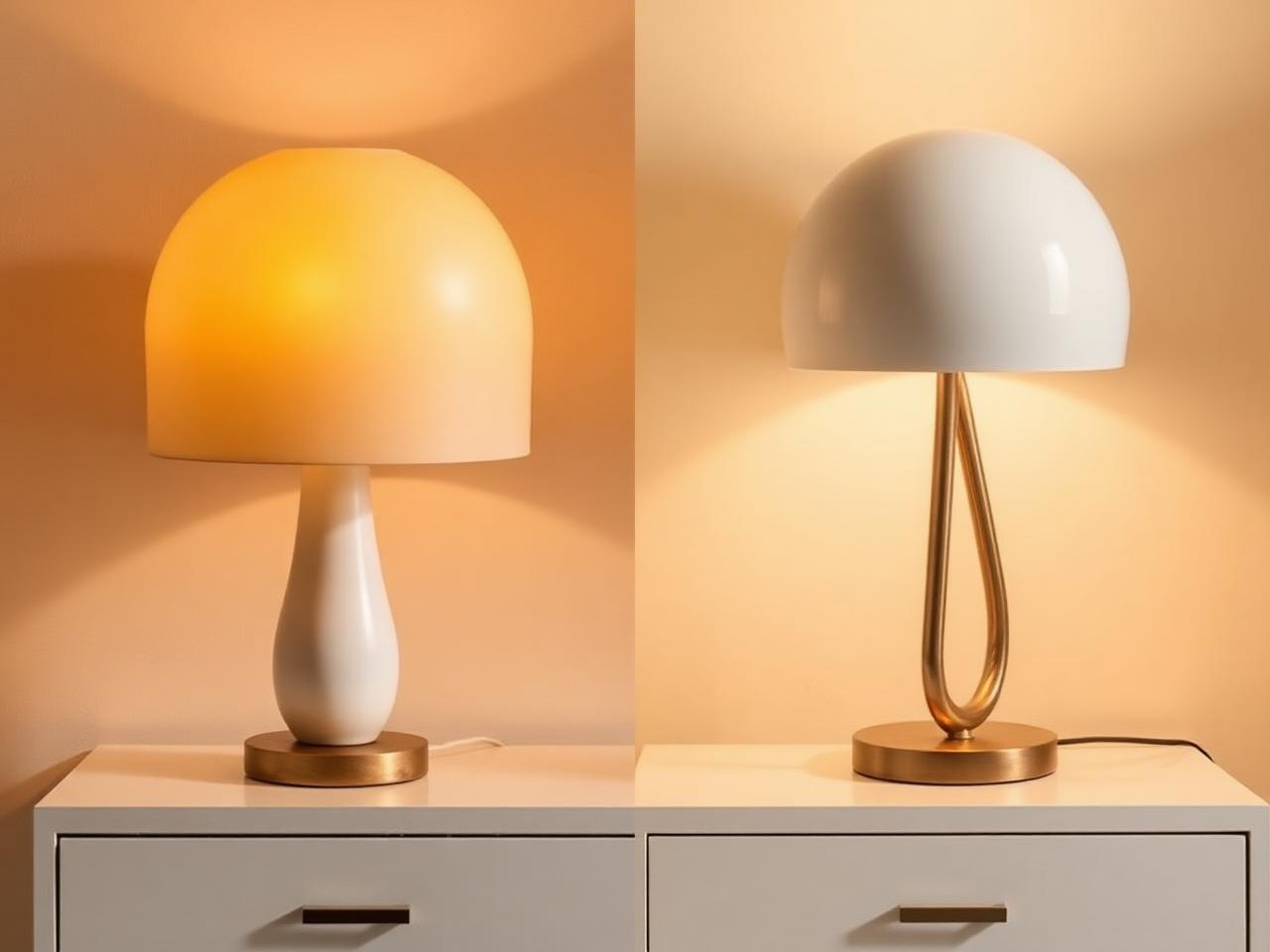
Matching Lamps or Mixed Shapes: Choose the Relationship First
Use repeated silhouettes for visual continuity or mixed forms for distinction, while keeping placement and practical needs separate.
By Lumière Light Studio Editorial
Matching lamps can make two separate surfaces feel connected. Different lamps can help those same surfaces express different uses. Neither approach is a shortcut to a finished room. The decision becomes clearer when you ask what relationship you want the lamps to create, rather than whether a pair is more correct than a mix.
Look at the room with the lamps mentally removed. Furniture placement, artwork and windows may already provide strong repetition. Alternatively, the space may be visually varied enough that one repeated outline would give it a useful point of continuity.
Repeat a silhouette when continuity is the missing element
A repeated shape can link opposite ends of a room or help two bedside surfaces read as a pair. It can be especially useful when the furniture is not identical but you would like the arrangement to feel related.
Repetition does not require strict symmetry. Two similar lamps might sit on different surfaces or at different distances from the room's centre. Judge the resulting view rather than forcing both positions into a mirrored arrangement that is awkward to use.
Keep their individual fit in mind. A lamp that suits one table may be too broad for another. Do not sacrifice the usable surface simply to preserve a matching outline. Similarity is a visual tool, not a reason to ignore the dimensions.
Mix shapes when the positions should have different identities
Different silhouettes can distinguish a display surface from a side table beside seating. An upright form and a low rounded form may each relate to their own surroundings without pretending the two areas are identical.
Give mixed shapes one readable connection if the room feels disjointed. That connection might be a similar colour family, a shared finish or a comparable degree of simplicity. It need not be all three. Strongly different forms can still belong together when you understand which relationship holds them in the same room.
Avoid choosing contrast merely to avoid a pair. If both positions are similar and you enjoy a repeated form, there is no design obligation to add variety. Equally, you can keep a lamp you like without searching for its exact twin.
Separate the composition from the lighting requirement
Matching shapes do not necessarily produce identical results in different places. Wall colour, shade orientation, surrounding surfaces and viewing angles change what you see. Mixed shapes can also contribute to a coherent lighting arrangement without looking alike.
List the practical job at each position. One may be decorative, while another sits beside an activity that needs its own assessment of light on the working surface. Do not use a matched pair as evidence that both locations are adequately lit, or a contrasting shape as evidence that one is a task lamp.
Compare the plan from the doorway and from your usual seat. If repeated outlines make the view too insistent, try relating the lamps through a quieter feature instead. If mixed shapes make the room feel disconnected, consider repeating one element. Start with the relationship the room lacks, then check each lamp's dimensions, controls and specifications independently.
The Editor's Notes
Get the Lumière styling notes
One quiet essay a month on layering light and shaping the atmosphere of a room. No noise. Unsubscribe anytime.
The Editor's Notes
One essay. One piece. Once a month.
Quiet dispatches from the studio. Unsubscribe anytime.
For the hour after
For the hour after the overhead light goes off
Shop lamps built for the quiet part of the evening.
Share this guide