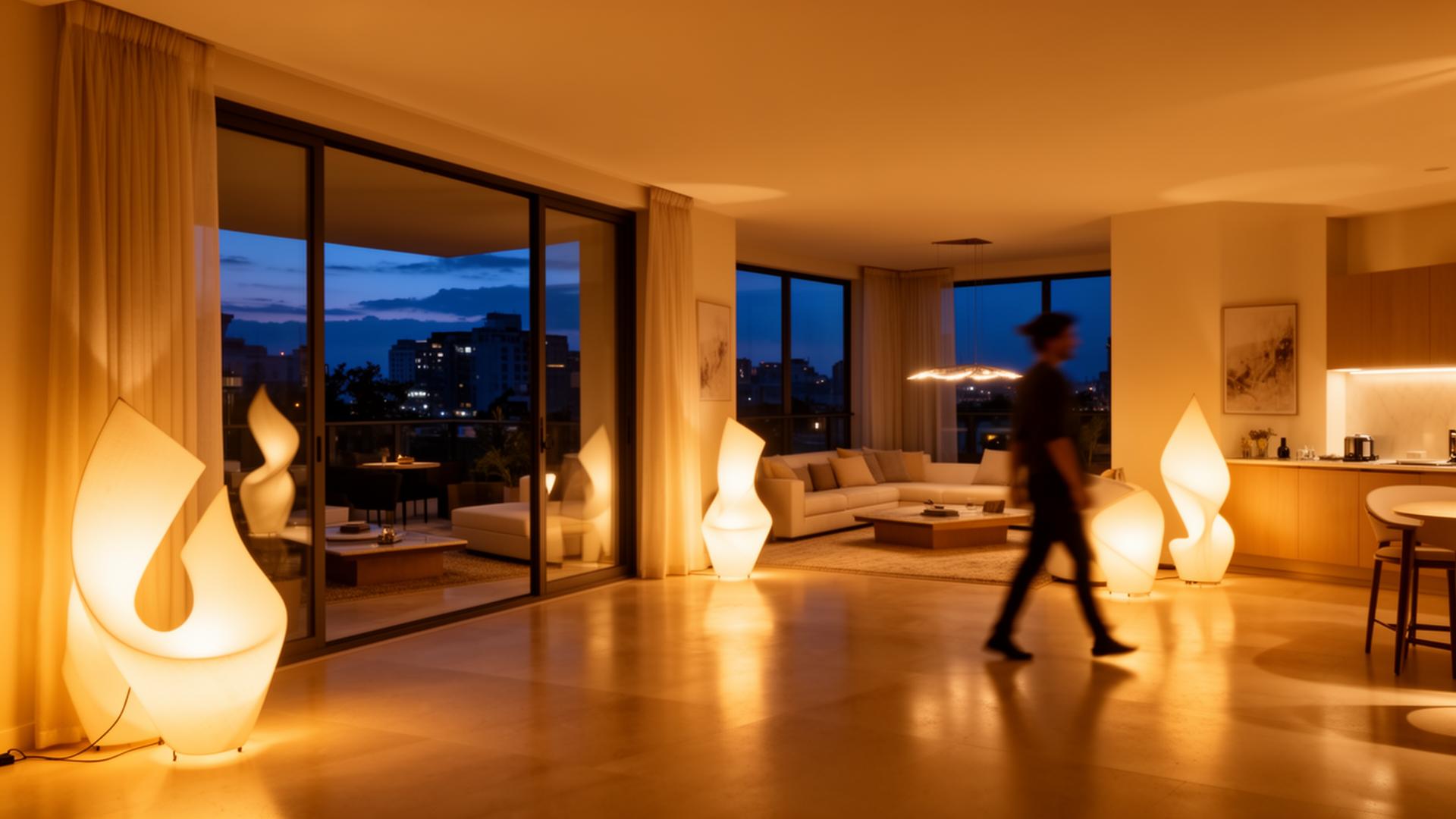
Entryway Lighting Ideas for an Easier Arrival
Plan the view from the door, the landing spot and the onward route. A console lamp can contribute without replacing useful general lighting.
By Lumière Light Studio Editorial
Coming home involves several small actions before you settle anywhere: opening the door, putting things down and moving further inside. Entryway lighting works better when it follows those actions. A decorative lamp can be part of that arrangement, but it should not be expected to solve every part of the arrival.
Begin with what you already have. Notice the light available when the door opens, where its control is and whether the console is visible. There is no need to reject overhead lighting simply because you would also like a softer point of light nearby.
Give the arrival a visible point of reference
One option is a lamp near the landing spot, where the illuminated surface helps identify the place for keys or post. Another is to place the decorative emphasis farther along the hall, so the view leads towards the adjoining room rather than stopping at the door.
Choose between these ideas by standing outside the open doorway and looking in. The lamp need not sit in the centre of that view. A position off to one side may leave a clearer route and a less crowded composition, especially where a door opens towards the console.
Keep useful general lighting available. Decorative light may not reveal a dropped object or the full passage clearly enough. The amount of light needed varies with the layout and activity; a universal output recommendation cannot settle that for a particular hallway.
Let the landing surface work before decorating it
A simple landing arrangement can be a lamp beside a clear tray, with wall art providing the visual detail. If the console is also where bags are emptied, leave more of it bare. The useful quantity of objects follows your routine rather than an odd-number styling rule.
If the surface already works well, try changing only the lamp position. Moving its visual emphasis towards one end may distinguish the landing area from a display area. Do this only where the full lamp remains properly supported and its placement follows the product instructions.
A nearby mirror introduces another view of the same lamp. Check whether it reflects a pleasant part of the room or a bright source towards the doorway. The reflection is not an additional lamp, and it does not guarantee more useful light on the console.
Plan operation around the way you enter
Think about arriving with occupied hands. Can you reach an existing control before needing to put things down? Does a decorative lamp's control remain accessible once the tray is in use? Keep the arrangement simple rather than assuming every lamp can be operated by an external timer or automatic accessory.
Review the transition into the next room too. If the console becomes a bright isolated spot, try using existing adjoining light alongside it. You are arranging a sequence of spaces, not trying to make one lamp illuminate the whole route.
Walk through the arrival after dark with the lighting you normally use. Note one awkward action or unclear area, then change that part first. For a new lamp, check the current specifications on the product page; for scale and console fit, use the separate console-lamp selection guide.
The pieces referenced above. Check current specifications, delivery and return details on each product page before ordering.
The Editor's Notes
Get the Lumière styling notes
One quiet essay a month on layering light and shaping the atmosphere of a room. No noise. Unsubscribe anytime.
The Editor's Notes
One essay. One piece. Once a month.
Quiet dispatches from the studio. Unsubscribe anytime.
For the hour after
For the hour after the overhead light goes off
Shop lamps built for the quiet part of the evening.
Share this guide