Why the Single Statement Lamp Look Works
A distinctive lamp can anchor a quiet surface. Judge the silhouette, surrounding space and actual light rather than a social-media image.
By Lumière Light Studio Editorial
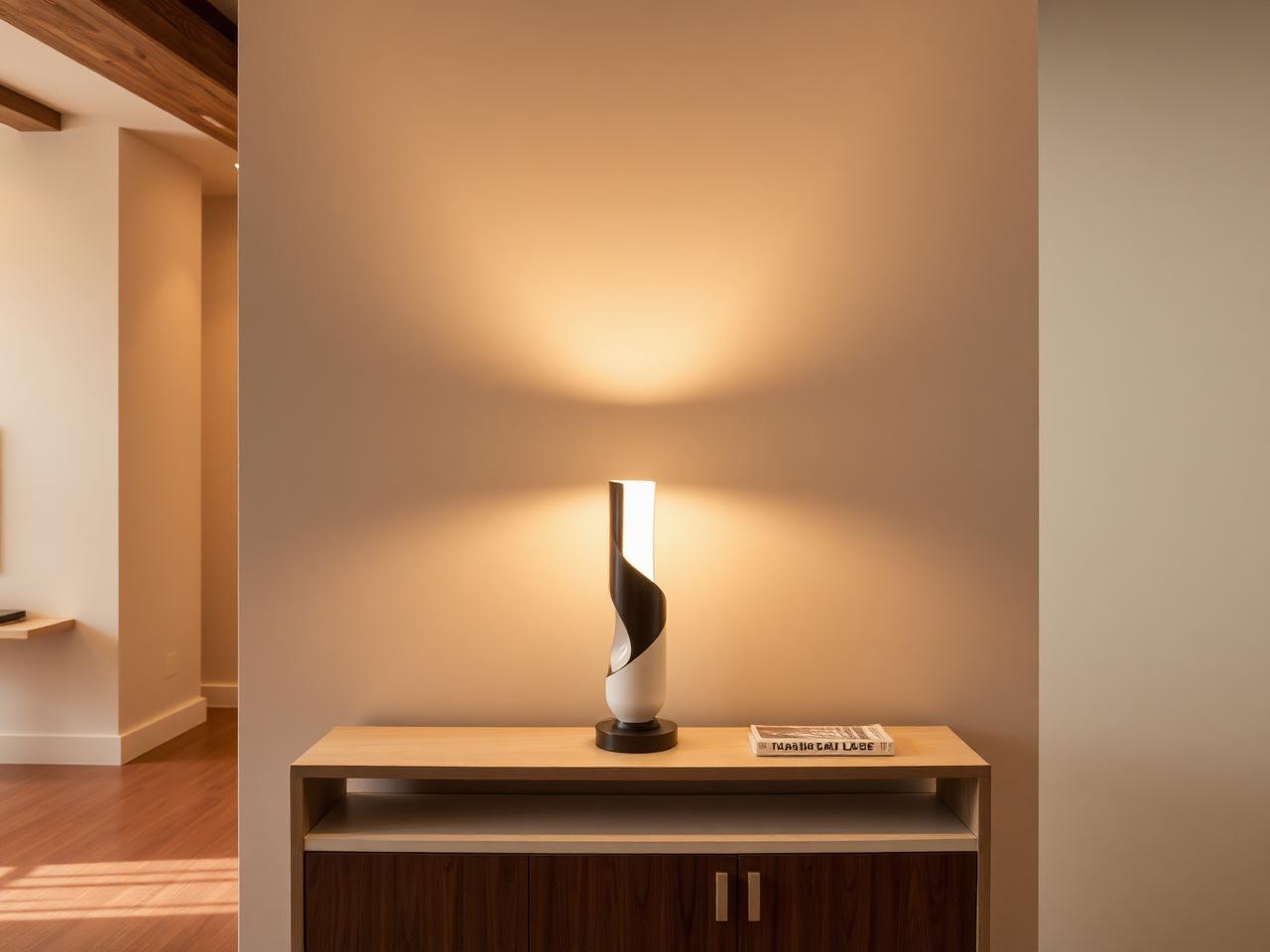
One distinctive lamp on a relatively clear surface gives the eye an obvious place to land. The effect does not depend on a trend or a professional endorsement. It comes from contrast: a rounded shape against straight furniture, a coloured object within a restrained palette, or a clear silhouette beside a quiet wall.
That makes the single statement lamp a useful styling approach, not a universal solution. A lamp can look compelling in a cropped image and still crowd a table or put light directly in your eyes. Consider the object with the room in view, then consider it again after dark.
Give the silhouette a clear background
Start with the wall or open space behind the proposed position. A curved shade can read clearly against a plain wall. Against a busy bookcase, the same form may be harder to distinguish. You do not need to remove the character of the room; move the lamp to a position where its outline has some breathing room.
Look from the doorway and your usual seat. These views may reveal different overlaps with a picture frame, curtain or nearby furniture. A lamp does not need to be the tallest item in the scene, but avoid an accidental tangle of edges if the intention is a simple composition.
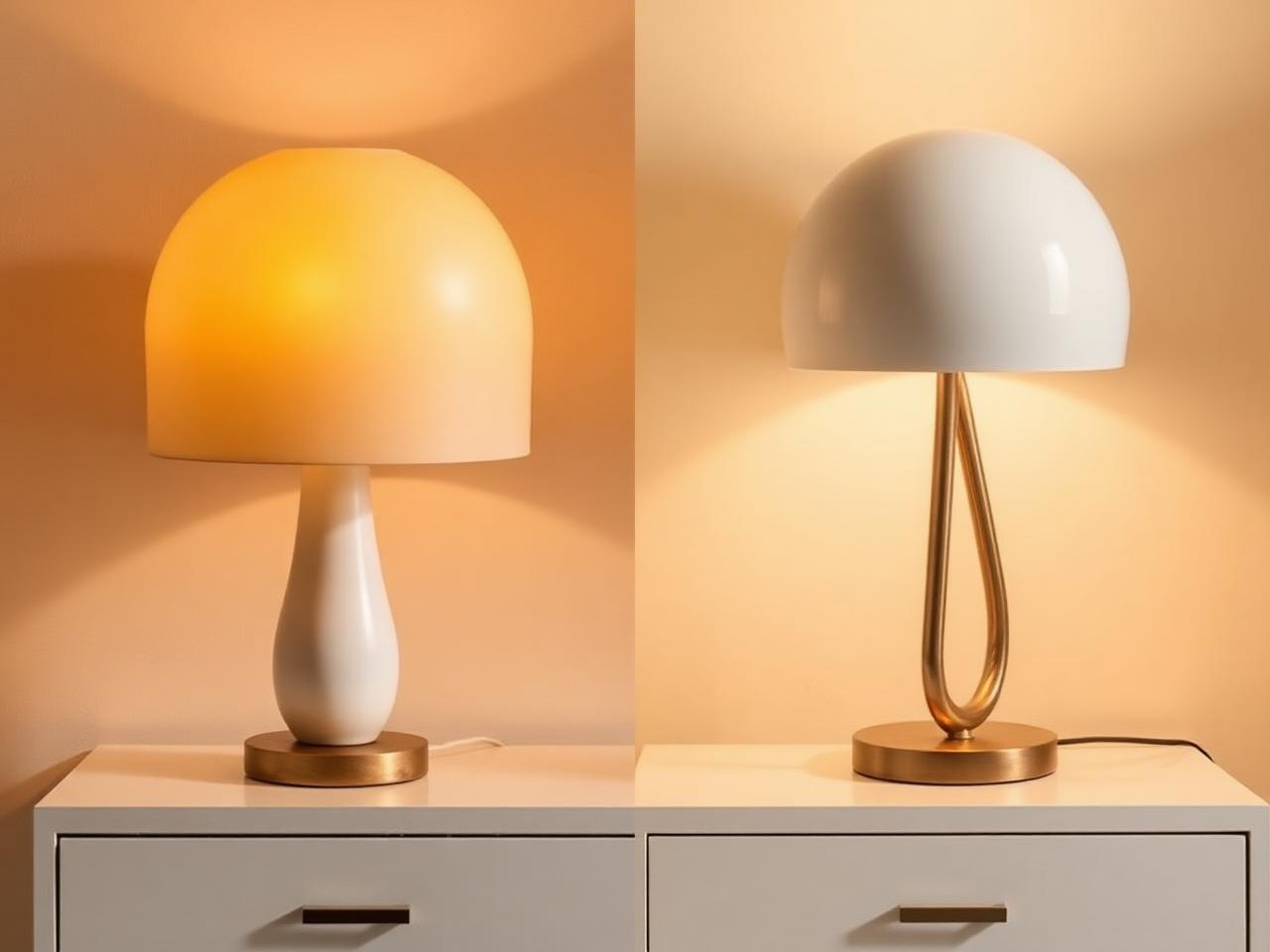
A dome shape offers a recognisable outline. Its light distribution, however, depends on the actual shade material, openings and source. The shape alone does not guarantee an even glow, flattering photographs or adequate task light. Judge those qualities separately rather than choosing a form for performance it has not demonstrated.
Make room without making a display pedestal
Remove objects that compete for the same patch of surface, then put back what is genuinely used. A lamp beside a bowl for keys may be a better daily arrangement than a carefully staged group that has to move whenever you arrive home. Empty space is useful when it protects the table's purpose.
Try a position away from the centre if the middle needs to remain available. Check the entire shade as well as the base: a compact footprint can conceal a much wider overhang. Keep the lamp supported on the furniture rather than relying on a pile of decorative objects to obtain a preferred height.
Check what the lamp does when switched on
A statement object should still suit the room's lighting needs. From your seat, note any exposed bright source or distracting reflection in a nearby screen. Keep other useful lighting on where needed. The statement lamp can be the visual focus without being the room's only light.
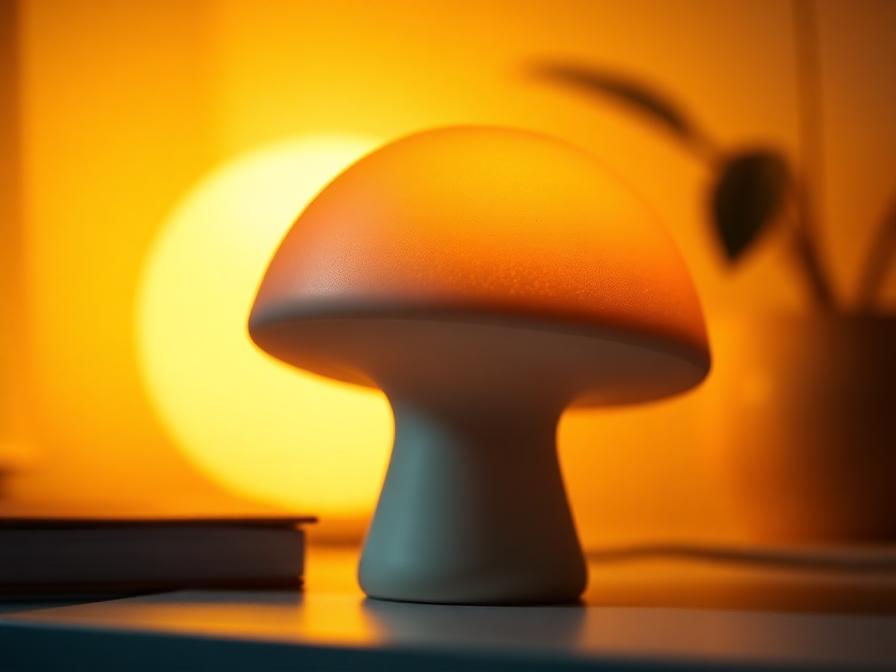
If a colourful lamp appeals to you, compare its colour in daylight with its appearance when illuminated. Those can be quite different compositions. Neither has to be neutral, but both should belong with the objects you intend to keep.
Before choosing anything new, clear one surface and try the most distinctive lamp you already own there. Photograph the whole room rather than a close crop, then sit down and use the space. Keep the arrangement only if its everyday function is as convincing as its outline.
The Editor's Notes
Get the Lumière styling notes
One quiet essay a month on layering light and shaping the atmosphere of a room. No noise. Unsubscribe anytime.
The Editor's Notes
One essay. One piece. Once a month.
Quiet dispatches from the studio. Unsubscribe anytime.
For the hour after
For the hour after the overhead light goes off
Shop lamps built for the quiet part of the evening.
Share this guide