Living Mostly Without the Overhead Light: What to Plan For
Prefer lamps in the evening? Plan controls, transitions and exceptions without giving up useful general lighting.
By Lumière Light Studio Editorial
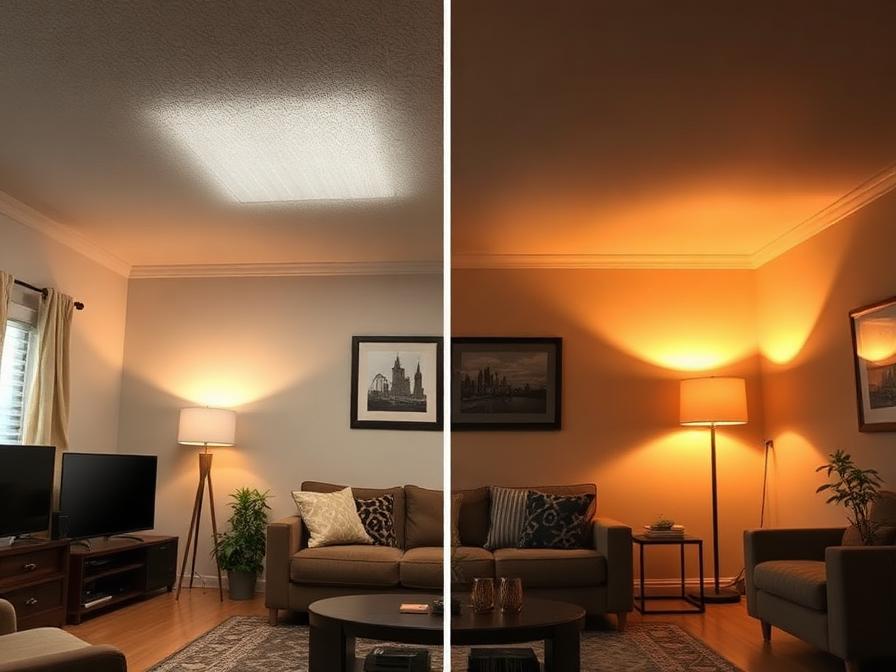
Preferring the look of lamps in the evening does not mean every ceiling light has to disappear. The practical challenge is managing the moments between activities: arriving home, moving to another room, finding a dropped object and switching the last light off. A lamp-led routine should account for those moments, not just the view from the sofa.
This is a planning guide, not a personal trial or a claim about health outcomes. Lighting preferences differ. The aim is to decide when smaller lights suit your routine and when general room illumination remains useful. Keeping both available can be the more workable choice.
Plan the first and last switches
Begin at the entrance after dark. Identify the control you can reach before moving through the room. If the lamp you prefer is across the floor, keep a convenient general light available while you get to it. A beautiful evening scene is less useful if reaching it requires crossing a poorly visible space.
Follow the same reasoning at the end of the evening. Work out the sequence from the final seat to the bedroom. Which light stays available while you leave the room? Where is its control? Do not make an awkward reach or an obstructed route part of the routine simply to keep the overhead off.
Keep control instructions straightforward for other people who share or visit the home. Show which lamps you normally use and leave access to the room's main lighting. A personal preference is not a reason to make ordinary switches difficult to find or to expect someone else to follow a complicated sequence.
Give everyday tasks an explicit exception
Reading, searching a cupboard, sorting laundry and clearing a table do not ask the same thing of light. Decide which tasks work with your chosen lamps and which call for additional illumination. Turning on an overhead light for a particular job is an ordinary option, not evidence that the arrangement has failed.
Keep suitable lighting for cooking, grooming and other demanding activities. A low decorative glow elsewhere in the home does not demonstrate that those tasks are covered. Retain appropriate functional lighting on routes and changes of level. Seek qualified advice about any fixed-lighting changes rather than treating lamp placement as an electrical solution.
When reading or working, judge the actual page or surface. If a decorative source leaves the activity awkward, use a suitable task light or the general light. Do not infer task suitability from a shade style, a warm appearance or the brightness of the lamp in a photograph.
Account for operation, not just atmosphere
Write down which lamps you would need to operate on an ordinary evening. A routine involving several distant controls may be less appealing in use than it looks in a room image. Consider whether fewer, better-placed sources cover the activities without adding unnecessary switching steps.
Check controls in the positions where they will be used. A cable switch can slip behind a table; a base control can be hidden by everyday objects. Place furniture and cables in accordance with the product instructions, keeping walking routes clear. Use only the cable or adapter specified by the listing or manufacturer; ask support if the required arrangement is unclear.
Do not assume that adding an external control or power accessory will deliver a desired lighting routine. Ask the seller about the exact product and intended use before relying on additional equipment. There is no need to alter the lamp or disable an existing fixture to explore a different evening arrangement.
Keep the routine flexible when circumstances change
Visitors, furniture moves and a different evening activity can all change what light is useful. Keep the ability to use the room more broadly illuminated. People may prefer different settings, and a lamp arrangement can remain a choice rather than becoming a household rule.
Walk the entry-to-seat and seat-to-bed routes with the normal lights available. Note any awkward control, unclear transition or activity that needs extra light. Resolve that one issue before expanding the routine to another room. A workable lamp-led evening is defined by convenient use and useful exceptions, not by how completely it excludes overhead light.
The Editor's Notes
Get the Lumière styling notes
One quiet essay a month on layering light and shaping the atmosphere of a room. No noise. Unsubscribe anytime.
The Editor's Notes
One essay. One piece. Once a month.
Quiet dispatches from the studio. Unsubscribe anytime.
For the hour after
For the hour after the overhead light goes off
Shop lamps built for the quiet part of the evening.
Share this guide