Placing One Lamp So a Room Looks Considered
Use one existing lamp to make a deliberate composition. Start with the room’s main view, then check the light from the place you actually sit.
By Lumière Light Studio Editorial
A room looks considered when its objects appear to have a reason for being where they are. One lamp can help establish that relationship: between a chair and table, between a console and the wall behind it, or between an unused corner and the rest of the room. The result is a compositional choice, not a claim about the value of the home.
Begin with a lamp you already have. Moving it is a useful way to separate a placement problem from a shopping problem. You may discover that the lamp is suitable but the surface is crowded, or that the light reaches the wrong area from its current position.
Choose a view with a purpose
Stand at the entrance you use most often. Pick one area that feels disconnected from the room. A console seen on arrival or a chair without a nearby light can be a sensible starting point. Do not automatically choose the lowest surface; the right position depends on support, reach and the view from nearby seats.
Ask what the lamp is meant to do there. It might define a small sitting area or give a plain wall some light. That is a narrower, more useful aim than expecting one object to transform the entire interior. Keep the existing functional lighting available while you experiment.
Let the furniture support the choice
Check the base and shade against the usable surface. The base needs full, stable support, and the shade should not project into a walking route. Leave room for everyday objects. A console beside the door still needs somewhere to set down keys; a side table still needs to work from the chair.
If the surface is too small, move to another one rather than raising the lamp on books or forcing it between objects. The extra height might look appealing in a photograph while making the arrangement less practical. The furniture and lamp need to work together without improvised supports.
Simplify the surroundings just enough to show the relationship. A lamp beside a picture can make sense when their outlines remain distinct. A lamp, several frames and a collection of similar-height ornaments may obscure one another. There is no required object count; remove the thing that makes daily use difficult first.
Compare the room in daylight and after dark
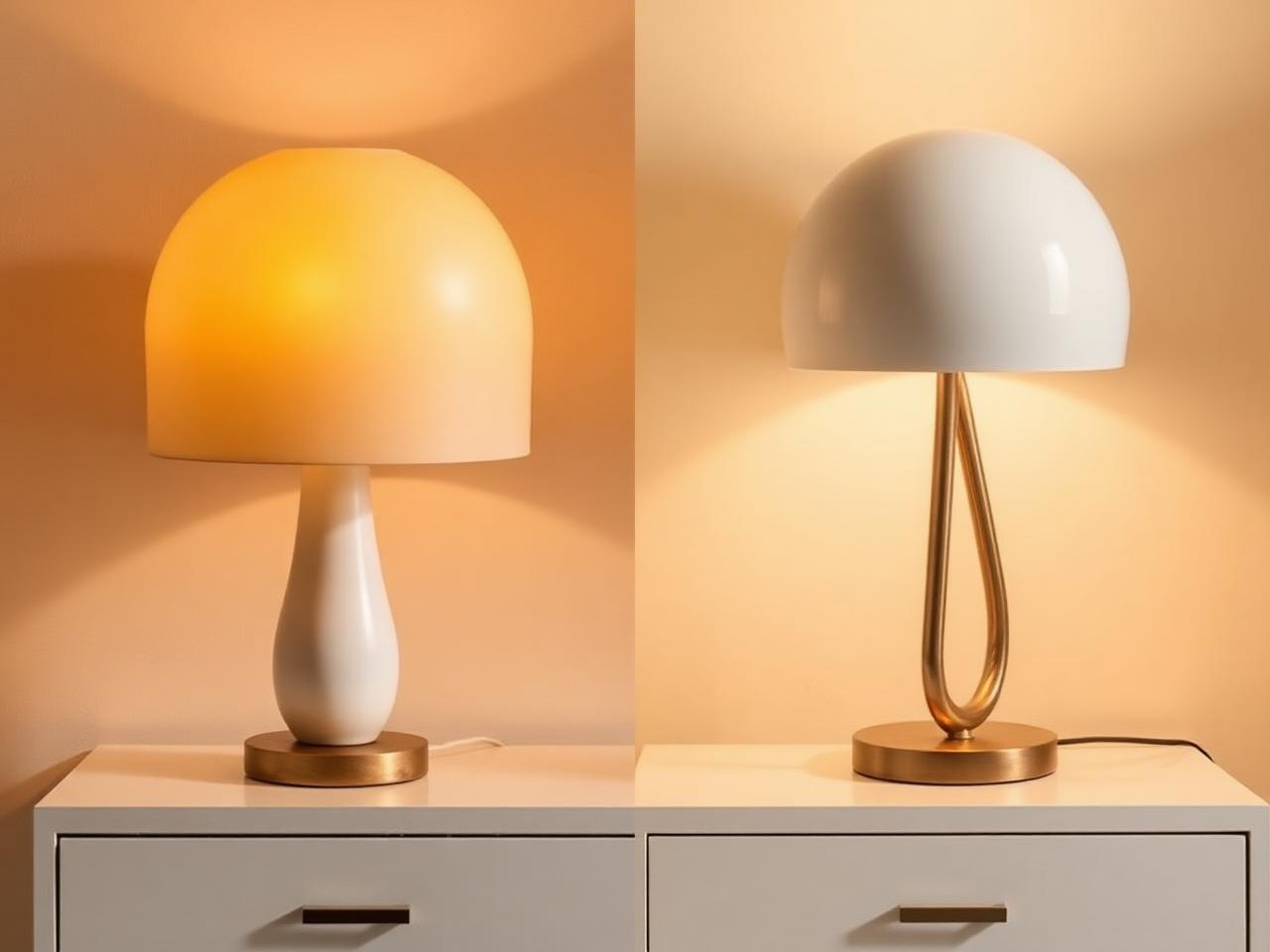
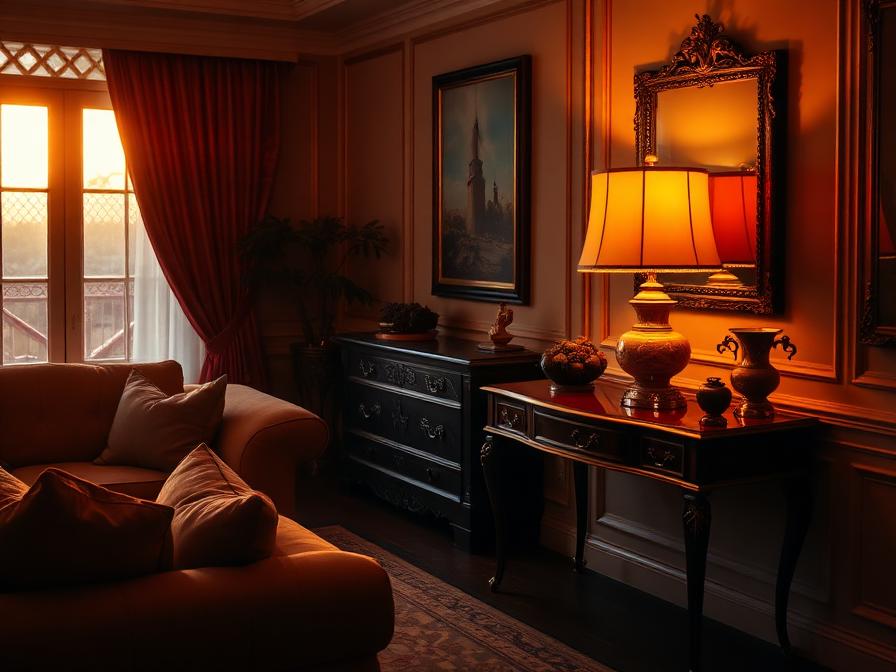
In daylight, assess the lamp as an object. Does it relate to a nearby colour or shape without looking like an isolated addition? After dark, check where the light actually falls. A bright shade against an otherwise unlit room can dominate more than expected. Another general source may be needed for balance.
Sit in the normal chair and look toward the lamp. Adjust its position if you see a distracting source or reflection. Then walk past the furniture and check the cable route. A composition that interrupts movement has not earned its place.
Leave the new arrangement in use for an ordinary evening before making another change. Notice whether you reach for that light and whether the surface remains convenient. Those observations are a better next step than attaching a price or a luxury promise to the result.
The Editor's Notes
Get the Lumière styling notes
One quiet essay a month on layering light and shaping the atmosphere of a room. No noise. Unsubscribe anytime.
The Editor's Notes
One essay. One piece. Once a month.
Quiet dispatches from the studio. Unsubscribe anytime.
For the hour after
For the hour after the overhead light goes off
Shop lamps built for the quiet part of the evening.
Share this guide