A Quick Evening Walk-Through: Checking How Your Rooms Are Lit
Walk through your home after daylight fades. Check routes, occupied seats and useful surfaces before deciding whether another lamp is needed.
By Lumière Light Studio Editorial
The room that looks well lit from a doorway can feel quite different from the chair where you spend the evening. A shade may hide its light source from one angle and expose it from another. A bright console can leave the table beside it difficult to use.
An evening walk-through helps locate these everyday mismatches. It is an observation of rooms and activities, not a test of your appearance or health. Choose an ordinary evening and keep the lights in their usual arrangement so you can see what that arrangement actually provides.
Begin with the route you normally take
Walk from the entrance to the places you use most. Notice where you reach for switches and whether furniture edges and changes in the route are visible. Keep enough light on to move around; the exercise does not call for walking through darkness to prove a point.
If you regularly cross a room to reach a lamp's control, record that inconvenience. It may call for a different position rather than an additional lamp. Look at the whole route, including where a door opens and where a chair is pulled out, before selecting another surface for lighting.
Do not make a separate lighting plan for a photograph. Leave the bags, everyday furniture and other usual objects where they normally belong. They are part of the room the lighting must serve, even when they are not part of a styled interior.
Sit down before judging a shade
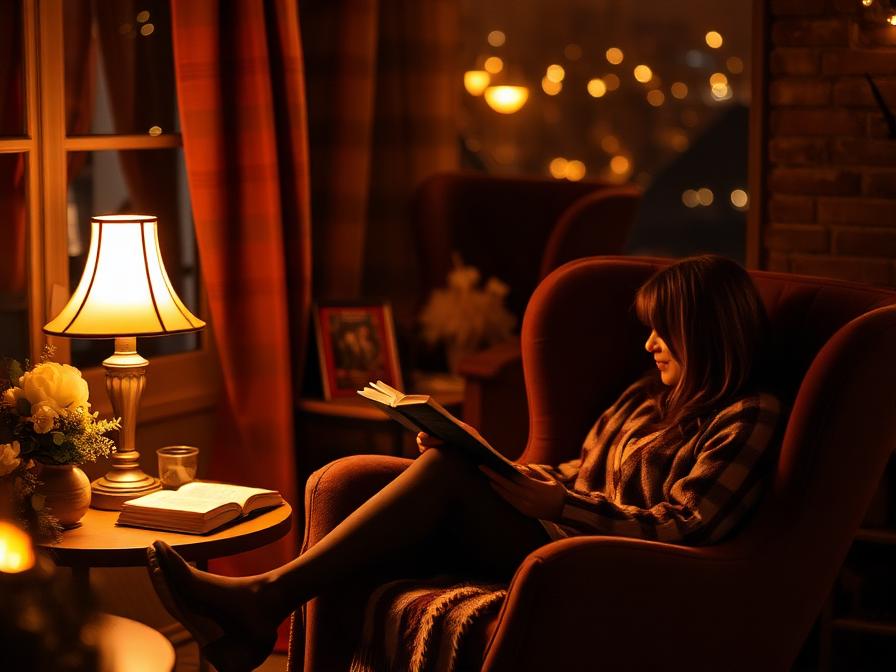
Take each frequently used seat in turn. Look ahead and then toward the nearby lamp. Is the light source directly in view? Is there a bright reflection on a screen or framed picture? Does the shade block the view of someone sitting opposite?
These observations describe different problems. A visible source suggests reconsidering the viewing angle. A reflection calls for comparing the positions of the light and reflective surface. An obstructed view may mean the lamp occupies the wrong part of the table. Increasing brightness does not answer each of these questions.
Where a small move is practical, change one position and sit down again. Keep the lamp on a suitable surface and follow its instructions. Do not alter the fixture, cover the shade or improvise a mounting arrangement to make the experiment work.
Check the surfaces that earn their space
Open the book, lay out the paperwork or put the usual objects on the dining table. Check the area you actually use rather than an empty patch beside it. Notice shadows from your hands and objects, as well as reflections from glossy pages.
A decorative lamp can remain useful as a visual accent without being the answer for this activity. If another light is needed, describe the task and the area to be lit before browsing. Keep bathroom and other specialist fixture questions separate from this ordinary living-space review; a general table-lamp suggestion is not a specification for those locations.
End with a short record: one route issue, one seated-view issue and one surface issue, if any appeared. Pick the most inconvenient one to address first. Recheck the same place on another evening before deciding that the whole room needs a new lighting scheme.
The Editor's Notes
Get the Lumière styling notes
One quiet essay a month on layering light and shaping the atmosphere of a room. No noise. Unsubscribe anytime.
The Editor's Notes
One essay. One piece. Once a month.
Quiet dispatches from the studio. Unsubscribe anytime.
For the hour after
For the hour after the overhead light goes off
Shop lamps built for the quiet part of the evening.
Share this guide