What Hotel Rooms Get Right About Lamp Placement
Borrow a useful hotel-room idea: place light where daily activities happen, then check reach, glare and the route through the room.
By Lumière Light Studio Editorial
A bedside light within reach, a separate light near a chair, and enough illumination to find a bag: these are useful details to notice in a hotel room. They are also details you can borrow at home without copying a particular interior. The practical lesson is placement around activities, rather than a prescribed number of lamps or an expensive furnishing scheme.
Hotels vary considerably. There is no single hotel lighting formula, and a room that looks inviting in a photograph may not suit the way you use your bedroom. Treat the arrangement as a starting point to examine, not evidence that a particular light will make your home feel a certain way.
Put the control where the activity happens
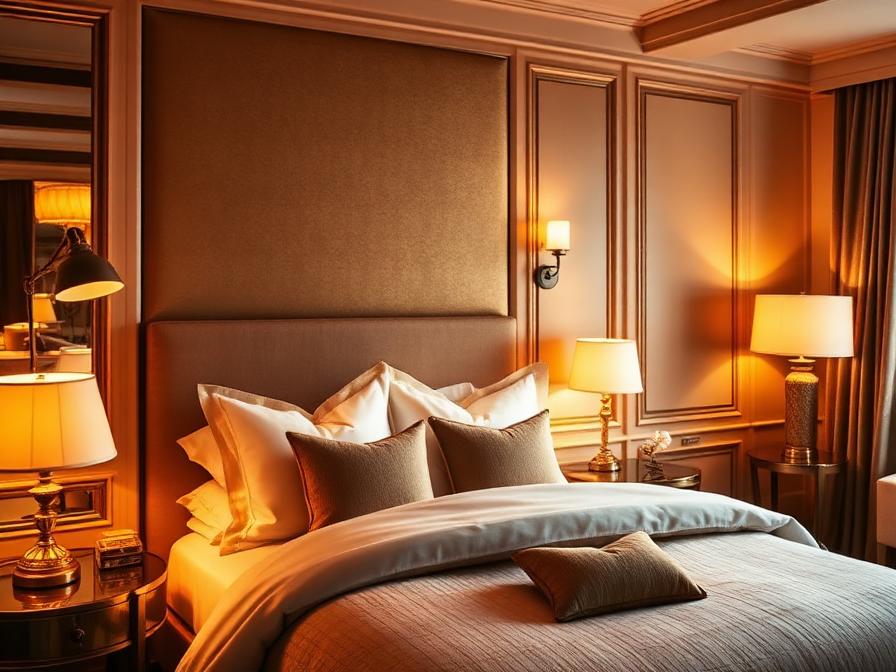
Start beside the bed. Sit as you usually do, with your pillows in place. Can you reach the lamp control without leaning across a drink or moving the bedside table? Can you set down a book without touching the lamp? The answers matter more than whether the two sides of the bed match.
Check the view while lying down as well. A source concealed when standing may be directly visible from the pillow. Change the position if the light feels intrusive. If reading is part of the routine, assess the actual page separately; decorative light beside the bed is not proof of useful reading illumination.
Give the chair its own light
A chair across the room may remain in shadow even when the bed is well lit. Look at what happens there: getting dressed, opening a suitcase, reading, or simply sitting. Each activity asks for a different distribution of light. A lamp chosen for atmosphere should not be expected to handle detailed tasks without checking the result.
Try an existing light before choosing another. Sit in the chair and look toward the bed, window and doorway. A position that looks balanced from the entrance can expose the source from the chair. Keep the table usable, too; the lamp should not occupy the place where a hand naturally sets something down.
Let several sources coexist
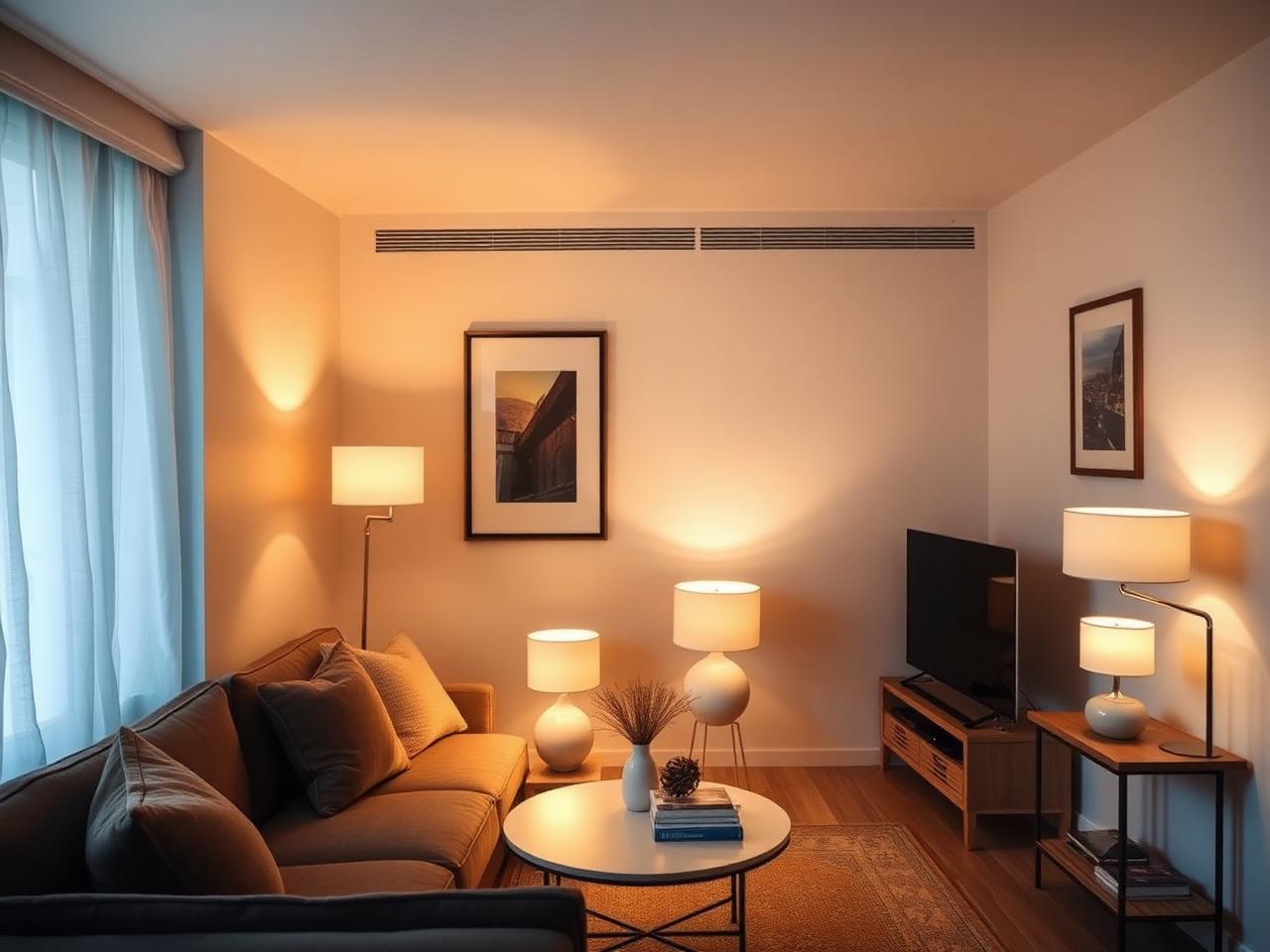
Turn on the lights you are likely to use together. If one appears markedly cooler or brighter than the others, decide whether that contrast is useful. Matching the visual warmth can make a scheme feel more coherent, but task areas may need different treatment. There is no requirement to make every source identical.
Keep general lighting available for finding clothes, cleaning and moving through the room. Table lamps supplement that provision. They do not need to replace it. Where controls offer adjustment, check the manufacturer's instructions rather than assuming that an additional control can be attached.
Finally, walk from the door to the bed and chair with the evening arrangement on. Notice the unlit gaps and any cables crossing the route. The next step is modest: resolve the least convenient position first, then repeat the seated and lying-down checks before adding another lamp.
The Editor's Notes
Get the Lumière styling notes
One quiet essay a month on layering light and shaping the atmosphere of a room. No noise. Unsubscribe anytime.
The Editor's Notes
One essay. One piece. Once a month.
Quiet dispatches from the studio. Unsubscribe anytime.
For the hour after
For the hour after the overhead light goes off
Shop lamps built for the quiet part of the evening.
Share this guide