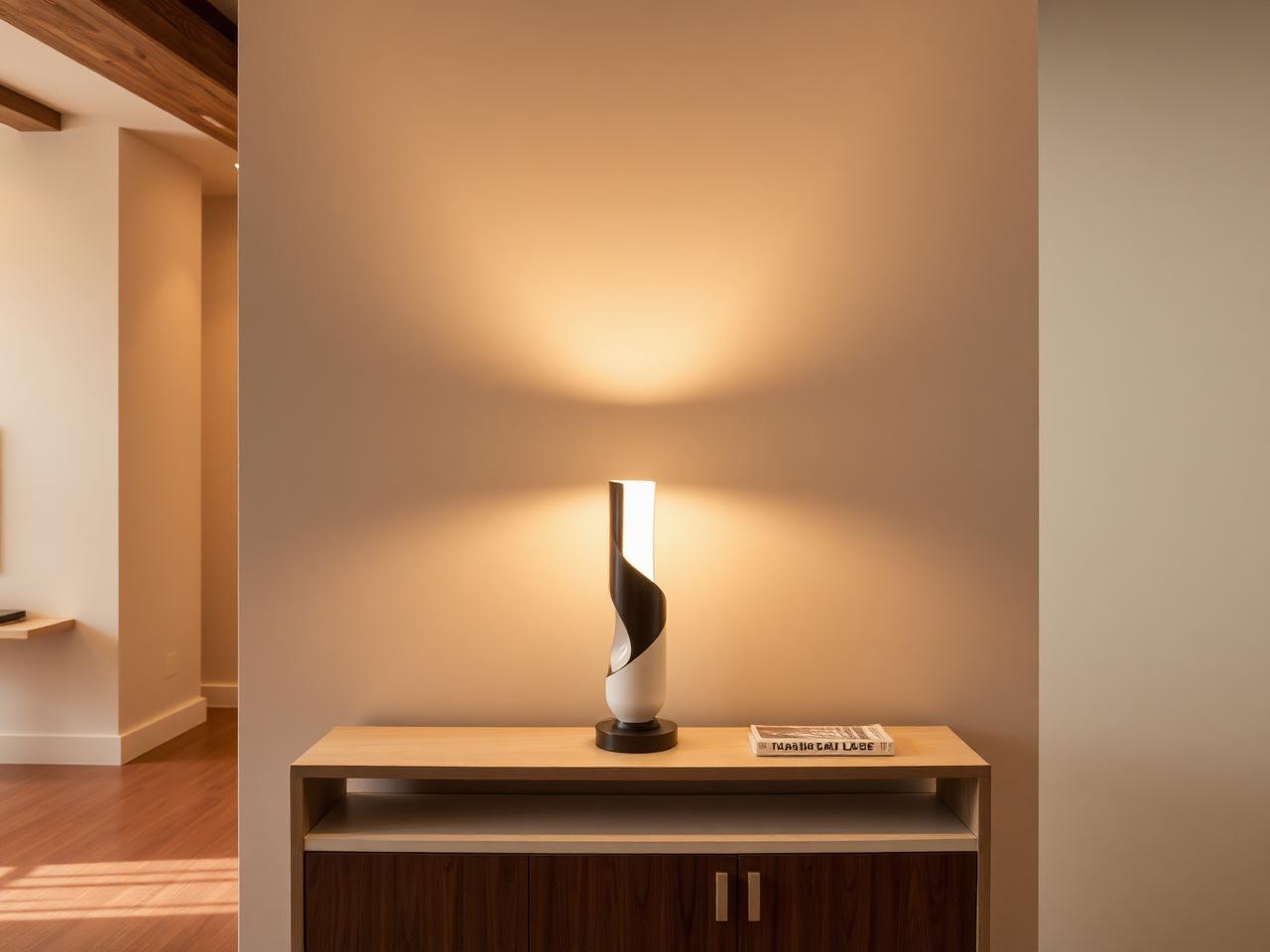
A Sculptural Lamp Beside Art: Decide What Leads
Compare the lamp and artwork from the doorway and your seat. Keep the composition distinct from any conservation-lighting requirements.
By Lumière Light Studio Editorial
A lamp and an artwork can each look convincing on their own, yet become awkward when placed together. A shade may interrupt a figure, a base may align with the frame in a distracting way, or the lamp may become more conspicuous than the image you wanted to see. The solution starts with deciding what should lead.
If the artwork matters most, treat the lamp as a neighboring object rather than the center of the display. If the lamp is the intended focal point, give the picture enough separation to remain readable. A shared surface does not require the two objects to have equal emphasis.
Protect the artwork decision before styling the pair
Decorative light is not conservation lighting. A lamp's pleasing appearance beside a work does not establish that its light, placement, or exposure is appropriate for that object. This article concerns visual composition, not preservation or a lighting specification for art.
For an original, fragile, or otherwise valued work, seek object-specific advice from a qualified conservator before using a lamp to illuminate it. Do not treat the absence of an immediate visible change as proof that an arrangement is suitable. You can assess the lamp's outline beside the work without directing light onto it.
Compare the outlines from two positions
Start at the doorway. Look for the relationship between the top of the shade and the frame, then move to your normal seat. An overlap that seems small while standing may cover an important part of the image when seated. The view you use most deserves priority.
Move the lamp laterally on its surface, keeping it fully supported and following its placement instructions. Compare a clearly separate outline with a deliberate overlap. A small accidental-looking collision between shade and frame can be more distracting than either a distinct gap or an intentional overlap, depending on the image.
Reduce competition without matching everything
A detailed artwork may need a simpler neighboring arrangement, but that does not mean the lamp must be plain. Removing a vase or a second framed object may provide enough separation. Simplify the supporting objects before replacing either of the two main pieces.
Color can connect the pair without making them match. A lamp might echo a small area of the picture, or stand apart from it. Avoid buying accessories just to repeat every color. Look at whether your attention returns to the feature you intended to lead.
Check reflections without turning the lamp into an art light
With glazed artwork, compare the reflected view from the chair as well as the entrance. A visible lamp reflection may interrupt the image even when the physical shade sits outside the frame. Changing the lamp's position can alter that view; assess any lighting directed toward valued work with conservation advice.
Keep the final step modest. Sketch the lamp and frame as simple outlines, then compare two supported lamp positions from your usual seat. Record which arrangement preserves the view you care about. The goal is a legible relationship between two objects, not a claim that decorative lighting can safely display every kind of art.
The Editor's Notes
Get the Lumière styling notes
One quiet essay a month on layering light and shaping the atmosphere of a room. No noise. Unsubscribe anytime.
The Editor's Notes
One essay. One piece. Once a month.
Quiet dispatches from the studio. Unsubscribe anytime.
For the hour after
For the hour after the overhead light goes off
Shop lamps built for the quiet part of the evening.
Share this guide