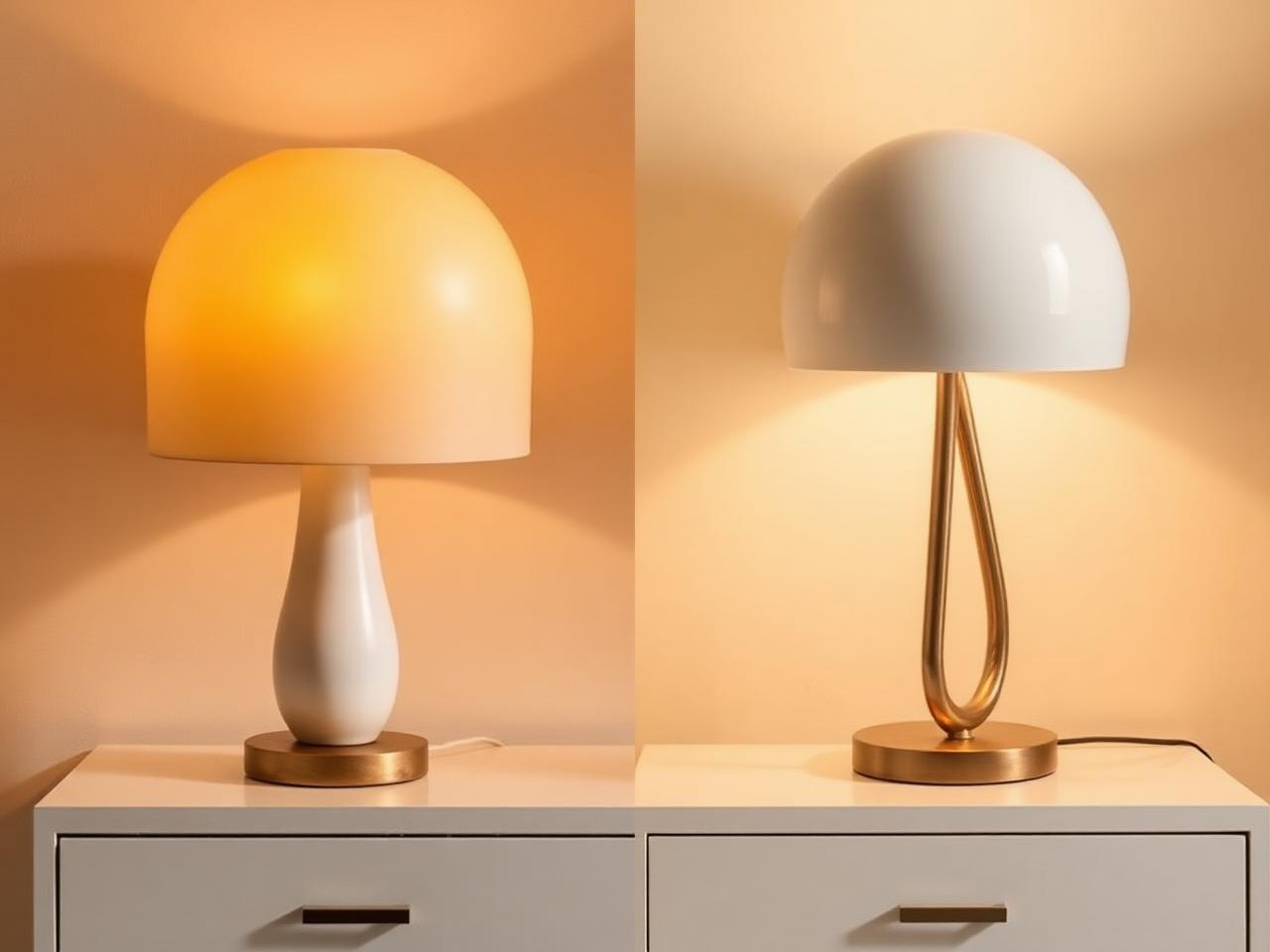
A Statement Lamp in a Minimal Room: Decide What to Leave Empty
Keep a sculptural lamp distinct without sacrificing the table’s everyday use. Empty space can be part of the arrangement.
By Lumière Light Studio Editorial
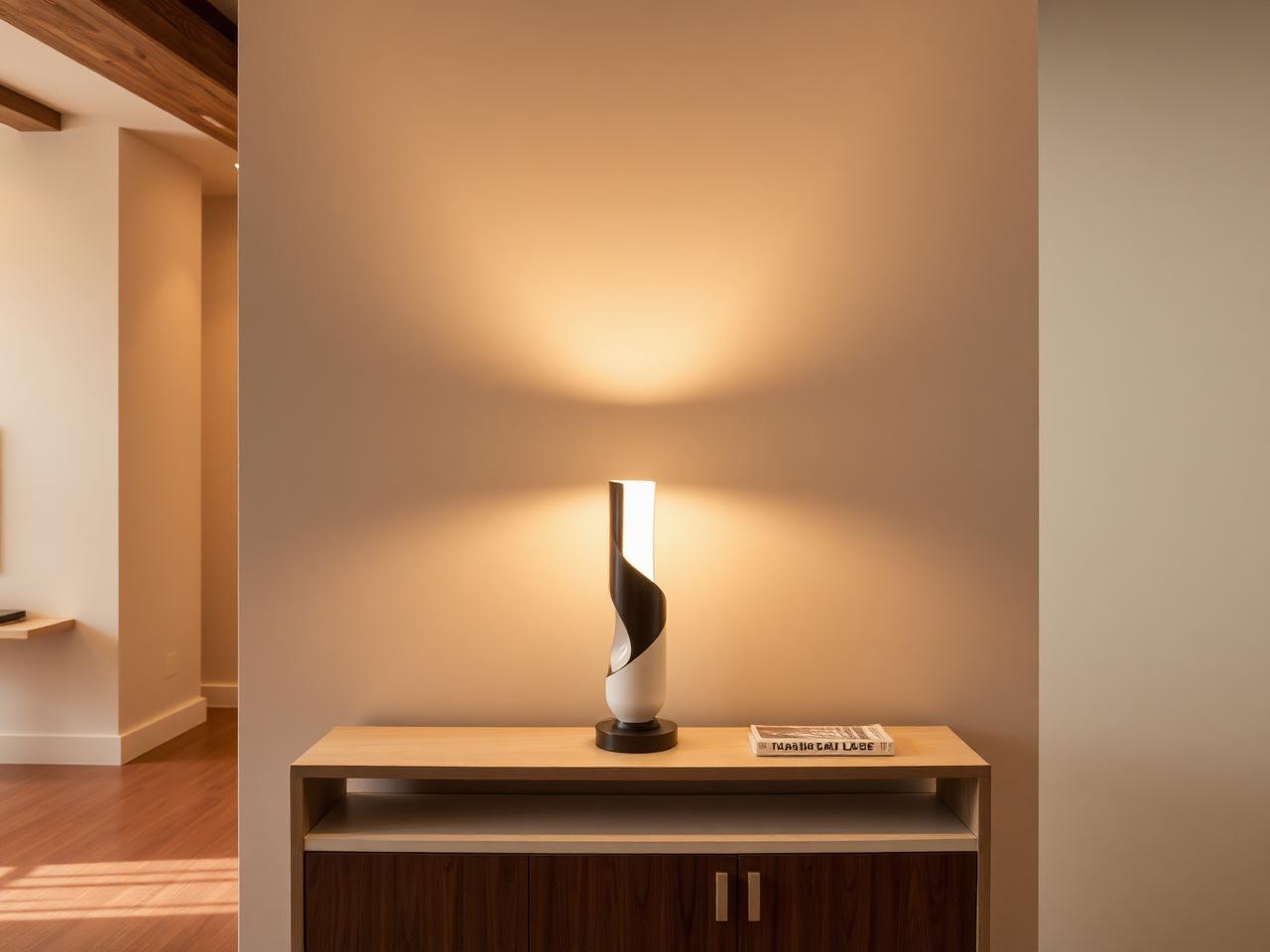
An empty patch of table beside a statement lamp can feel like an unfinished job when you are used to styled photographs. In a minimal room, it may be exactly what lets the lamp remain distinct. Before filling that space, decide whether the surface needs another object or simply needs to stay useful.
The question is not how to make the lamp the most important thing in the entire room. It is how much company it needs on its own surface. A clear answer can keep a distinctive object from starting a chain of unnecessary additions.
Reserve useful space before arranging decorative space
List what happens at the table. A side table may need room for a cup and a book; a console may be where you set things down on arrival. Those uses deserve space even if they are absent from the photographs that inspired you.
Check the lamp's footprint and shade against that usable area using current product information. Keep it fully supported, with access to its intended control and a cable route clear of movement. If the practical objects have nowhere to go, the lamp may need a different surface rather than a more elaborate arrangement.
Compare three levels of company
Start with the lamp alone, apart from anything essential to the table's use. Observe its outline from the entrance and your usual seat. Does it look comfortably distinct, or do you genuinely prefer a second shape beside it? Give that question a chance before adding objects by habit.
Next, try one small object you already own. Choose it for a particular relationship: a lower outline beside a tall lamp, or a contrasting color beside a restrained one. Then remove it. The comparison is more revealing than deciding in advance that a table must contain a particular number of things.
Finally, try a small group only if you want a more layered surface. Notice whether the lamp remains legible and whether access gets worse. A fuller arrangement is not a failure of minimal styling, but it should be a preference rather than an attempt to fill every available gap.
Keep empty space connected to the rest of the room
Look beyond the tabletop. If the surrounding wall, upholstery, and floor are visually quiet, the lamp may already provide enough emphasis. If there is art or another prominent object nearby, extra accessories may make the local arrangement busier than the room needs.
There is no requirement for the lamp to sit centrally. An offset position can leave a useful landing area, while a centered position may suit another surface. Judge the actual proportions and use instead of treating either arrangement as the correct minimal look.
Let daily use edit the final arrangement
Use the table normally before calling the composition finished. If an ornament repeatedly has to move, it may not belong there. If the lamp obscures something important from your seat, reconsider its placement within the manufacturer's guidance.
End with a simple comparison: the clear surface, then your preferred supporting arrangement. Keep the version that gives the lamp room to be seen and leaves the table easy to use. You do not need to add another object to prove that the space was considered.
The Editor's Notes
Get the Lumière styling notes
One quiet essay a month on layering light and shaping the atmosphere of a room. No noise. Unsubscribe anytime.
The Editor's Notes
One essay. One piece. Once a month.
Quiet dispatches from the studio. Unsubscribe anytime.
For the hour after
For the hour after the overhead light goes off
Shop lamps built for the quiet part of the evening.
Share this guide