A Lamp Against a Dark Wall: Judge the Outline Before Adding Decor
Check which parts of the lamp remain visible by day and after dark. Adjust the view before adding objects or changing the background.
By Lumière Light Studio Editorial
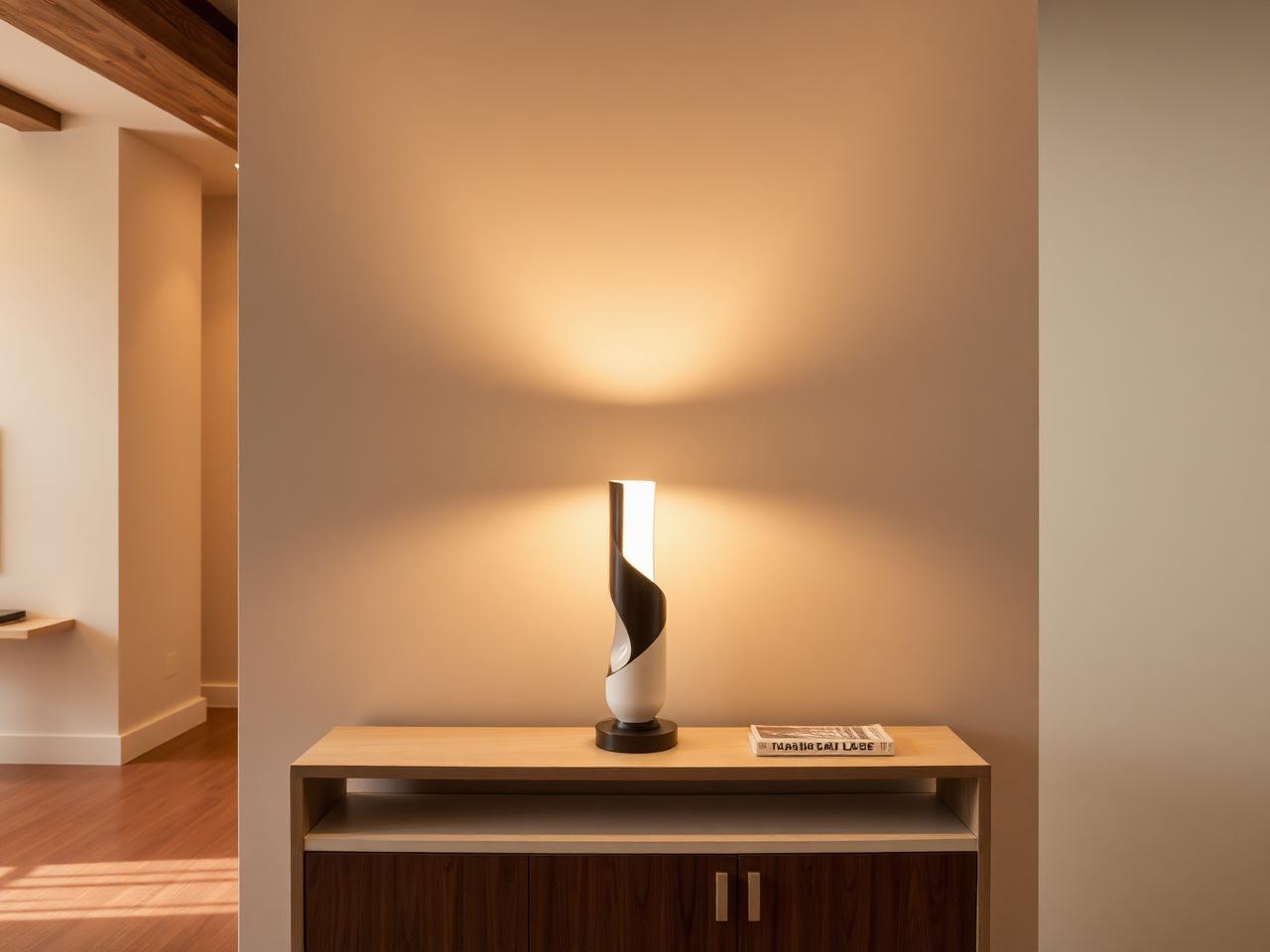
Against a dark wall, you may notice a lamp's shade clearly while losing sight of its base. That can look appealingly selective or simply unfinished, depending on what you wanted to see. Before adding a tray, books, or another light, decide which part of the object should remain visible.
This is a background-and-outline problem, not an instruction to make the whole room darker. Keep the lighting needed for ordinary use. Your task is to judge one lamp against one wall, from the places where that relationship will actually be seen.
Read the unlit outline first
Look at the lamp during ordinary daylight without switching it on. Can you distinguish the top, sides, supports, and base from your normal seat? You may like a complete outline, or prefer the shade to appear more separate from the lower part. Neither is a universal standard.
Check the surrounding furniture too. A dark tabletop beneath a dark wall may make the lower part harder to distinguish than it would be on a different surface. Identify whether you are responding to the wall, the furniture, or both before deciding the lamp itself is wrong.
Change the position before changing the grouping
Move the lamp within the usable surface, leaving it fully supported and respecting the product's instructions. Compare a position near the middle of the dark background with one closer to a visible wall edge or another background transition. The different outline may matter more than another ornament beside it.
Check the new position from the entrance and the chair. A background transition that creates a clear view from one angle may run through the shade from another. Choose the view that matters for everyday use rather than chasing a perfect outline from every point in the room.
Let the evening view be different
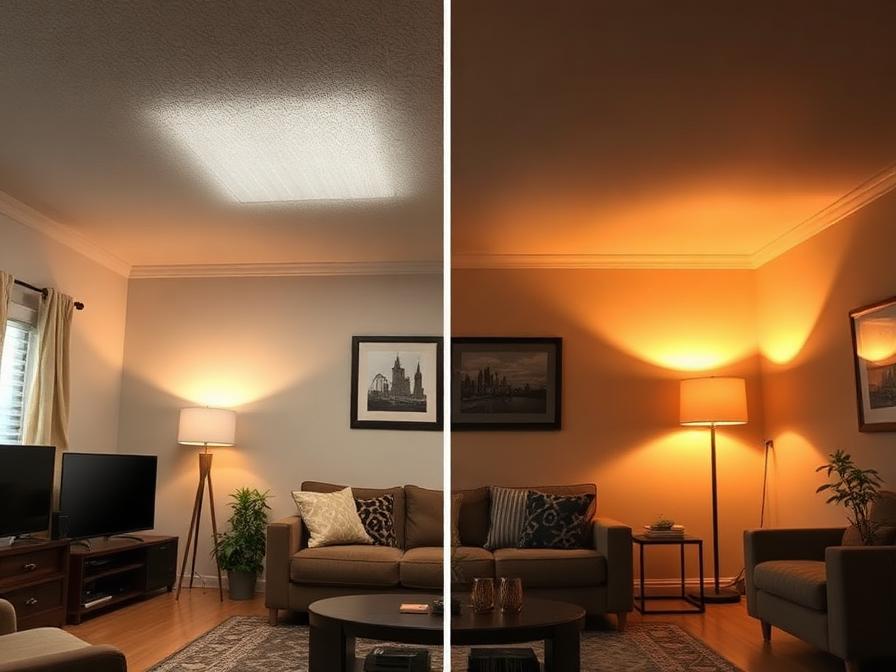
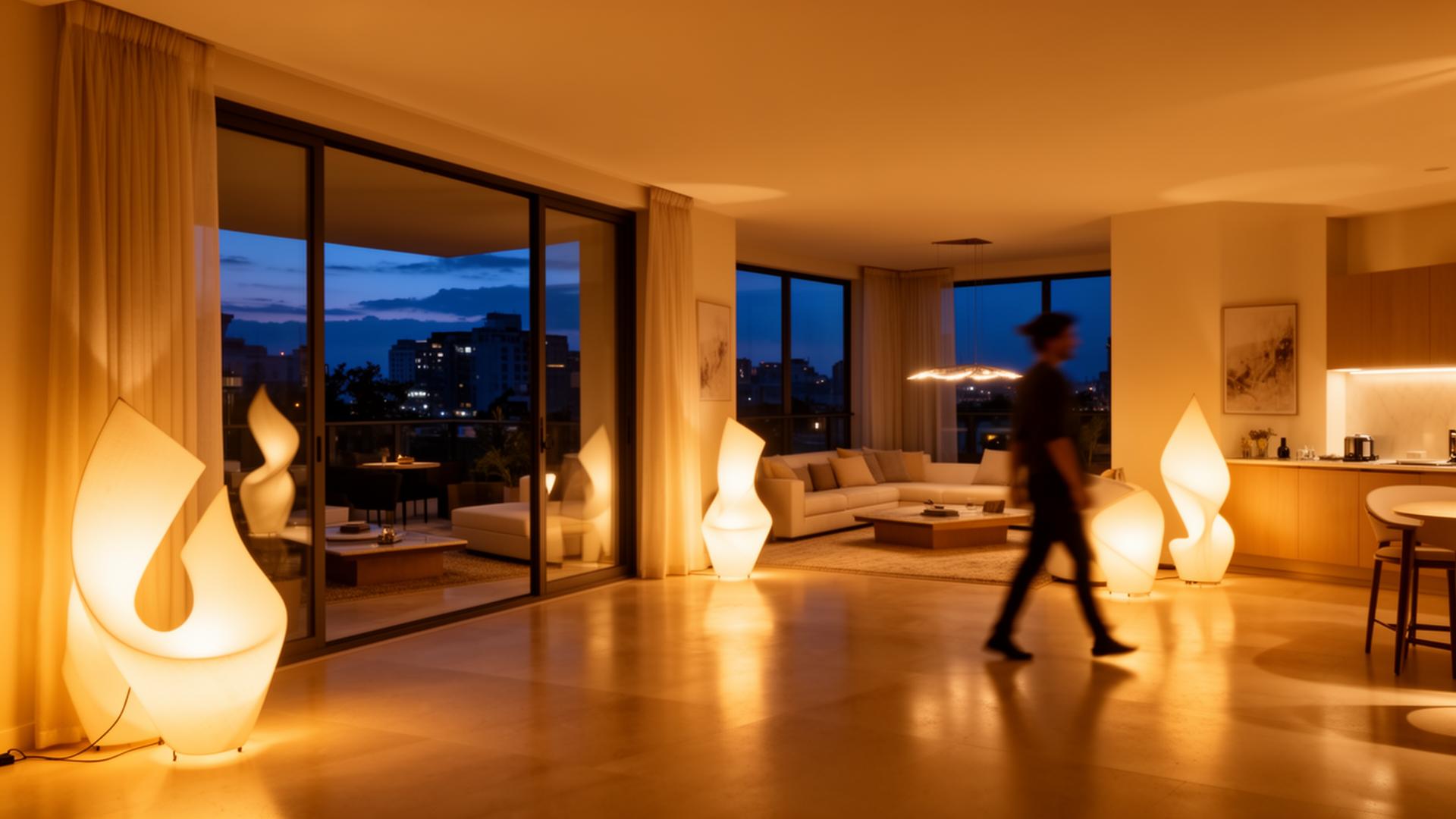
When the lamp is lit, the most noticeable feature may change. The shade or visible light can become the focus while the lower outline becomes less prominent. You do not need to force the daytime and evening views to be identical, but both should look intentional to you.
Compare the lamp with the room's usual evening lights on. If a conspicuous bright opening distracts from the object, consider another permitted position or retain more surrounding light. A strong contrast in a photograph is not evidence that the same view is comfortable from your chair.
Add an object only when it solves a visible problem
A pale object nearby may create another distinct shape, but it will not necessarily clarify the lamp. It can also draw attention away from the feature you wanted to emphasize. Test with an existing object and remove it again before deciding that the grouping needs it.
Finish by comparing the simplest arrangement with one supported alternative. Note which parts of the lamp you can see, what catches your attention first, and whether the surface still works normally. If the outline is convincing without extra decoration, leave the space alone. A dark background can remain part of the composition without becoming a reason to buy more objects.
The Editor's Notes
Get the Lumière styling notes
One quiet essay a month on layering light and shaping the atmosphere of a room. No noise. Unsubscribe anytime.
The Editor's Notes
One essay. One piece. Once a month.
Quiet dispatches from the studio. Unsubscribe anytime.
For the hour after
For the hour after the overhead light goes off
Shop lamps built for the quiet part of the evening.
Share this guide