Lighting a Small Apartment Without Crowding It
Plan light around the places you use, preserve useful surfaces, and check the view from each seat before adding another lamp.
By Lumière Light Studio Editorial
A small apartment asks each object to earn its place. A lamp may share a table with dinner, sit beside a folding desk, or stand near the only route to a window. The useful question is not how to make the room appear twice as large. It is how to light the activities you need without making the room harder to use.
Start with the furniture you have rather than a preferred number of lamps. One well-placed source may help a particular corner. Another part of the room may still need different light. Compact rooms can contain several distinct needs within a few steps of each other.
Map activities before choosing objects
Sketch the main room and mark where you eat, sit, work, and pass through. Add existing outlets and the ceiling light. Keep installed lighting available where it is useful; a compact home does not need to reject one type of light to enjoy another.
Look for conflicts. If the dining table becomes a desk, a decorative lamp should not consume the area needed for papers or plates. If a side table holds daily essentials, measure what remains after those objects are in place. That is the useful lamp area, not the table's full width.
A floor lamp exchanges surface space for floor space. That may help beside a broad sofa and hinder beside a narrow doorway. Compare the whole outline, including the shade, with the route people actually take through the room.
Give the eye somewhere to travel
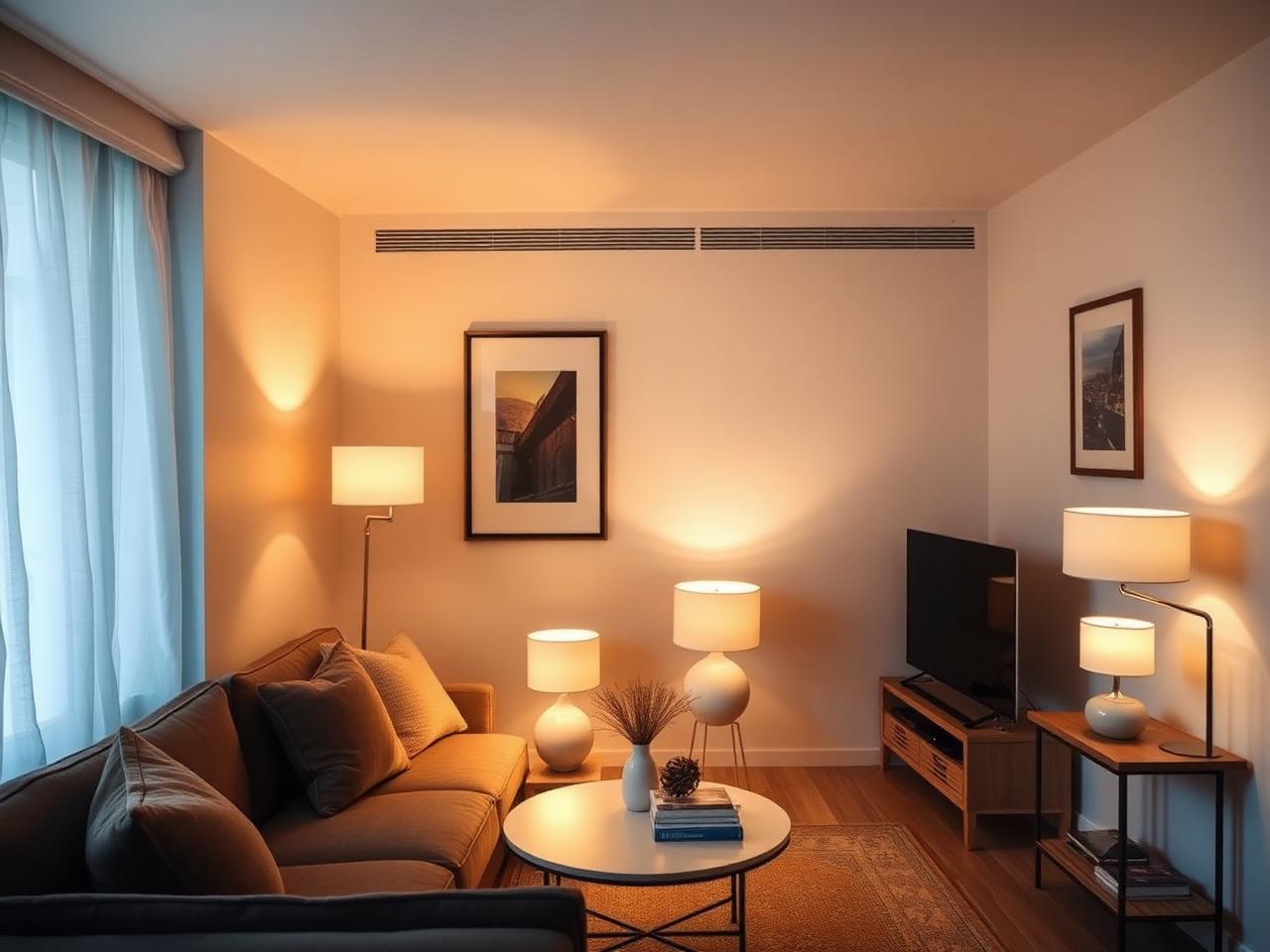
A lamp near a wall can make that part of the room more visible in the evening. Try an existing lamp in a usable corner and see what its actual light reaches. Shade shape, furniture, and wall finish affect the result; corner placement is not a guarantee of a larger-looking room.
Leave some visual space between lit areas if you like that effect, but do not keep an important route dark for atmosphere. The aim is a room whose separate areas make sense, not a dramatic contrast that makes everyday tasks difficult.
Mirrors deserve a seated check. A reflection may show a pleasing pool of light or put a bright source directly in view. Look from the sofa and the dining chair before treating the mirror as part of the arrangement.
Test the arrangement in daily use
Spend an evening with a trial position before adding another piece. Sit, stand, open cupboards, and pull chairs out. Check whether the switch is reachable and whether the cable can reach the intended power source without crossing the walkway or being trapped by furniture.
For close work, assess the light on the actual page or surface. A decorative glow is not evidence of enough useful task light. Keep the lighting that lets you see the activity clearly, even if it differs from your evening arrangement.
Photograph the trial from the doorway to compare the composition, then judge it in person again. A photograph cannot tell you whether a table still works for breakfast. Note the one remaining problem, if there is one, and measure that location before choosing anything else.
The Editor's Notes
Get the Lumière styling notes
One quiet essay a month on layering light and shaping the atmosphere of a room. No noise. Unsubscribe anytime.
The Editor's Notes
One essay. One piece. Once a month.
Quiet dispatches from the studio. Unsubscribe anytime.
For the hour after
For the hour after the overhead light goes off
Shop lamps built for the quiet part of the evening.
Share this guide