Dining Room Lighting: See the Table and Shape the Room
Keep useful light on food, faces and serving areas, then add surrounding lamps for atmosphere without blocking sightlines or creating seated glare.
By Lumière Light Studio Editorial
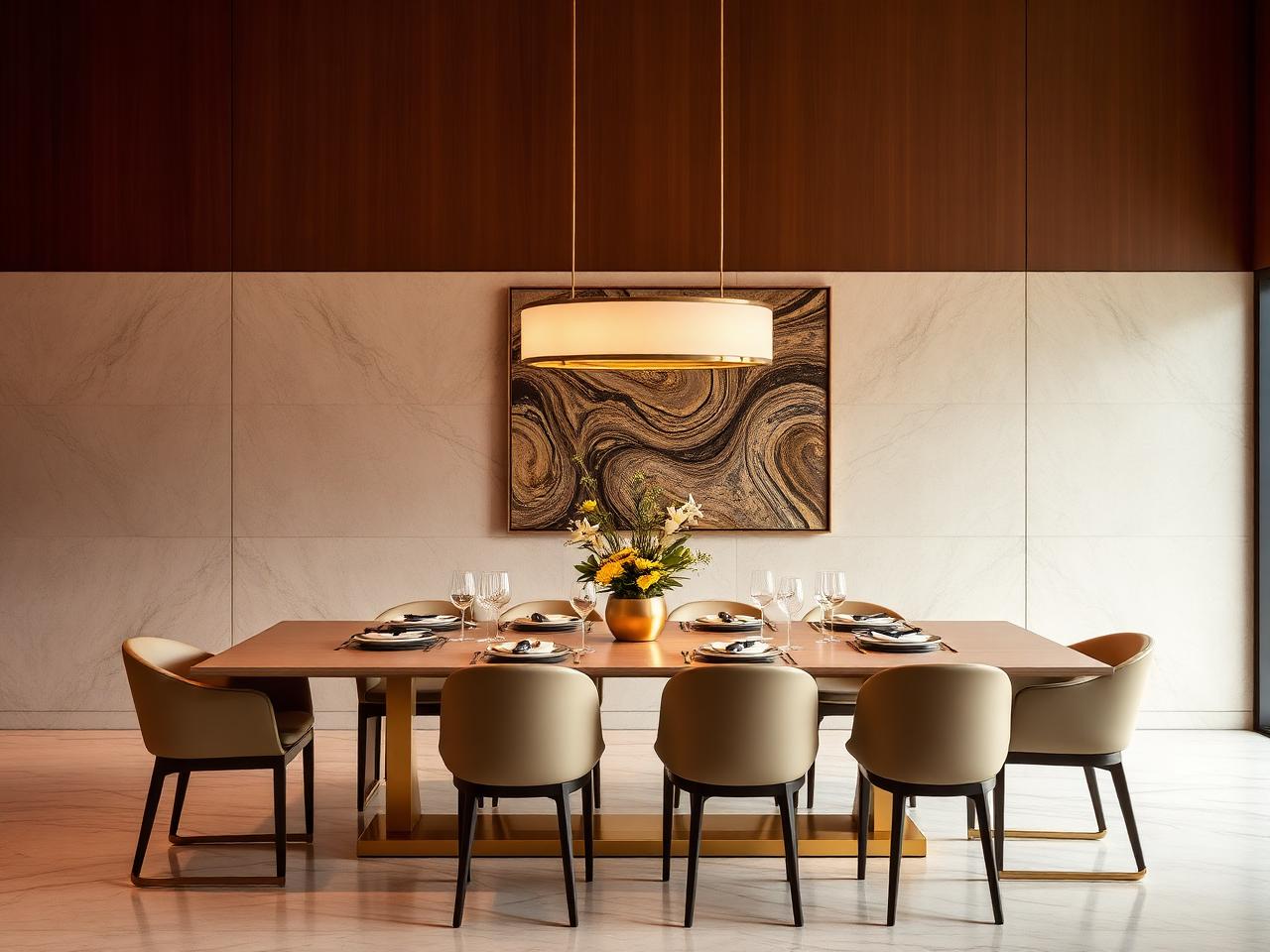
Dinner lighting has a practical job before it has a decorative one. People need to see what is on their plates, recognise the person opposite and pass dishes without searching for an unlit space. A room can look atmospheric from the doorway while making those ordinary actions awkward at the table.
Separate the table from its surroundings when planning the light. The existing overhead or pendant can continue to illuminate the meal. A lamp on a console or sideboard can give the surrounding room another layer. These sources need not compete, and the decorative layer does not have to take over the table's work.
Keep useful light where the meal happens
Begin with the table laid for an ordinary meal. Include plates, glasses and the serving dishes you regularly use. Switch on the existing table light and sit down. Look at the centre, both ends and the places where food is served. One bright patch in the middle is not the same as useful coverage across the whole surface.
Try reading a label or identifying the contents of a serving bowl from the end seat. Check whether a tall centrepiece interrupts the light or hides a dish. Remove or relocate an obstruction before deciding that the room needs another lamp. A simpler arrangement may make better use of the illumination already available.
Keep the overhead or pendant in use if it serves the meal well. Overhead light is not inherently unsuitable for dining. Its direction, coverage and appearance from the seats matter more than a rule against ceiling fixtures. If the table remains difficult to use, a decorative console lamp is not evidence that the table-lighting problem has been solved.
When an installed fixture needs assessment or alteration, ask a qualified professional. A placement guide can help identify what you want to see differently, but it is not a set of instructions for moving fittings or changing electrical controls. Describe the dark areas and obstructed views rather than specifying an untested fix.
Protect the view across the table
Look directly at the person opposite from each occupied chair. A pendant, shade, vase or table lamp can interrupt that view. The important line is between seated faces, not the view of the arrangement while standing beside it. Different chairs and different seated heights can change where an obstruction appears.
A universal hanging measurement cannot account for every fixture and table. Keep a useful note of where the obstruction appears and from which seat. If the installed pendant blocks conversation, take that observation to a qualified professional rather than trying to adjust its suspension yourself. A good-looking overhead arrangement still needs to work when people sit beneath it.
Keep portable lamps off the dining surface if they crowd plates or occupy the shared view. A nearby sideboard may offer a better decorative location. If a lamp is being considered for the tabletop, account for its full shade width, the serving space and the route of its cable before treating it as a workable arrangement.
Judge glare at seated eye level
A shade that looks comfortable from above may reveal a bright opening when viewed from a chair. Sit at the head, foot and sides of the table. Look toward the pendant and toward each surrounding lamp. Note whether you see the source directly or a bright reflection in a mirror or cabinet door behind another person.
Check glossy plates, polished cutlery and the tabletop too. A reflection may obscure something from one chair while remaining invisible from another. Try moving portable surrounding lamps between suitable existing surfaces, one change at a time. Compare the occupied seats again after each move instead of judging the result only from the doorway.
More brightness is not automatically the answer to a reflection. Direction can matter just as much. If a lamp on the console shines into the eyes of the person facing it, a different position may be more useful than adding a second decorative source. Keep the useful table light while you assess the surrounding layer separately.
Let surrounding lamps support the table
A console lamp can make a wall or the edge of the room visible without occupying the meal surface. That is a useful atmospheric role in its own right. It does not establish that enough light reaches food or faces, particularly when the console is behind the chairs or some distance from the table.
Leave the console's working area usable if it also holds serving dishes. Place the lamp where its base and shade fit fully, where controls remain accessible and where chair movement does not disturb its cable. Pull out the nearest chair, stand up and walk the normal route behind it. The arrangement should work during serving, not just while the chairs are tucked in.
Warm-looking surrounding light may suit the atmosphere you want, but there is no compulsory colour setting for a meal. Compare the actual combination on familiar plates and food. A coloured decorative glow is a styling choice, not proof of accurate colour appearance or sufficient table illumination. Lumière product pages do not currently list lumen output, so their decorative role should stay distinct from a task-lighting claim.
Save a usable meal setting before changing the mood
If existing controls provide adjustment, begin at a level where the whole table is usable. Then compare the room with the surrounding lamp on and off. Reduce only what can be reduced without losing the practical view you just checked. Do not assume that a new lamp or existing fixture supports dimming; consult its current specifications and instructions.
Finish by noting which lights serve the table and which serve the room. Keep that simple arrangement as your everyday starting point. Before adding anything, sit in the least favourable chair once more and check the plate, the person opposite and the serving route. Those observations are more useful than a photograph of an empty dining room.
The Editor's Notes
Get the Lumière styling notes
One quiet essay a month on layering light and shaping the atmosphere of a room. No noise. Unsubscribe anytime.
The Editor's Notes
One essay. One piece. Once a month.
Quiet dispatches from the studio. Unsubscribe anytime.
For the hour after
For the hour after the overhead light goes off
Shop lamps built for the quiet part of the evening.
Share this guide