Switch a Dining Table Between Paperwork and Dinner
Make two repeatable lighting arrangements for one table, with a clear place for work equipment when the meal begins.
By Lumière Light Studio Editorial
At the end of a work session, the dining table needs to become a dining table again. Moving the laptop is only part of that change. A task lamp, its cable and the papers beside it can still occupy serving space or interrupt the view across dinner.
Treat the table as two documented arrangements. One serves the particular seat used for paperwork. The other serves the people and dishes around the table. The existing overhead may contribute to both, while portable equipment changes position or leaves the surface.
Give the work setup a defined seat
Choose the place you normally work, then set out the laptop, paper and notebook together. Keep the existing room light in use while checking the arrangement. Notice whether the paper is shaded by your writing hand and whether the laptop shows a reflection from a nearby source.
A source opposite your writing hand is a useful starting point for paper work, not a guaranteed answer. Try a few lines of notes. Move the notebook between the laptop and its usual side position. If one of those locations becomes unreadable, record it as part of the work requirement.
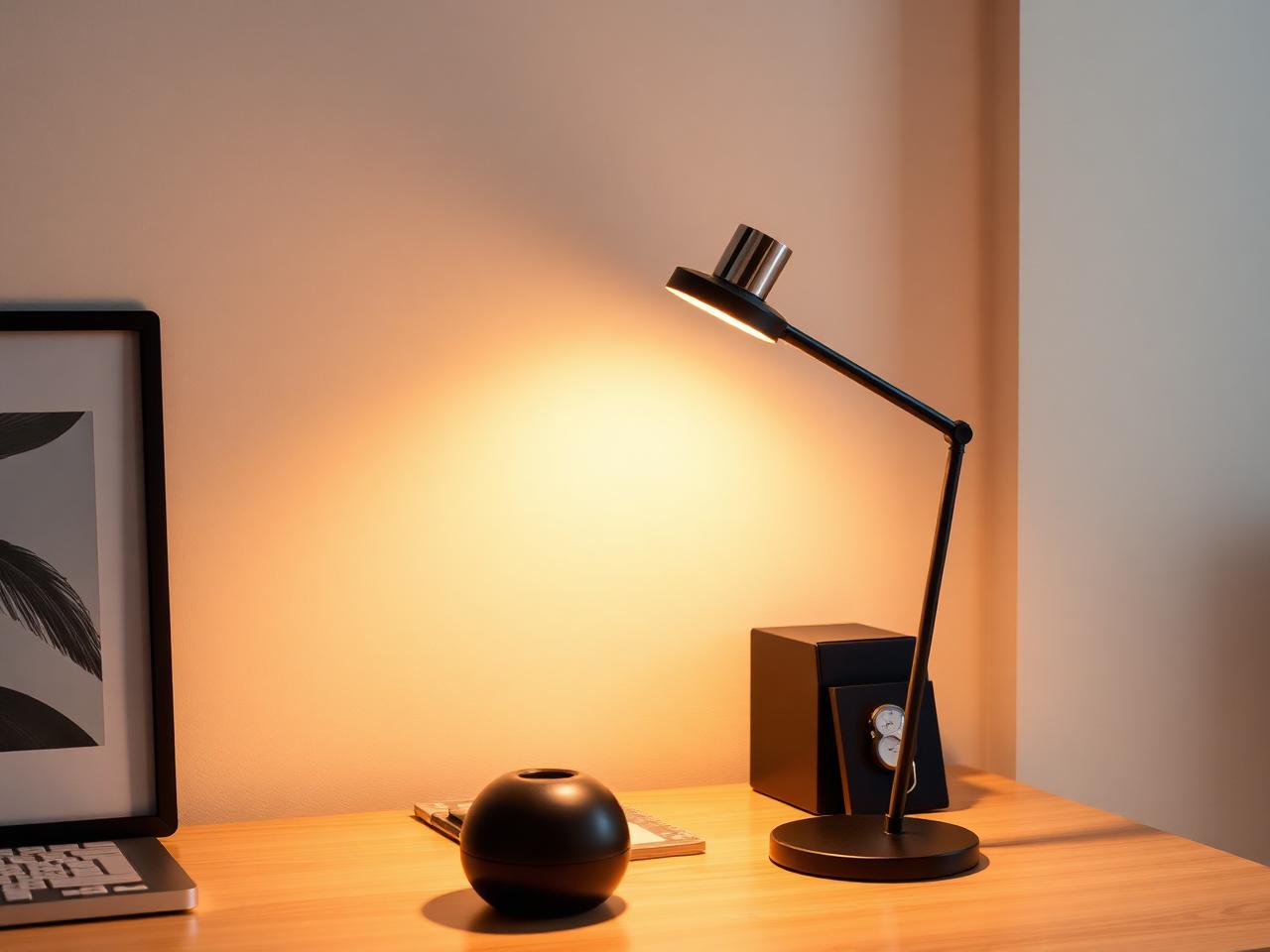
Look at the screen from your working posture. Compare the position of a portable lamp without changing several things at once. A reflection on the display may call for a different direction rather than more light. Keep the laptop in a practical position, not tilted awkwardly just to accommodate a decorative lamp.
Allow space for the lamp's full footprint if it belongs on the table. A small base does not describe the shade's reach. If the work layout consumes the serving area, that may be acceptable during work, provided there is an actual place for the equipment when the table changes role.
Make the meal setup a separate arrangement
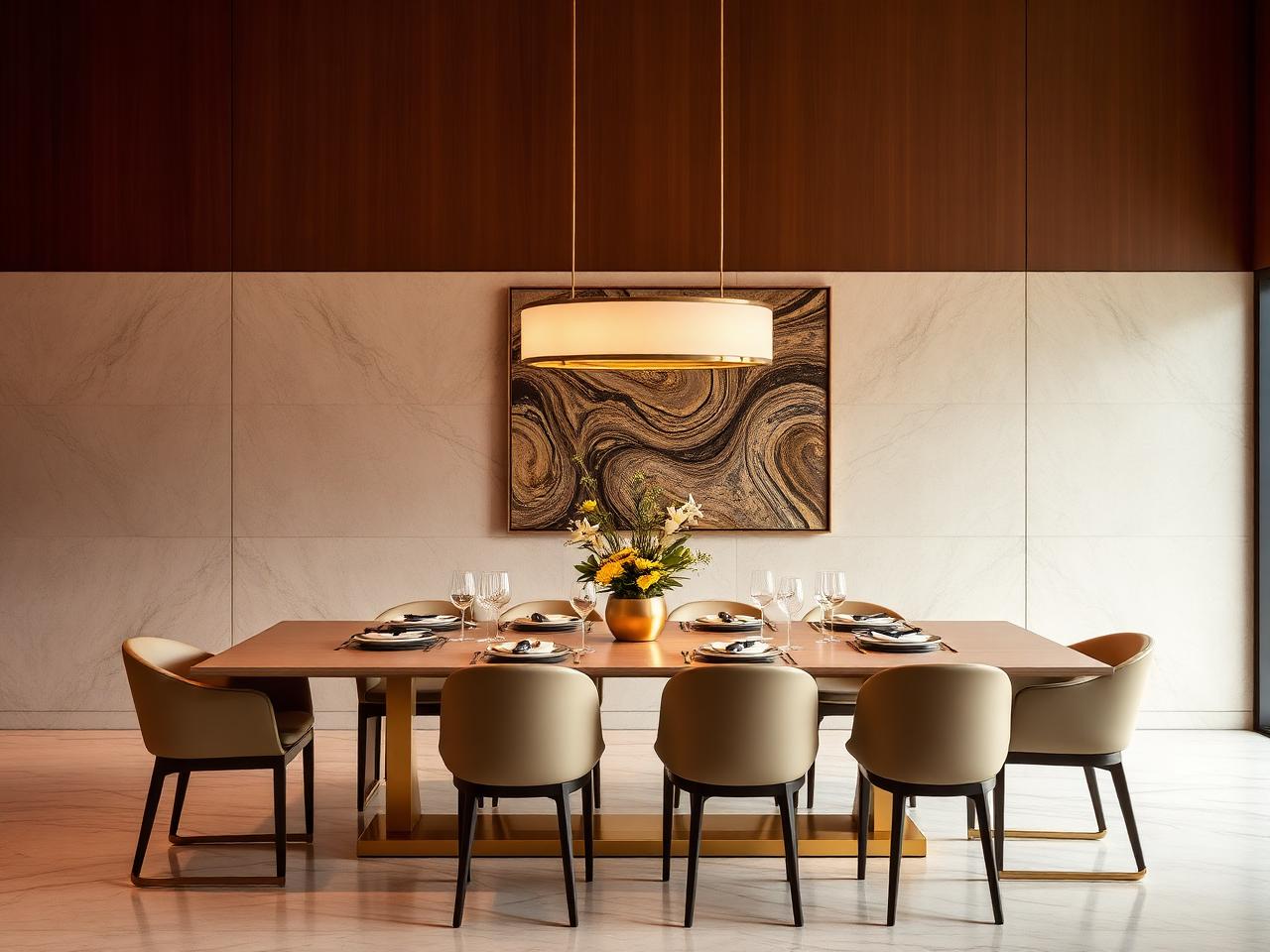
For dinner, restore the overhead or pendant as the table-lighting layer where it provides useful coverage. Put out plates and a serving dish before deciding whether the arrangement works. Check the ends of the table as well as the centre, and look at the person opposite from each chair.
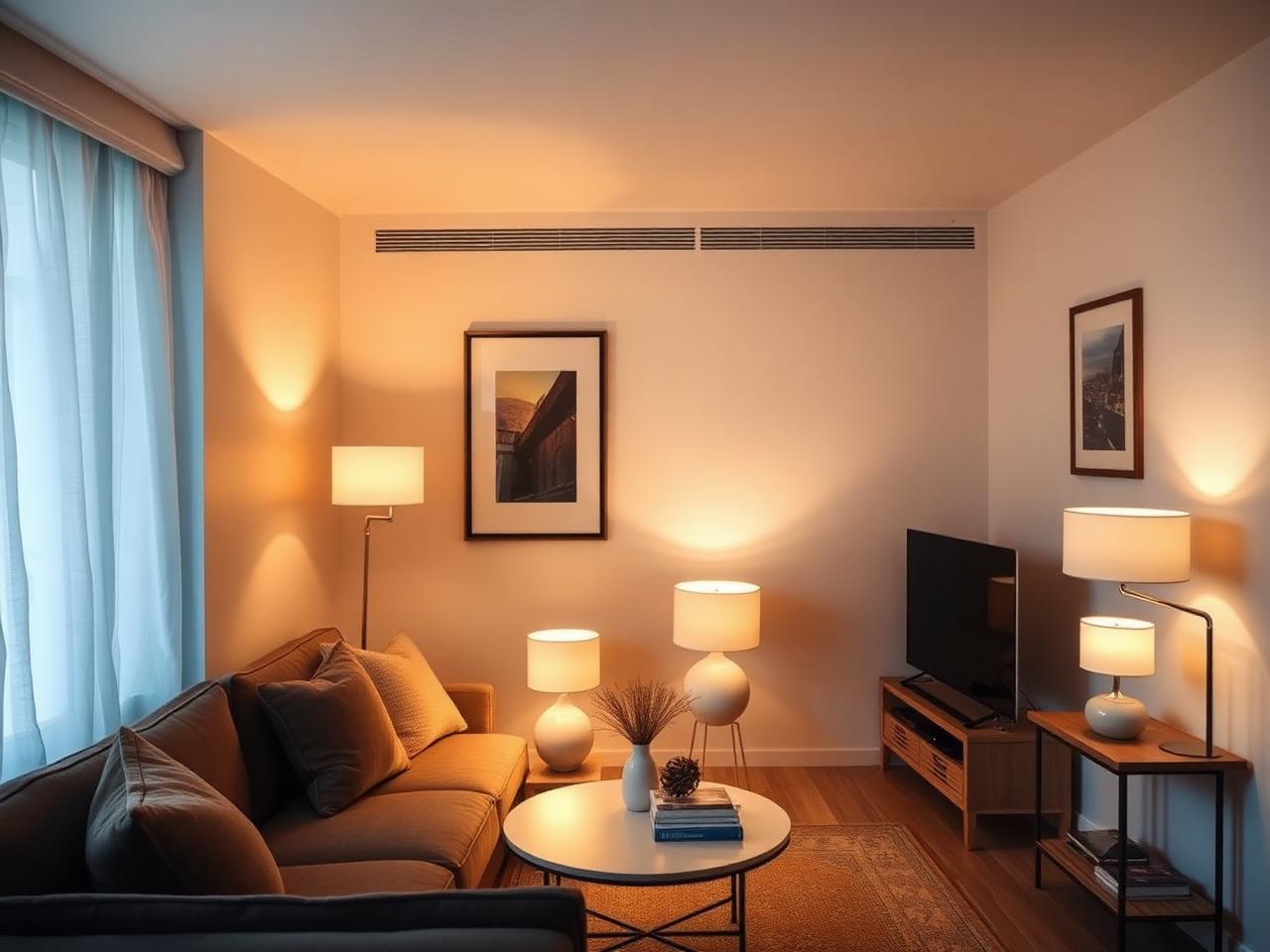
A console lamp can remain as surrounding light. It does not replace the need to see the meal. Keep its role separate from any task source used during paperwork, and check that it does not shine toward a seated person's eyes once the work chair has moved.
| Arrangement | Keep available | Clear from the table |
|---|---|---|
| Paperwork | Laptop view, page light, writing area | Items that block documents or controls |
| Meal | Plate visibility, shared view, serving space | Work equipment and its cable route |
This is a planning example, not a requirement for particular equipment. The two arrangements may share most of their lighting. The important distinction is what each needs to reveal and which objects each needs to leave out of the way.
Give portable equipment a real destination
Choose a suitable resting place for work equipment that is not a chair someone will need or a narrow route around the table. Follow the lamp manufacturer's handling and operating instructions when moving it. A lamp used on another surface must fit and function appropriately there too.
Plan cables as part of each arrangement. Do not leave a work cable crossing a chair's path simply because the laptop has gone. Use only the cable or adapter specified by the listing or manufacturer, and ask support when the required arrangement is unclear.
Record the reset you can repeat
Sketch the work seat and lamp position, then sketch the meal layout beside it. Note the destination for the laptop, lamp if moved and paperwork. A brief reset that reflects actual objects is more useful than a general instruction to clear the table.
For any proposed task lamp, seek documented information relevant to its use. Lumière product pages do not currently list lumen output, so decorative appearance is not proof that one will serve paperwork. Assess the functional need separately from surrounding styling.
Try both arrangements on an ordinary evening. If changing from one to the other requires shifting several pieces of furniture, simplify before adding more equipment. The next step is a repeatable transition that preserves useful light, not a second permanent workspace inside the dining room.
The Editor's Notes
Get the Lumière styling notes
One quiet essay a month on layering light and shaping the atmosphere of a room. No noise. Unsubscribe anytime.
The Editor's Notes
One essay. One piece. Once a month.
Quiet dispatches from the studio. Unsubscribe anytime.
For the hour after
For the hour after the overhead light goes off
Shop lamps built for the quiet part of the evening.
Share this guide