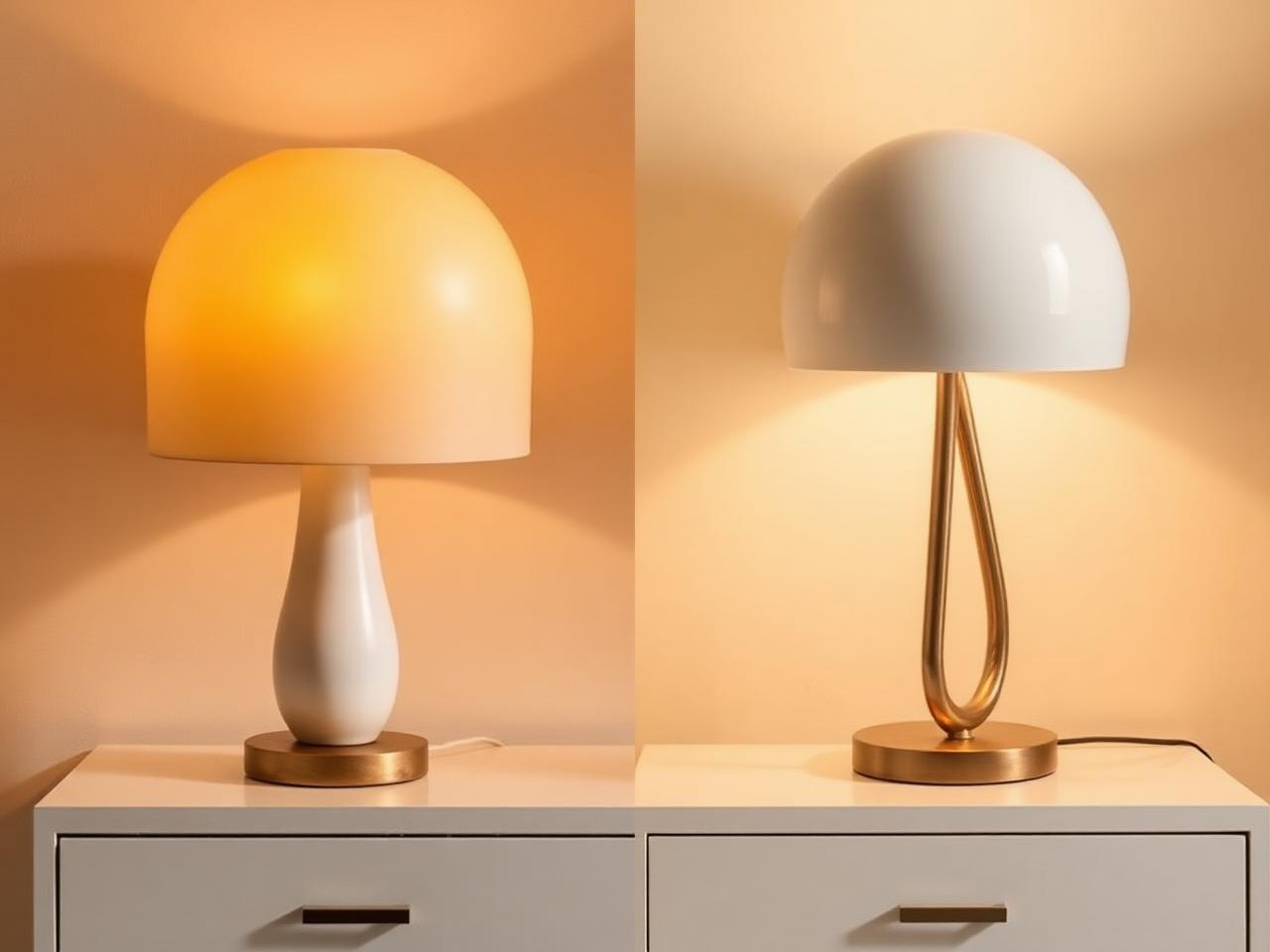
Can a Lamp Fit on a Kitchen Counter or Breakfast Nook?
Establish a suitable dry location, then check counter depth, food preparation space and the full cable route.
By Lumière Light Studio Editorial
The quiet end of a kitchen counter can look like an inviting place for a lamp until the kettle, chopping board and breakfast dishes return. A workable position has to survive ordinary kitchen use, not just an empty-counter photograph. Start by deciding whether the proposed location is appropriate at all.
A separate breakfast nook may offer a better opportunity than the main preparation counter. Even there, proximity to drinks, moving chairs and the route between table and kitchen needs attention. A domestic room label alone does not establish suitability for a particular lamp.
Location guidance rules out positions before styling begins
Consult the lamp manufacturer's location and placement instructions. Keep it away from sinks, hobs and heat, and out of places exposed to splashes or steam. Consider nearby appliances as they are actually used, including a kettle or toaster that is brought forward during breakfast.
Do not invent a universal separation distance. The relevant instructions and the specific layout decide whether a position can be considered. If the guidance is absent or the location remains uncertain, ask the manufacturer before using the lamp there. Choose another room while that question is unresolved.
A clear patch between appliances is not necessarily a suitable spot. The cable, control and connection also need an appropriate location. Do not let a decorative preference override the manufacturer's restrictions or improvise protective covers.
Measure the depth left after everyday use
Record usable depth from the front edge to the actual obstruction behind the lamp. A splashback ledge, projecting trim or nearby cupboard can reduce that space. Compare it with the lamp's complete dimensions, including a shade wider than its base and any clearance its instructions require.
Keep the entire base supported on a stable surface. A shade that projects into the area where you lift dishes or work with food is a practical reason to reject the position, even if the base fits neatly. Check cupboard doors through their full movement without a lamp in the way.
Now put the usual breakfast objects back. Leave room to set down a plate without sliding it under the shade or reaching around the lamp. If the only workable arrangement depends on keeping a busy counter empty, consider a separate dry side surface rather than a smaller gap.
Trace the cable before choosing the final spot
Follow the complete intended cable route to the appropriate connection. It should not cross a sink, cooking area, preparation surface or walking route. Keep it away from heat and moving doors, and avoid places where chairs, drawers or appliances could trap it.
Use only the cable and adapter specified by the product listing or manufacturer. If the route cannot work with the specified equipment, do not solve the layout with improvised electrical accessories. A different lamp position is the more useful planning decision.
At a breakfast nook, sit down and stand up as you normally would. Check the source for glare at seated height and make sure chair movement does not approach the cable. Retain the functional kitchen lighting for preparation and cleaning; an accent lamp need not replace it.
Measure one candidate location with the everyday objects present, then check the manufacturer's guidance against that actual setting. Only move on to appearance once both the location and cable route make sense.
The Editor's Notes
Get the Lumière styling notes
One quiet essay a month on layering light and shaping the atmosphere of a room. No noise. Unsubscribe anytime.
The Editor's Notes
One essay. One piece. Once a month.
Quiet dispatches from the studio. Unsubscribe anytime.
For the hour after
For the hour after the overhead light goes off
Shop lamps built for the quiet part of the evening.
Share this guide