Borrowing Lighting Ideas from European Interiors Without Copying a Room
Translate the relationships in an interior photograph into your own space, without assuming a single European lighting style.
By Lumière Light Studio Editorial
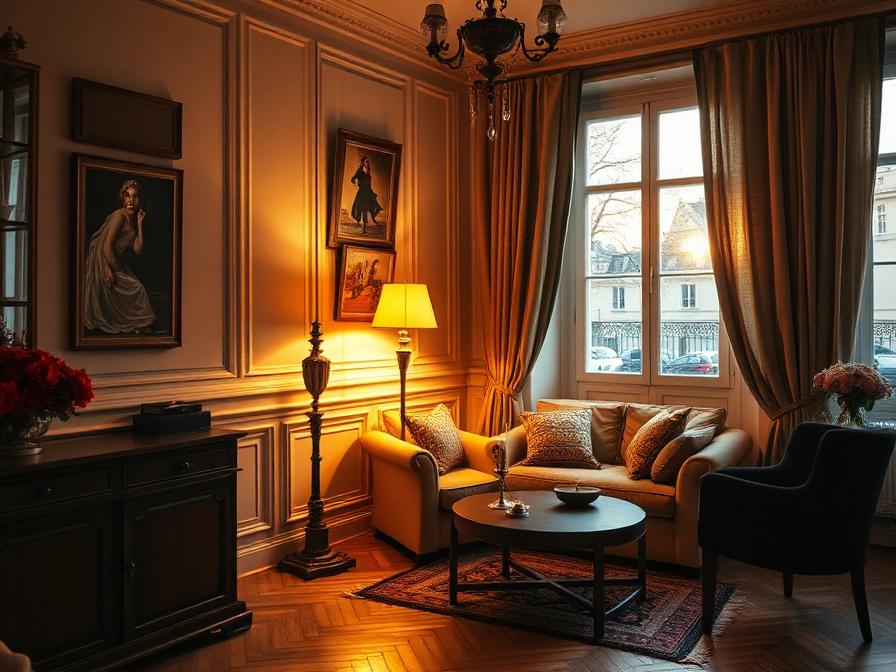
A photograph of an apartment in Paris and one of a house in Copenhagen may offer very different lighting ideas. Neither stands for the way a continent lives. What makes an image useful is a relationship you can identify and adapt, not an address that guarantees good taste.
Perhaps a lamp balances a tall picture. Perhaps a brighter foreground sits against a quieter wall. Looking for those relationships lets you borrow an idea without copying architecture, furniture, or a national identity.
Read the arrangement instead of assigning a national style
Describe the image without place names. A small lamp sits beside a large mirror. A floor lamp marks the end of a sofa. A lit wall gives depth behind a dining area. These descriptions are more actionable than saying a room feels European.
Notice what is not visible. A photograph may omit ceiling lights, cables, other seats, or the route into the room. It can show a successful composition without showing a complete lighting plan. Avoid treating what lies outside the frame as evidence that it is absent.
The photograph also records one moment. Daylight, other sources, and exposure affect how bright the lamp appears. Use the image to understand arrangement, not to calculate light output or decide that the same lamp will produce an identical result.
Compare the architecture before repeating the placement
A high wall can make space for a tall composition. A deep console can accommodate objects that would crowd a narrow shelf. If those conditions differ at home, copying the arrangement literally may make it less useful.
Instead, retain the relationship at a different scale. A lamp beside artwork might move to another surface where both can be seen. A background glow might belong on a wall visible from the sofa rather than in the corner shown in the photograph.
Keep doors, seating, and walking routes in the comparison. An image may make a floor lamp look isolated and elegant, while the same position in your room would interrupt a route. Let the actual plan decide where the borrowed idea can live.
Existing furniture can supply the connection
You do not need a matching set of objects. Look for one link between the reference and something you own: a rounded outline, a repeated dark line, or a similar balance of open and occupied space. That can be enough to guide a small change.
Try rearranging nearby decoration before adding a lamp. Sometimes the useful lesson is that the light has more room around it, or that the wall behind it is less busy. More purchasing will not necessarily recreate that clarity.
Keep functional lighting in place while making the comparison. There is no need to reject overhead sources or make the whole room darker to borrow a particular composition. The image is a reference, not an instruction for every activity.
Keep the idea that survives ordinary use
Judge your adaptation from the doorway and from the seat used most often. Check the surface still holds what it needs, controls remain accessible, and reflections are acceptable. A pleasing view should not depend on clearing away daily necessities each time.
Choose one relationship from a reference image and sketch it beside a rough plan of your own room. If it still makes sense with the furniture, routes, and lighting you need, try that arrangement before looking for additional objects.
The Editor's Notes
Get the Lumière styling notes
One quiet essay a month on layering light and shaping the atmosphere of a room. No noise. Unsubscribe anytime.
The Editor's Notes
One essay. One piece. Once a month.
Quiet dispatches from the studio. Unsubscribe anytime.
For the hour after
For the hour after the overhead light goes off
Shop lamps built for the quiet part of the evening.
Share this guide