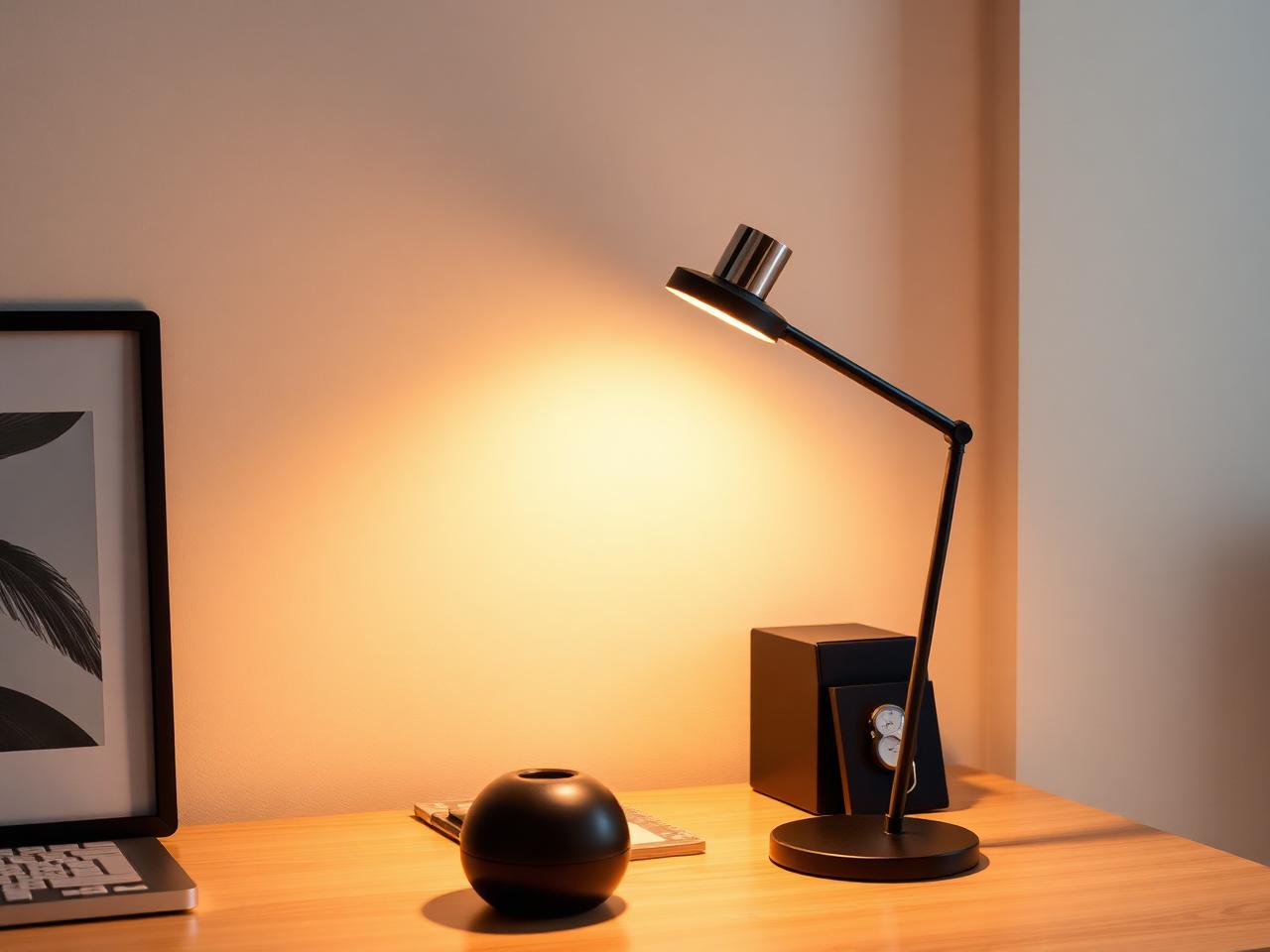
A Lamp in an Older Child’s Room: Start With the Homework Surface
Plan a usable homework surface, straightforward operation and a cable route an adult can check.
By Lumière Light Studio Editorial
Exercise books rarely stay in the neat stack shown in a room photograph. They spread across the desk with a pencil case, an open textbook and perhaps a screen. A lamp for an older child’s room needs a viable place within that actual arrangement, not just an empty corner available before homework begins.
Start with the child at the desk and an adult checking the equipment requirements. This is a guide to everyday room use, not a claim about learning, development or health. The child’s preferences matter, while product suitability and placement still need adult review.
The working area takes priority over decoration
Set out the materials used for an ordinary assignment. Leave room to turn pages and write without pushing the lamp toward the edge. Compare the base footprint and the full shade width with the space that remains.
Check light on the writing area rather than judging how bright the shade looks. A decorative glow may be welcome elsewhere in the room without being useful for homework. Where the existing light is inadequate, compare a documented task source rather than assuming a decorative lamp will fill the gap.
Ask the child to make a few normal writing movements. If their hand blocks the light, try a permitted position on the other side. Check an open book and any screen too. A useful page view should not depend on leaning around the shade or changing the desk into an impractical layout.
Ordinary use should not involve moving the lamp
Choose a suitable, stable surface with the base fully supported, following the manufacturer’s instructions. Keep the lamp separate from piles of loose paper and follow the required clearances. Do not use books or storage boxes as risers.
Check that the control is easy to identify and reach from the working chair. The child should not need to pull the cable or lift the lamp to switch it on. Confirm what the control does; a touch surface may have an operation sequence that is not obvious from its appearance.
Discuss the routine rather than issuing a general instruction to be careful. Establish where bags go, where completed work is stacked and which part of the desk stays clear. If routine use repeatedly crowds the lamp, reconsider the furniture arrangement.
Adults should trace the cable and revisit the setup
Follow the whole cable to the specified connection. Keep it away from chair wheels, drawers, door movement and walking routes, without accessible loose loops. Do not leave a dangling section where it is likely to be pulled during play or desk use.
Use only the manufacturer-specified cable or adapter. If the required route cannot work without tension, trapping or an unverified accessory, choose another lamp location. Adult checks do not make an unsuitable product or arrangement appropriate.
Review the setup when the desk moves, storage changes or younger children begin using the room. Keep equipment outside younger children’s reach and follow the product’s instructions. Ask the older child to mention a wobble, a difficult switch or visible cable damage rather than trying to correct it. The next useful step is a shared desk review with ordinary school materials in place.
The Editor's Notes
Get the Lumière styling notes
One quiet essay a month on layering light and shaping the atmosphere of a room. No noise. Unsubscribe anytime.
The Editor's Notes
One essay. One piece. Once a month.
Quiet dispatches from the studio. Unsubscribe anytime.
For the hour after
For the hour after the overhead light goes off
Shop lamps built for the quiet part of the evening.
Share this guide

