Nursery Lighting: Practical Placement and Everyday Access
Plan nursery light around adult reach, stable placement, clear routes and cables kept out of a child’s reach. Follow each product’s safety instructions.
By Lumière Light Studio Editorial
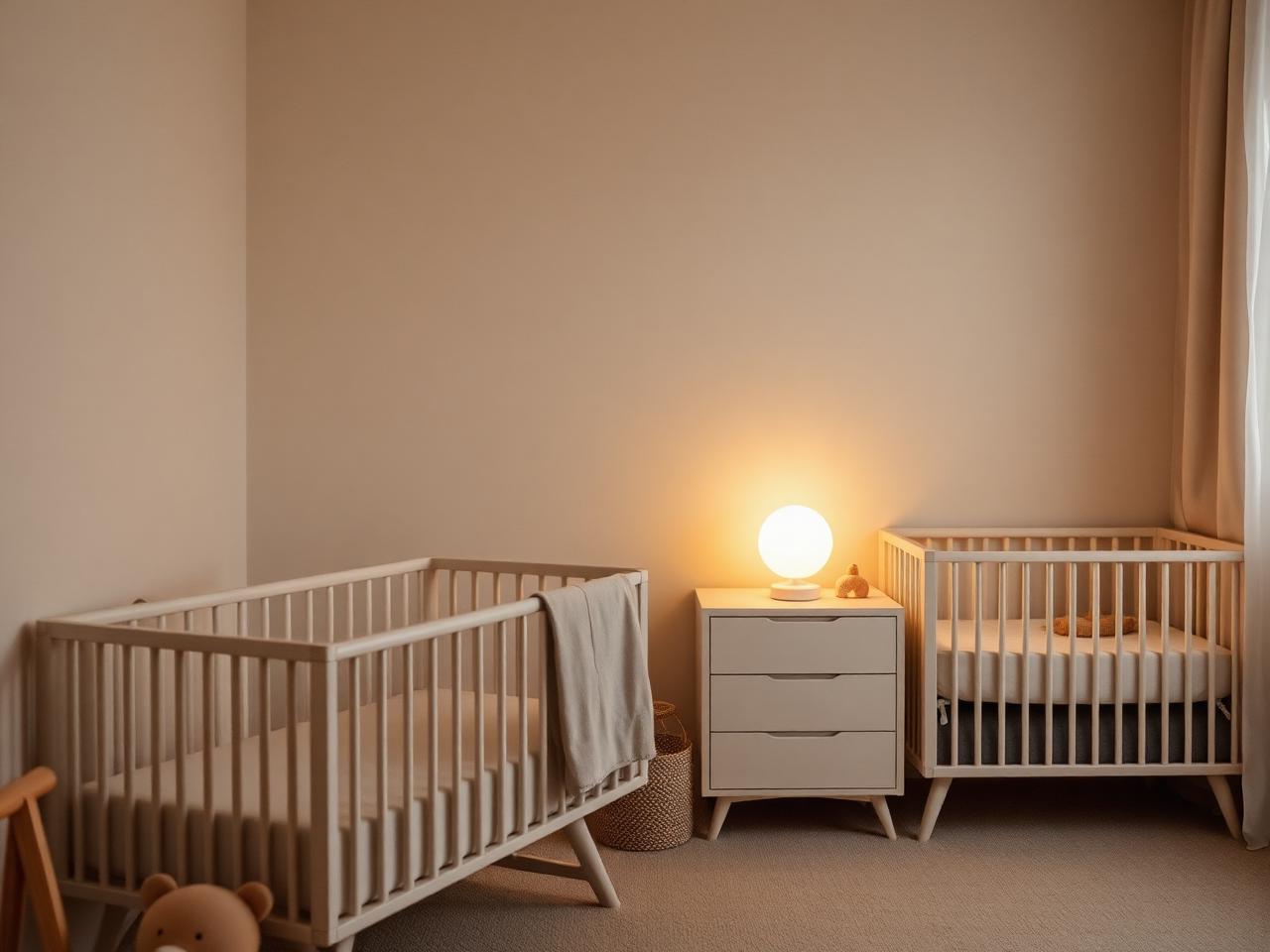
In a nursery, the useful lighting question is often very immediate: can the adult using the room see what they are doing and reach the control while holding a baby? Start with that practical sequence rather than a preferred lamp shape. A decorative glow does not establish that a feeding chair or changing area has the light it needs.
Plan the room with its existing functional lighting available. Different activities may need different arrangements, and it is reasonable to use brighter light for a task. This guide concerns placement and access, not infant sleep or health, and no light colour or lamp style is presented as a solution to those concerns.
Work through the adult's actual movements
Walk the route from the doorway to the chair and changing area with empty arms first. Identify where you would need to operate a control while holding a baby. If it requires bending behind furniture, stretching over the chair or moving the lamp, choose a different control position or lighting arrangement.
Try the sequence from a seated position too. A control that is convenient while standing can be inaccessible once you are holding a baby in the chair. Rehearse with a cushion rather than moving a lamp or testing an awkward reach with a child in your arms.
Keep the required items accessible without reaching around the lamp. The light should not occupy the patch needed for care supplies or sit where a hand is likely to knock it during ordinary use. A clear surface can be more practical than a styled arrangement with several small decorative objects.
Stable placement and inaccessible cables come first
Follow the lamp manufacturer's safety, setup and placement instructions. Use an appropriate stable surface with the base fully supported. Do not put a lamp on books or another improvised riser. Do not assume that a decorative lamp is intended for use near a cot or within a child's reach.
Keep lamps, cables and controls out of the child's reach, including from the cot and other furniture the child can access. Plan the entire cable route, not just the short section visible on top of a dresser. Do not leave accessible loops or route a cable where it can be pulled, trapped or crossed during movement.
Review placement as the child grows and the furniture changes. A location that was inaccessible at one stage may not remain so. If the arrangement cannot keep the lamp and its cable out of reach while following the product instructions, choose another location or a different lighting arrangement.
Judge visibility at each care position
Look at the surfaces you actually use. A lamp glowing beside the chair may not illuminate the changing area. Keep functional lighting for tasks that need it, and assess the room with its usual curtains and furniture in place. Avoid assuming that a shaded source is free of glare from every position.
For wall fixtures, use qualified installation according to the fixture's instructions. Do not improvise mounting or modify a lamp to suit the room. Ask support about unclear product requirements before planning around an unconfirmed feature.
Make the next step a room walk-through without the baby: check the route, adult control access, stable placement and the full cable path. Revisit anything that requires an awkward movement or puts equipment within a child's reach.
The Editor's Notes
Get the Lumière styling notes
One quiet essay a month on layering light and shaping the atmosphere of a room. No noise. Unsubscribe anytime.
The Editor's Notes
One essay. One piece. Once a month.
Quiet dispatches from the studio. Unsubscribe anytime.
For the hour after
For the hour after the overhead light goes off
Shop lamps built for the quiet part of the evening.
Share this guide