Choosing a Lamp for a Room with Mixed Metal Finishes
Inventory the finishes you can actually identify, then choose repetition or contrast without guessing material from a photograph.
By Lumière Light Studio Editorial
Your room may already contain several metallic details before a lamp enters it: door handles, a mirror frame, furniture legs and picture fittings. Finding one finish to match all of them can turn a small decision into an impossible search. A more useful approach is to decide which relationship the lamp should have with the details that matter most.
Start by distinguishing known information from visual impressions. You may know the finish of a recently purchased handle but only see a warm colour on an older frame. Keep that uncertainty visible rather than assigning both the same material name.
Inventory the finishes that share the view
Stand where the lamp will usually be seen. List the nearby metallic surfaces, their apparent colour and their sheen. Note which are large, which catch light and which are barely noticeable. A small reflective fitting can attract more attention than a broad muted surface.
Limit the inventory to the relevant view. A metal in a distant room does not necessarily need a partner beside this lamp. The aim is a coherent local relationship, not a single finish across the entire home.
For anything you can identify from documentation, use the stated finish name. For the rest, write a visual description such as pale and reflective. That is enough to plan a relationship without making a construction claim.
Repetition and contrast solve different problems
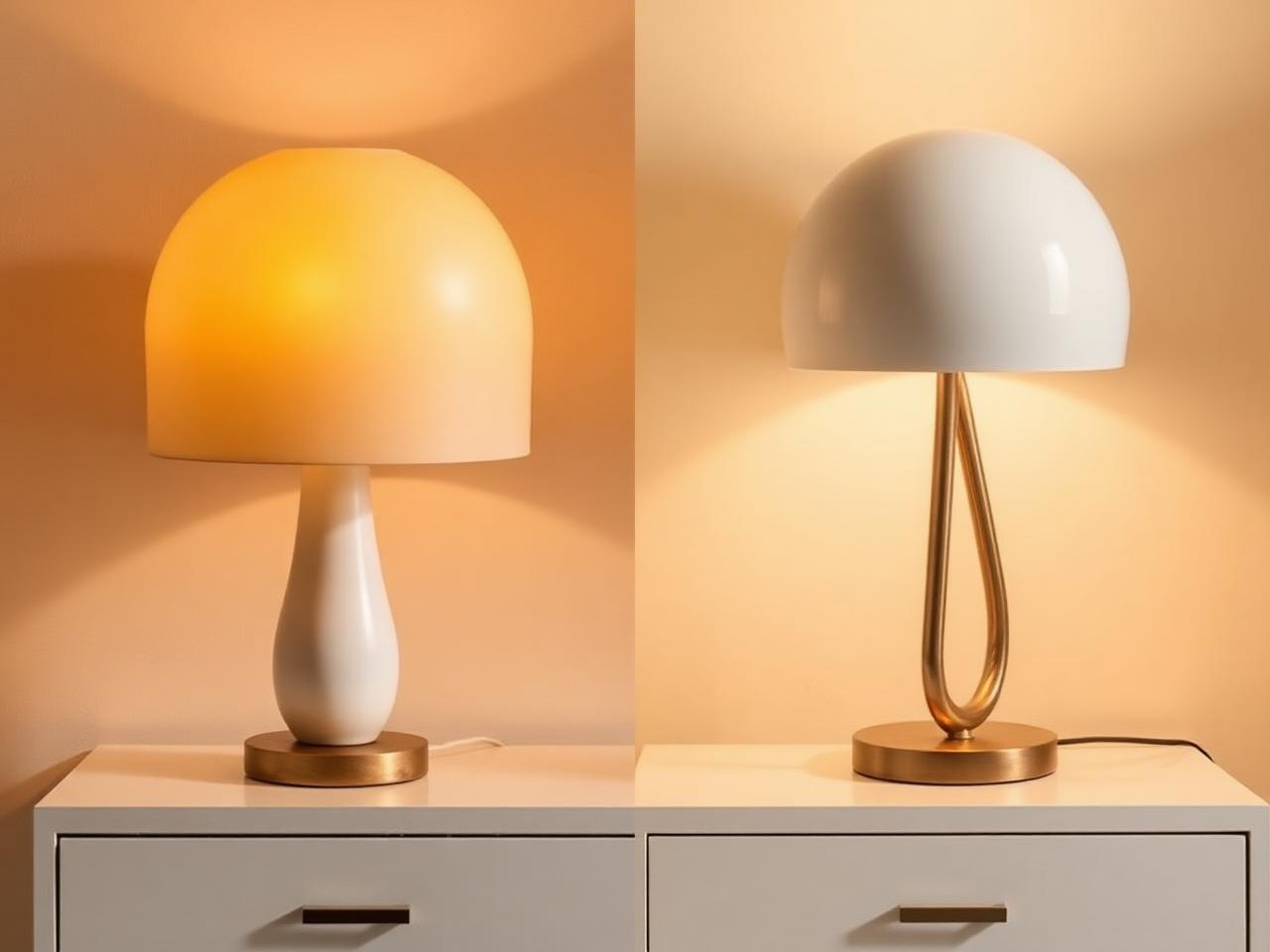
Repeating a prominent finish can help the lamp feel connected to a nearby frame or furniture detail. Exact matching is not required for that visual link, but if an exact match matters to you, finish names alone may not establish it across different manufacturers.
Contrast can be useful when the room already has a dominant metallic surface and the lamp would otherwise disappear against it. A different sheen or colour may give the lamp its own place. Decide which distinction you want instead of changing several qualities at once without a clear aim.
A lamp with little visible metal may also be a reasonable choice. You do not have to add another metallic focal point simply because the room contains several. Look at how much of the base or support will actually remain visible beneath the shade.
Confirm the finish before treating the photo as evidence
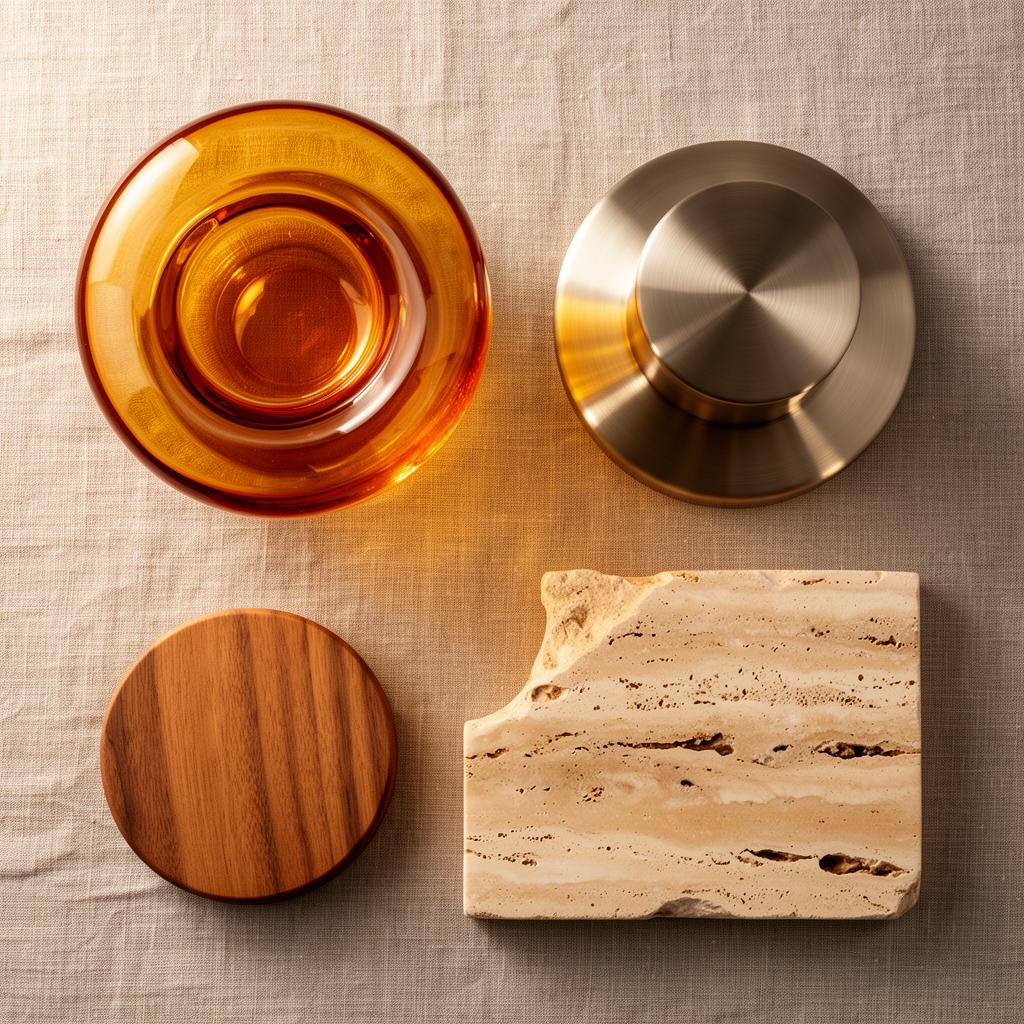
Photographs help you see the silhouette and broad balance of materials. They are less reliable for identifying a finish. Nearby colours, reflections, exposure and your screen can all change a metal's apparent colour. A warm-looking reflection is not proof of brass, and a pale reflection is not proof of chrome.
Check the exact product and variant description. If only a colour is stated, do not turn that into a metal claim. Ask support to confirm the finish when the distinction affects your choice; Lumière product pages do not currently describe metallic finish composition.
Write a one-line intention before comparing options: repeat the frame, contrast with the cabinet hardware, or keep visible metal quiet. That gives you a test you can actually use. Confirm the stated finish next, and leave an undocumented match unresolved rather than trusting a photograph.
The Editor's Notes
Get the Lumière styling notes
One quiet essay a month on layering light and shaping the atmosphere of a room. No noise. Unsubscribe anytime.
The Editor's Notes
One essay. One piece. Once a month.
Quiet dispatches from the studio. Unsubscribe anytime.
For the hour after
For the hour after the overhead light goes off
Shop lamps built for the quiet part of the evening.
Share this guide