Brass in Lamp Design: Separate Material from Finish
A warm metallic appearance does not establish what a lamp is made from. Learn which material and finish details to verify.
By Lumière Light Studio Editorial
A golden lamp base may catch your attention before you read its description. That colour is not enough to establish its composition. Brass, a brass coating and a brass-coloured finish are different descriptions, even when photographs make them look similar. Separating those terms is the first useful step in choosing a lamp for its material.
This is general material education, not a statement about how Lumière lamps are made. The available product specifications do not establish brass construction. A product name or a warm metallic appearance should not be used to fill that gap.
Brass describes a material, not one fixed appearance
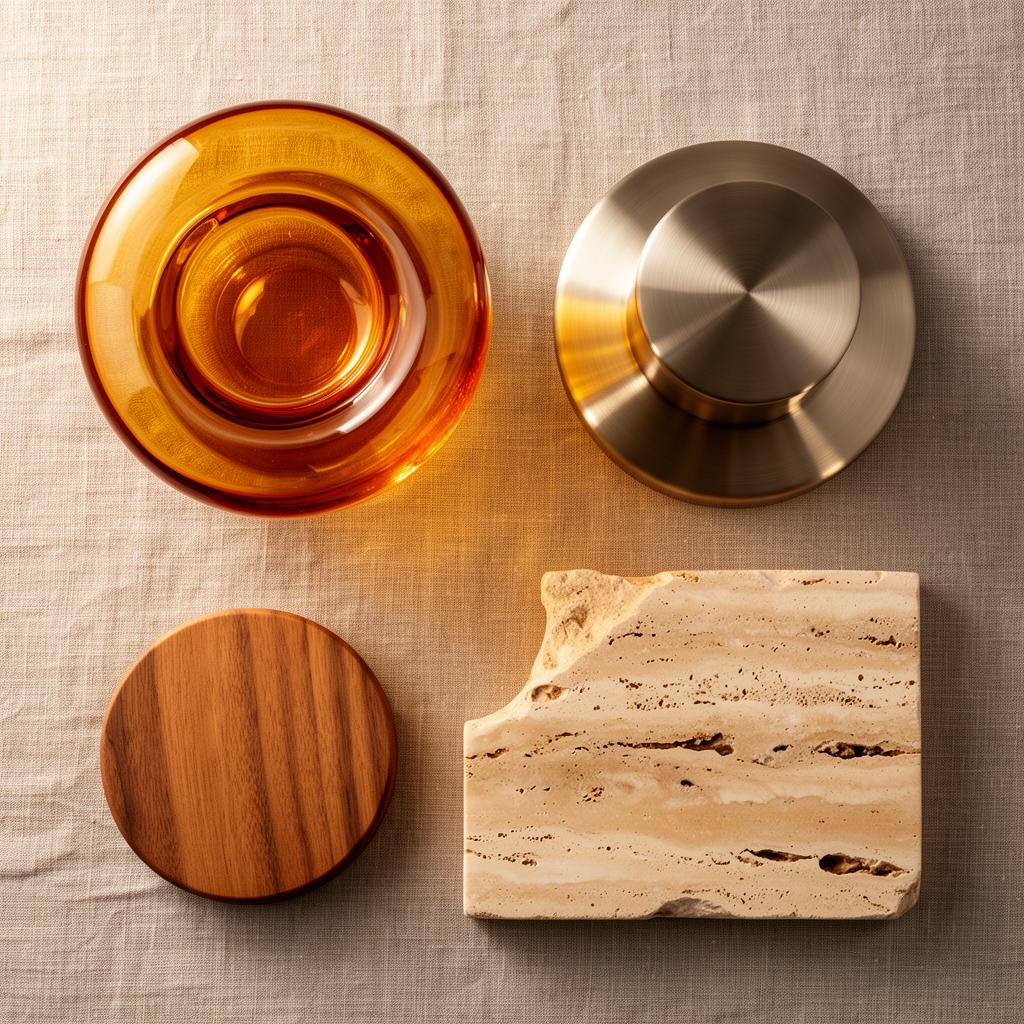
Brass is an alloy based on copper and zinc. As a material, it can have a bright, muted or darker appearance depending on its composition and surface treatment. A polished surface and a brushed surface can look different even when both are described as brass.
A coating describes a surface layer over another material. A colour description may describe appearance without identifying a brass layer at all. These distinctions are not a simple ranking of good and bad. They change what you should ask about care, wear and the appearance you can reasonably expect.
Read the material and finish fields together. If the listing gives a colour but not the underlying material, record the material as unknown. If it describes the base but not the shade or fittings, avoid extending that description to the whole lamp.
Surface treatment changes what ageing means
Exposed brass can change colour through interaction with its environment and handling. A protective coating can alter that process. An intentionally aged finish is another possibility. You cannot reliably predict the future appearance of a particular lamp from a warm metallic photograph.
Some people enjoy visible variation; others prefer a more consistent surface. Neither preference makes a lamp more authentic. Ask whether the stated finish is intended to change and what care is specified to preserve it. Do not treat an unexplained mark as desirable patina without knowing what the surface actually is.
Compare the finish in the room you have
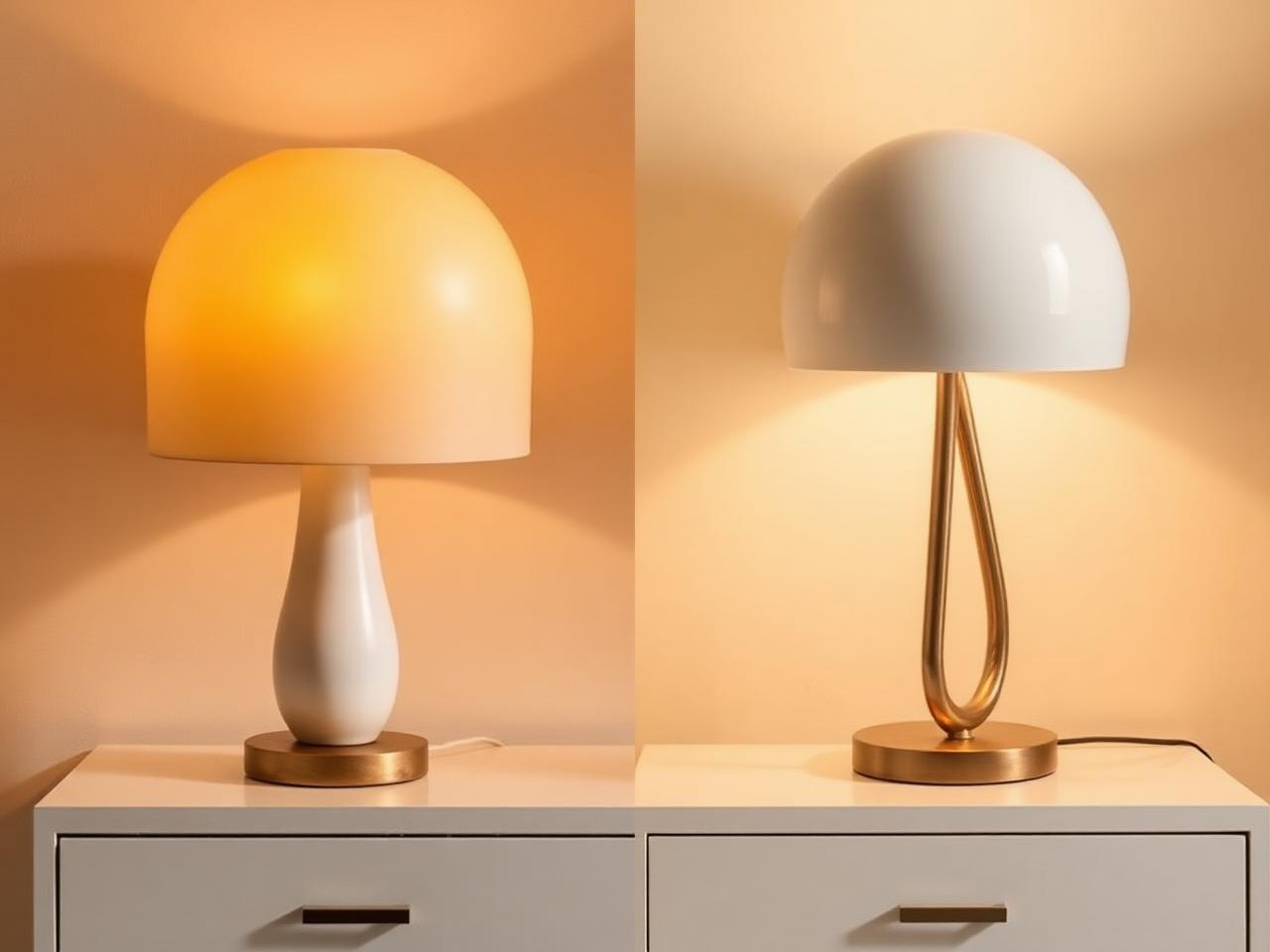
Consider nearby hardware, mirror frames and furniture details. A warm metal can relate to wood or contrast with a cooler metallic surface. The effect depends on its area, position and sheen as much as its colour. A small polished detail may draw more attention than a larger muted one.
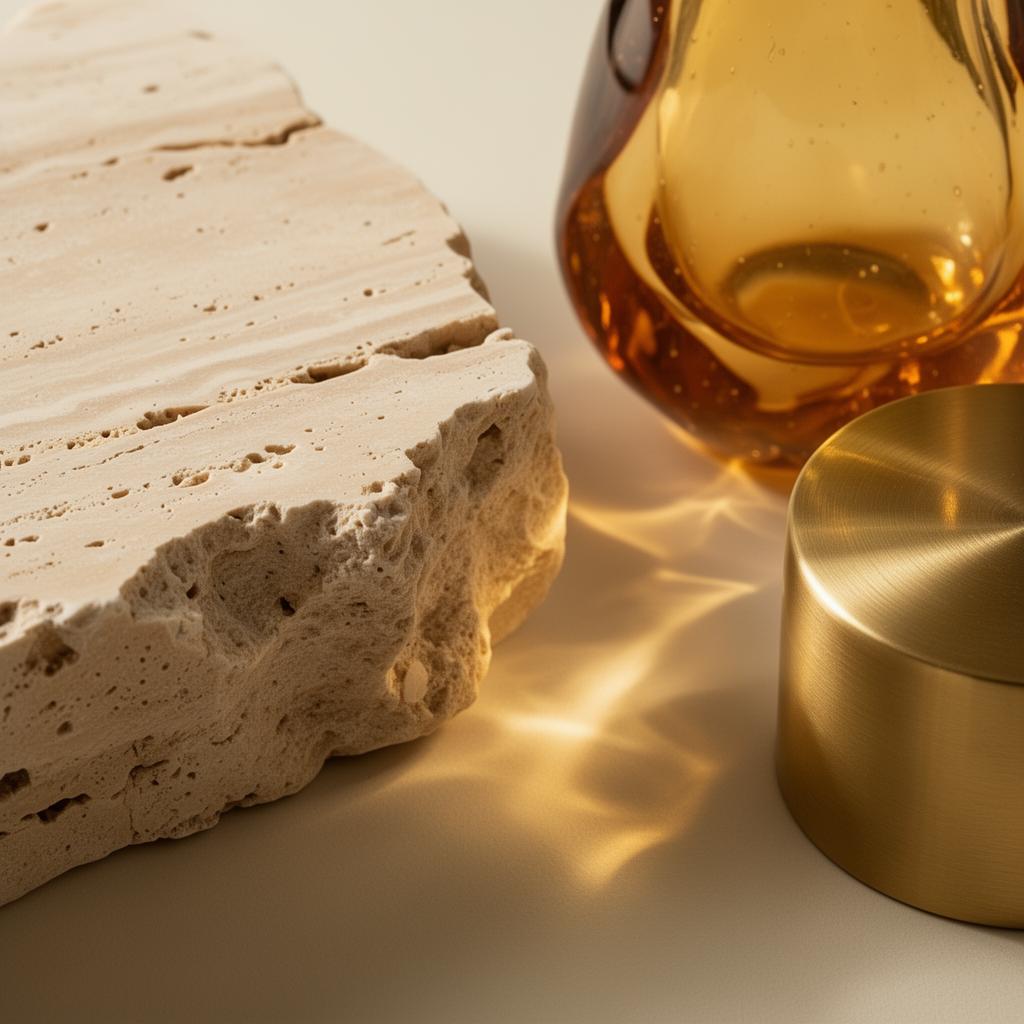
Use photographs to judge the broad composition, not to certify a finish. Lighting and reflections can make a pale metal look golden or a warm metal look silvery. For a close match, ask support for the stated finish rather than treating a screen comparison as confirmation.
Care should follow the exact lamp's instructions. A treatment intended for exposed brass may be inappropriate for a coating, another metal or adjacent components. Disconnect power before cleaning, and ask support if the material or method is unclear. The next useful step is a short question about composition and finish, not an assumption based on colour.
The Editor's Notes
Get the Lumière styling notes
One quiet essay a month on layering light and shaping the atmosphere of a room. No noise. Unsubscribe anytime.
The Editor's Notes
One essay. One piece. Once a month.
Quiet dispatches from the studio. Unsubscribe anytime.
For the hour after
For the hour after the overhead light goes off
Shop lamps built for the quiet part of the evening.
Share this guide