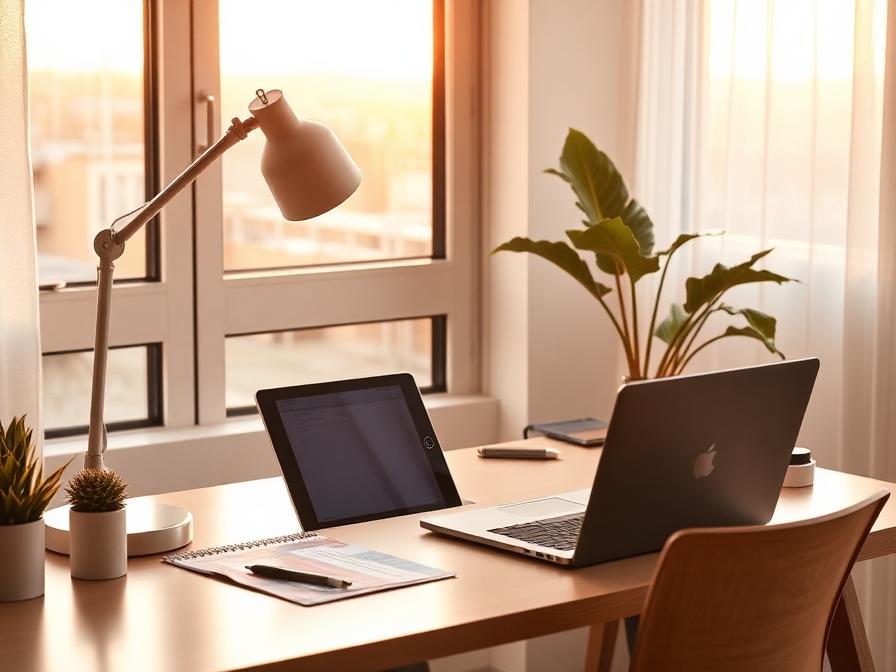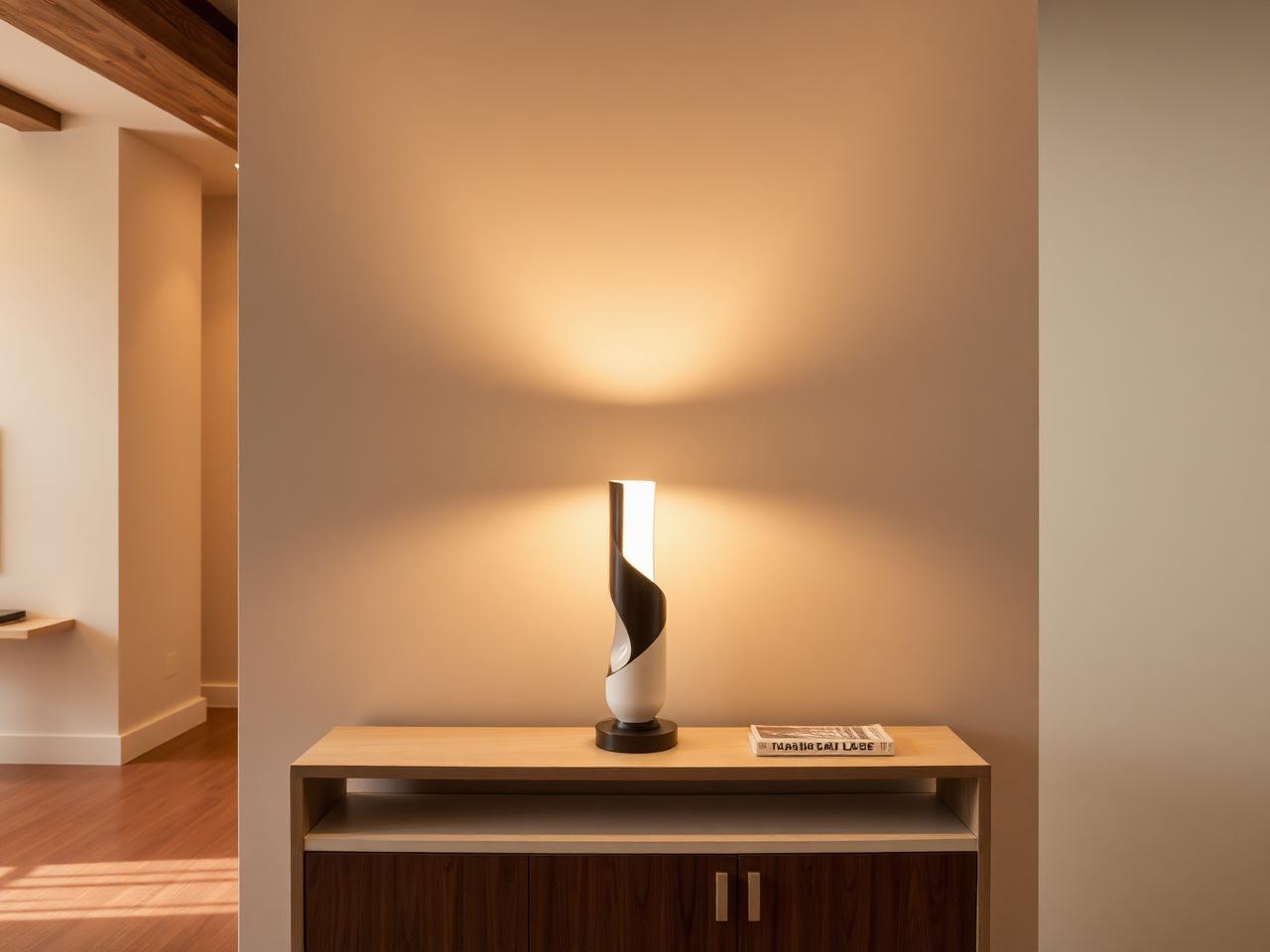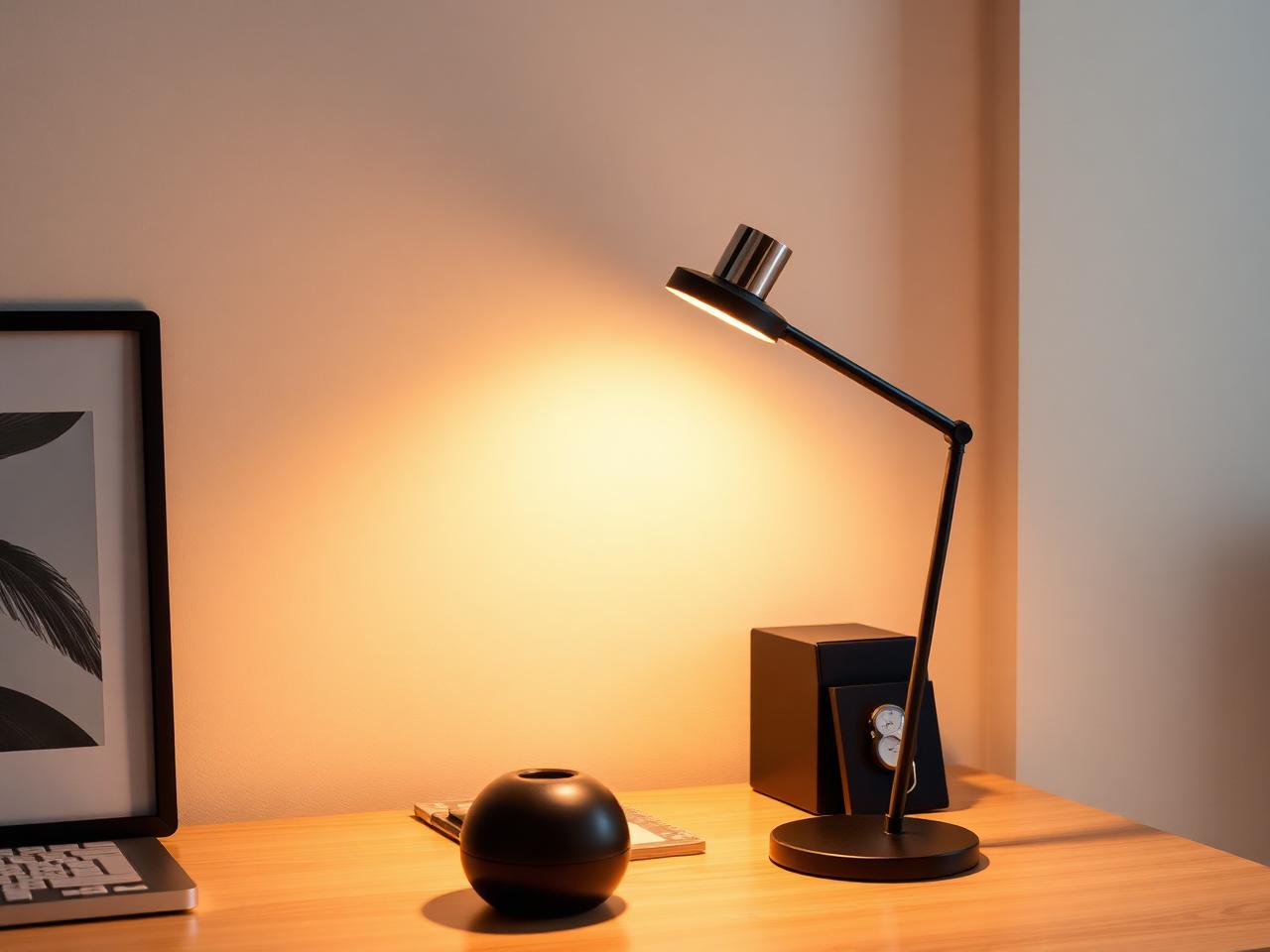
Choosing a Lamp for a Video-Call Background
Use the actual camera preview to place a decorative lamp. Keep background styling separate from face lighting and the light needed for desk tasks.
By Lumière Light Studio Editorial
A lamp that looks balanced behind your desk can become a bright patch at the edge of a video-call frame. The camera sees a narrower arrangement than you do when standing in the room. Choose the background position through that frame rather than by the room view alone.
There are three separate jobs here: making your face visible to the camera, lighting the desk for work and arranging what appears behind you. A decorative lamp belongs to the third job. Its presence does not establish that either of the first two is taken care of.
Set the camera view before styling the background
Open the preview in the application you normally use. Sit at the usual distance and set the camera at the position you intend to keep. Look at the edges of the frame as well as the area immediately behind your head.
A lamp can appear to sit directly above a shoulder or merge with the outline of your head. Moving it sideways may give the object a clearer place in the picture. Leave some separation in the frame rather than relying on how far apart the objects seem in the room.
Check the view while seated naturally, including a small sideways movement. A carefully composed background that works only from one rigid position will be difficult to maintain during ordinary conversation. Look for a position with a little flexibility.
Compare the lamp on and off in the preview
Switch the lamp on using its normal control and observe what changes. Does the shade remain visible as a shape, or become a bright area without detail? Does the rest of the image change? Different cameras and settings can render the same lamp differently, so the useful evidence is your own preview.
If the lamp is distracting, try another suitable position or leave it off. Use brightness adjustment only if the lamp actually provides it. Do not cover a shade, alter the fixture or assume an accessory will change its output in an appropriate way.
Check reflective objects within the frame too. A framed print or mirror may show the light source even when the lamp itself sits outside the crop. A modest change to the background arrangement may remove that reflection without rearranging the whole desk.
Keep face visibility and desk work independent
Look at your face in the preview with the decorative lamp off, then on. If it is difficult to see, do not treat a glowing object behind you as the solution. Assess the light reaching your face separately, using the actual camera view rather than judging from the brightness of the room.
Likewise, check your notebook or documents without relying on the background lamp. A lamp behind the chair may contribute to the composition while doing little for a page on the desk. Keep the task-lighting decision grounded in that page and the screen beside it.
Repeat the preview near the time you usually take calls, especially if the room receives changing daylight. Your next step is simply to choose one usable camera frame and compare one background position with the lamp on and off. Keep the arrangement that works for the call without making the room harder to use afterward.
The Editor's Notes
Get the Lumière styling notes
One quiet essay a month on layering light and shaping the atmosphere of a room. No noise. Unsubscribe anytime.
The Editor's Notes
One essay. One piece. Once a month.
Quiet dispatches from the studio. Unsubscribe anytime.
For the hour after
For the hour after the overhead light goes off
Shop lamps built for the quiet part of the evening.
Share this guide