A Lamp Near a Fireplace: Start with Heat, Then Balance
Check manufacturer guidance before considering a mantel position, and plan the room for evenings without a fire.
By Lumière Light Studio Editorial
A mantel offers a ready-made focal point, which can make a lamp seem like an obvious addition. The visual opportunity is only part of the decision. An active fireplace or wood stove introduces heat, and a nearby position cannot be approved by appearance or by the lamp fitting on the ledge.
Keep two questions separate: whether the position is permitted, and whether the composition works. Answer the first before measuring out a decorative arrangement. A lamp can balance a fireplace from elsewhere in the room without sitting on its mantel.
Manufacturer guidance decides whether the position is possible
Read the fireplace or wood stove manufacturer's guidance for nearby objects and clearances, together with the lamp manufacturer's placement and operating instructions. Mantels and fireplace surrounds differ; a ledge above the opening does not establish a protected location.
Do not substitute a general distance, a photograph or a hand-temperature check for that guidance. If the requirements are unclear or the manufacturers cannot confirm the proposed arrangement, choose another surface away from the heat. Seek advice from the relevant manufacturer or a qualified fireplace professional rather than testing an uncertain position with a fire.
Account for the entire lamp and its cable, not only the base. A cable must not approach the appliance, cross the hearth or interfere with access. Do not improvise shielding, route it behind hot components or alter the lamp to make a position work.
A fire that is unlit today does not make a permanent arrangement suitable for later use. If the appliance remains in use, plan for that use from the start rather than relying on remembering to move objects before lighting it.
A permitted position still needs room around the outline
Only after suitability is established should you compare the lamp's full dimensions with the usable surface and required clearances. Mantels may be shallower than they appear. Keep the complete base supported; a shade projecting into a route or conflicting with nearby objects is another reason to reconsider.
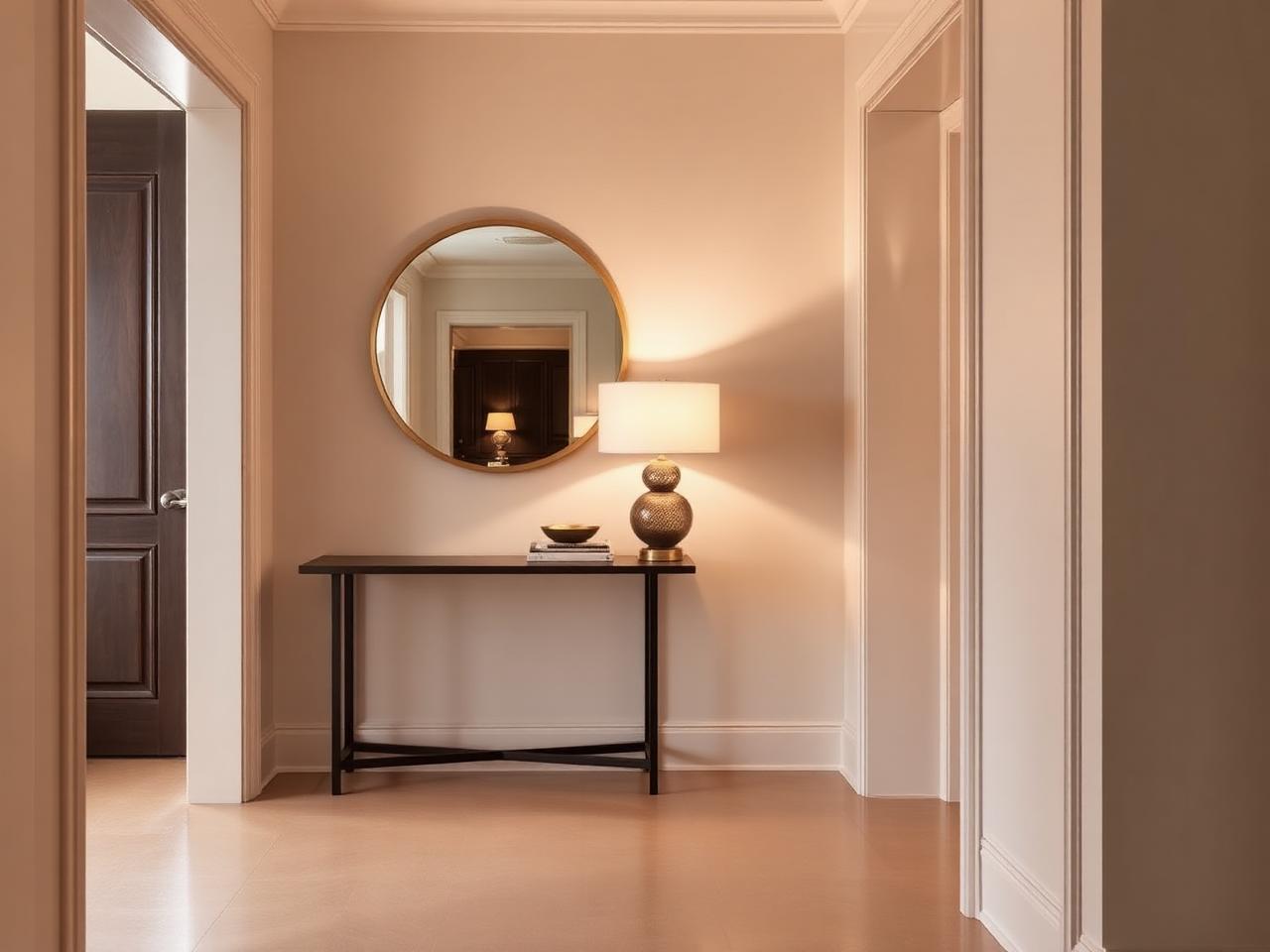
Look from the doorway and from the main seats. A lamp beside an overmantel mirror or picture can compete with its lower edge. Try a composition with one clear lead object and enough empty space to read the others separately.
Symmetry is optional. A lamp on a suitable side table can balance the fireplace against an object on the other side of the room. This can preserve the mantel's outline while keeping the lamp away from the appliance. Judge the actual relationship rather than trying to fill both ends of a ledge.
Build the evening arrangement without counting on the fire
Check the room with the fire unlit. Can you see the furniture edges, find things beside the chairs and move through the room? Light from a fire is variable and should not be the only contribution you rely on for those jobs.
Use the existing room sources to establish a workable arrangement first. A lamp near the fireplace can then contribute to the view if its position is permitted, without carrying responsibility for the whole room. Check any mirror above the mantel for reflected glare from the seats.
Begin with the two sets of manufacturer instructions and a sketch of an alternative side-surface position. If the mantel remains uncertain, keep it clear and develop the alternative rather than forcing the composition.
The Editor's Notes
Get the Lumière styling notes
One quiet essay a month on layering light and shaping the atmosphere of a room. No noise. Unsubscribe anytime.
The Editor's Notes
One essay. One piece. Once a month.
Quiet dispatches from the studio. Unsubscribe anytime.
For the hour after
For the hour after the overhead light goes off
Shop lamps built for the quiet part of the evening.
Share this guide