Light a Room for People Standing and Talking
Check faces above seated height, leave places to set down glasses and preserve routes through a small gathering.
By Lumière Light Studio Editorial
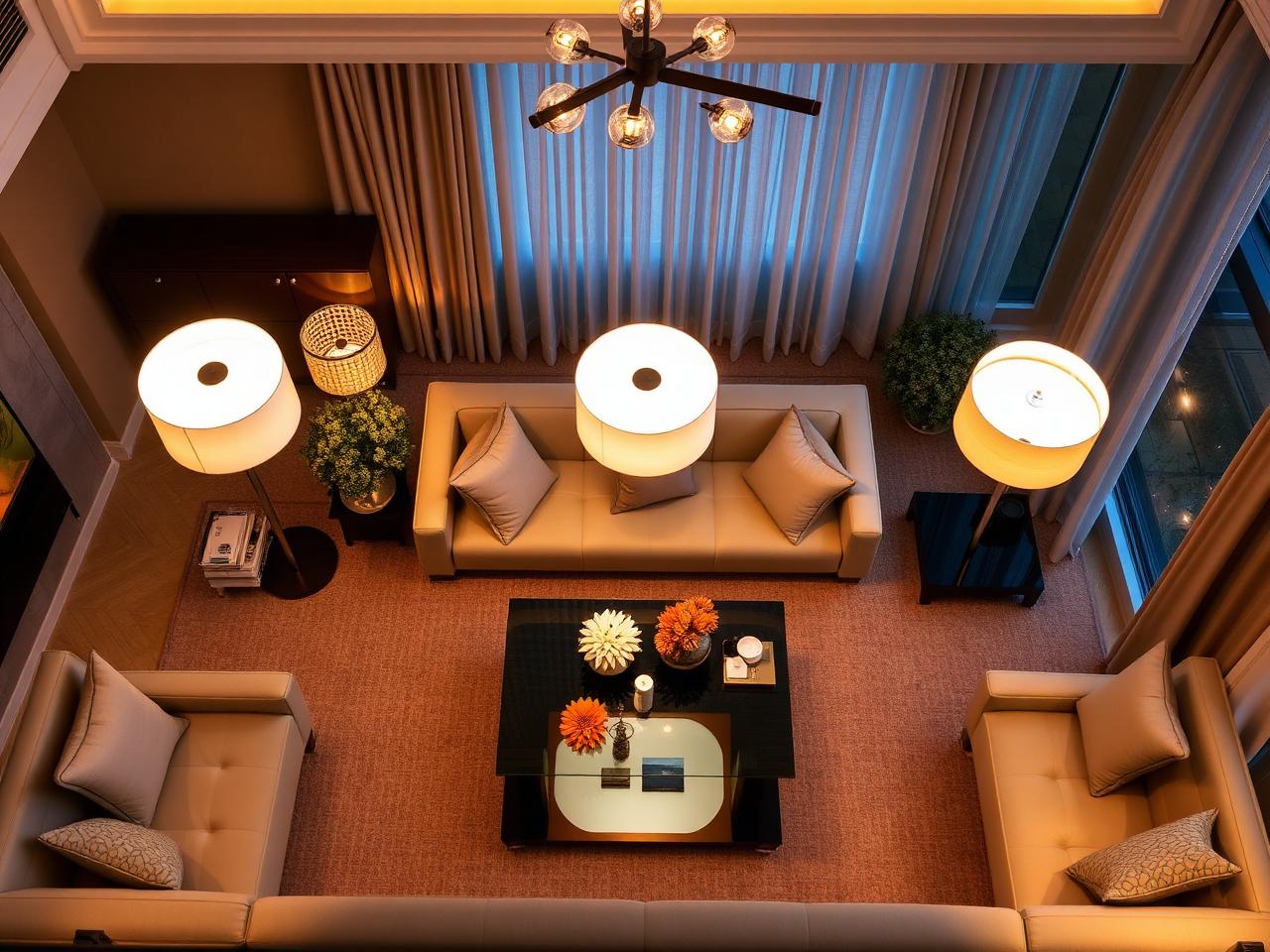
Once the chairs are pushed aside, the room's familiar lamp arrangement deserves another look. People at a small standing gathering occupy different places and look across the room at a different height. A shade that works beside the sofa may expose its source to someone standing over it.
Plan for a few loose groups rather than a seated dinner layout. People may gather near the doorway, drift towards a serving surface or turn to talk across the centre of the room. The aim is a room that remains easy to use as those groups move.
Map the standing places before adjusting lamps
Mark the likely conversation areas on a rough plan. Include a place near the entrance and the space where drinks are collected. Furniture edges and available surfaces often shape these groups more than the centre of the room does.
Leave a route between the entrance, seating, serving area and exit. Do not turn a narrow passage into a conversation spot by placing the most attractive lamp there. Retain a few usable seats without making the route depend on chairs staying tucked away.
Look for places to set down a glass that do not share a crowded edge with a lamp. If a side table will become a busy landing point, consider whether its lamp belongs on a different suitable surface for the occasion. Keep that decision within the manufacturer's placement guidance.
Judge faces and sources from standing height
Stand in each likely group position and turn towards the others. Look for a visible bright opening under a shade or a small source directly behind the person opposite. A lamp that photographs well across the room may dominate this closer view.
Check whether faces remain visible as people turn. Strong light from just one side can leave the other side in shadow. Existing general illumination may provide the missing balance; switching off the ceiling fitting is not a requirement for a gathering.
Do not simply raise every lamp. A higher position may introduce glare elsewhere, need a less stable support or put the cable in the way. Compare permitted positions in the actual room, keeping the full base supported and controls accessible.
Use the room's other light while making changes. Lower overall brightness is not a reliable cure for an exposed source, particularly when the source remains prominent against a dark background.
Rehearse movement with the room set up
Ask another person to stand where a group is likely to form, or check the views from each marked position yourself. Walk the routes carrying an empty glass. Notice where you turn sideways, reach over furniture or approach a cable.
Keep cables outside those routes and away from chair movement. Do not run one across an open area to achieve a balanced-looking pair of lamps. A less symmetrical arrangement with suitable positions is more useful than a display that interrupts movement.
Finally, check the entrance from outside the room. Arriving people should be able to identify where to go without stepping immediately into a crowded dark corner. Keep practical lighting available for setting out and clearing away.
Before the gathering, make one circuit with the furniture and serving surface ready. Correct the most exposed source or tightest route, then leave the arrangement simple enough to operate while people are present.
The Editor's Notes
Get the Lumière styling notes
One quiet essay a month on layering light and shaping the atmosphere of a room. No noise. Unsubscribe anytime.
The Editor's Notes
One essay. One piece. Once a month.
Quiet dispatches from the studio. Unsubscribe anytime.
For the hour after
For the hour after the overhead light goes off
Shop lamps built for the quiet part of the evening.
Share this guide