Borrow a Living Room Lighting Idea Without Copying the Photograph
Translate an appealing room image into one practical change that fits your own furniture, seats and evening routine.
By Lumière Light Studio Editorial
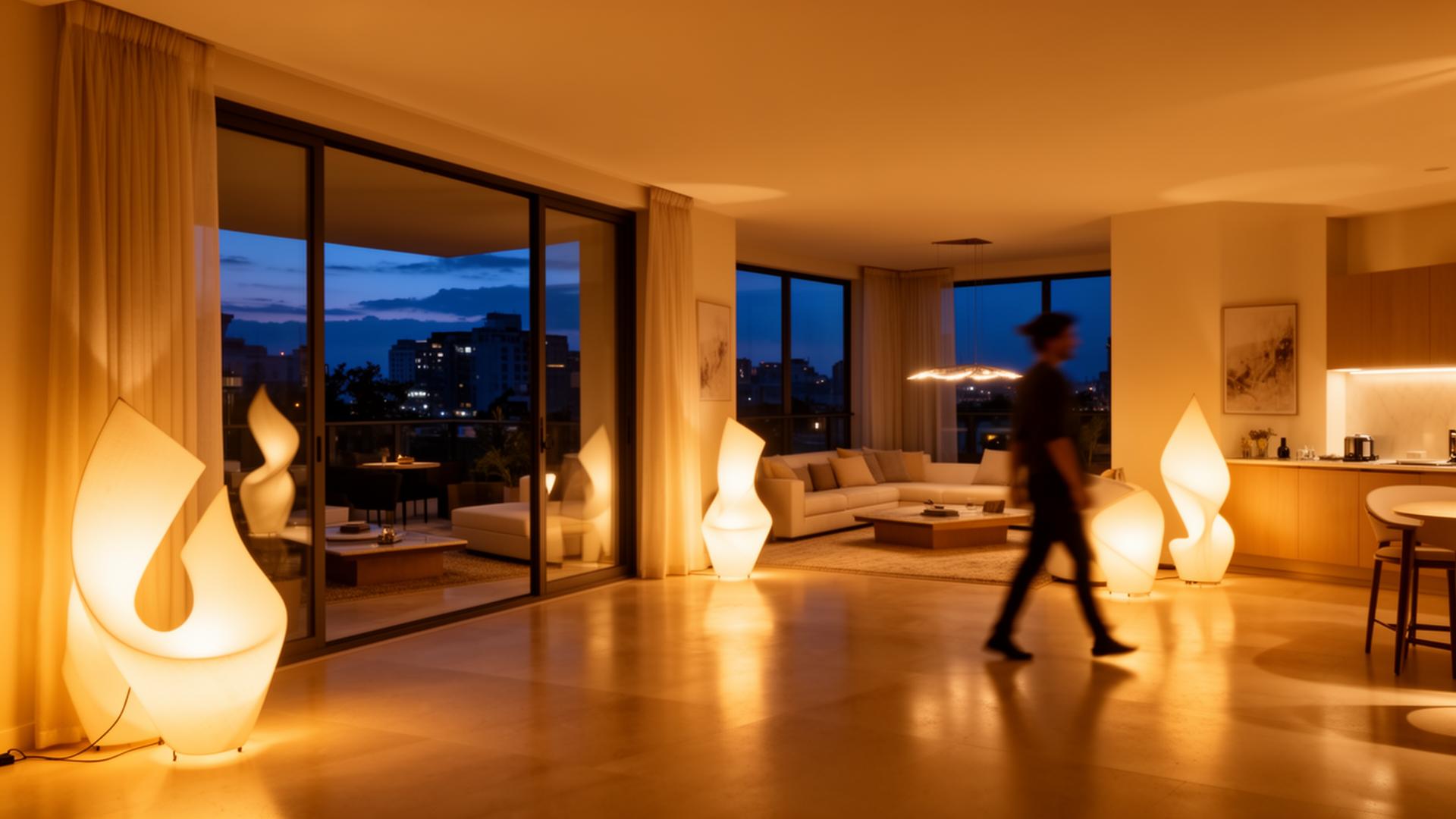
An appealing living room photograph can suggest a direction without providing a plan for your own room. It shows one view, under particular conditions, with much of the practical detail outside the frame. Treat it as a starting point for a question rather than a set of instructions to reproduce.
The useful question is what you actually like about the image. It may be a softly visible wall, a lamp's relationship to the sofa or a contrast between one bright object and a quieter background. Naming that relationship makes it easier to borrow the idea without copying unsuitable furniture or buying unnecessary pieces.
Describe the effect without naming a product
Look beyond the lamp itself. Where is the viewer positioned? Which surfaces remain visible? Is the appeal a single focal point, a repeated shape or light beside a particular seat? Write one sentence describing that effect in ordinary words.
Avoid assuming that every visible lamp is doing equal work. A photograph does not reveal all the sources outside the frame, the available daylight or the camera's treatment of brightness. It cannot establish a lamp's output, dimensions or suitability for reading. Those need separate information.
Choose only one relationship to explore. Trying to reproduce the whole composition can turn a useful idea into a demand for new tables, extra lamps and furniture positions that do not suit your room. A narrower aim makes it easier to judge whether the change is worthwhile.
Translate the relationship into your own constraints
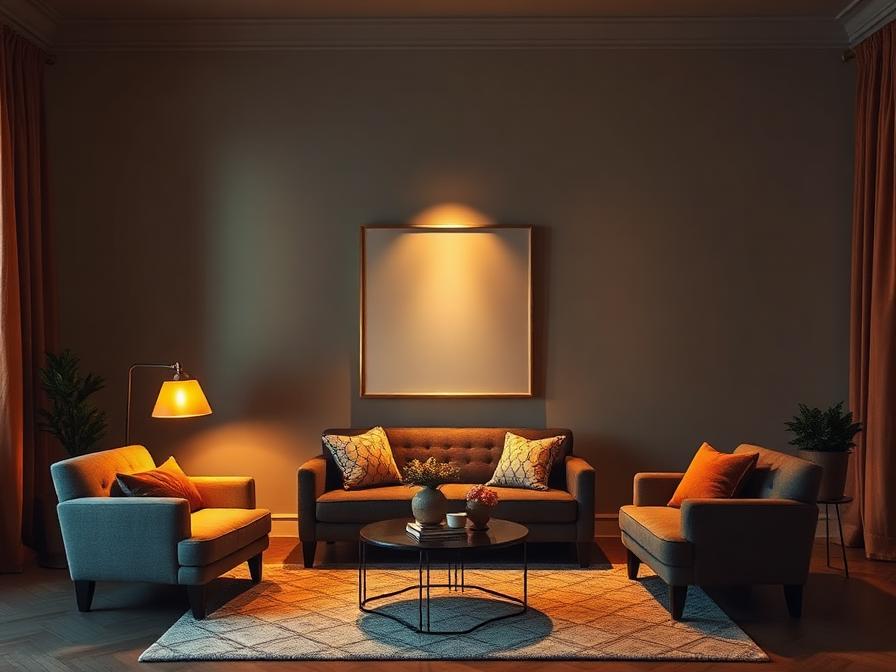
Suppose the image shows a lamp against a clear wall beside a sofa. Your equivalent wall might contain a radiator, a door or storage that needs frequent access. The transferable idea may be a visible background beside the seating, not that exact corner or height.
List the surfaces you can genuinely use, with their ordinary objects still in place. Check the available footprint, the full shade width and the control location. A photograph's tidy side table does not establish that your table can hold the same arrangement alongside a book and drink.
Use a suitable lamp you already have to explore the position if possible. Keep its support stable and its cable out of circulation routes. This trial is about the relationship in the room, not proving that the borrowed image's lamp would perform the same way.
Judge the result from the seats, not just the camera
Stand where you usually enter and then sit where you spend the evening. Check the view at ordinary seated height and when leaning back. A lamp that looks balanced in a wide photograph may intrude into conversation or reveal a distracting bright opening from the sofa.
Keep the practical test separate from a new photograph. The image you take may be useful for remembering a layout, but it is not a measurement of visibility or task performance. Look at the actual table, page and route through the room.
Keep the change only if the borrowed relationship suits everyday use. If it does not, retain the original idea as a preference rather than forcing it into the space. End with a note about what worked and one measurement needed for any further decision; there is no need to recreate the whole scene.
The Editor's Notes
Get the Lumière styling notes
One quiet essay a month on layering light and shaping the atmosphere of a room. No noise. Unsubscribe anytime.
The Editor's Notes
One essay. One piece. Once a month.
Quiet dispatches from the studio. Unsubscribe anytime.
For the hour after
For the hour after the overhead light goes off
Shop lamps built for the quiet part of the evening.
Share this guide