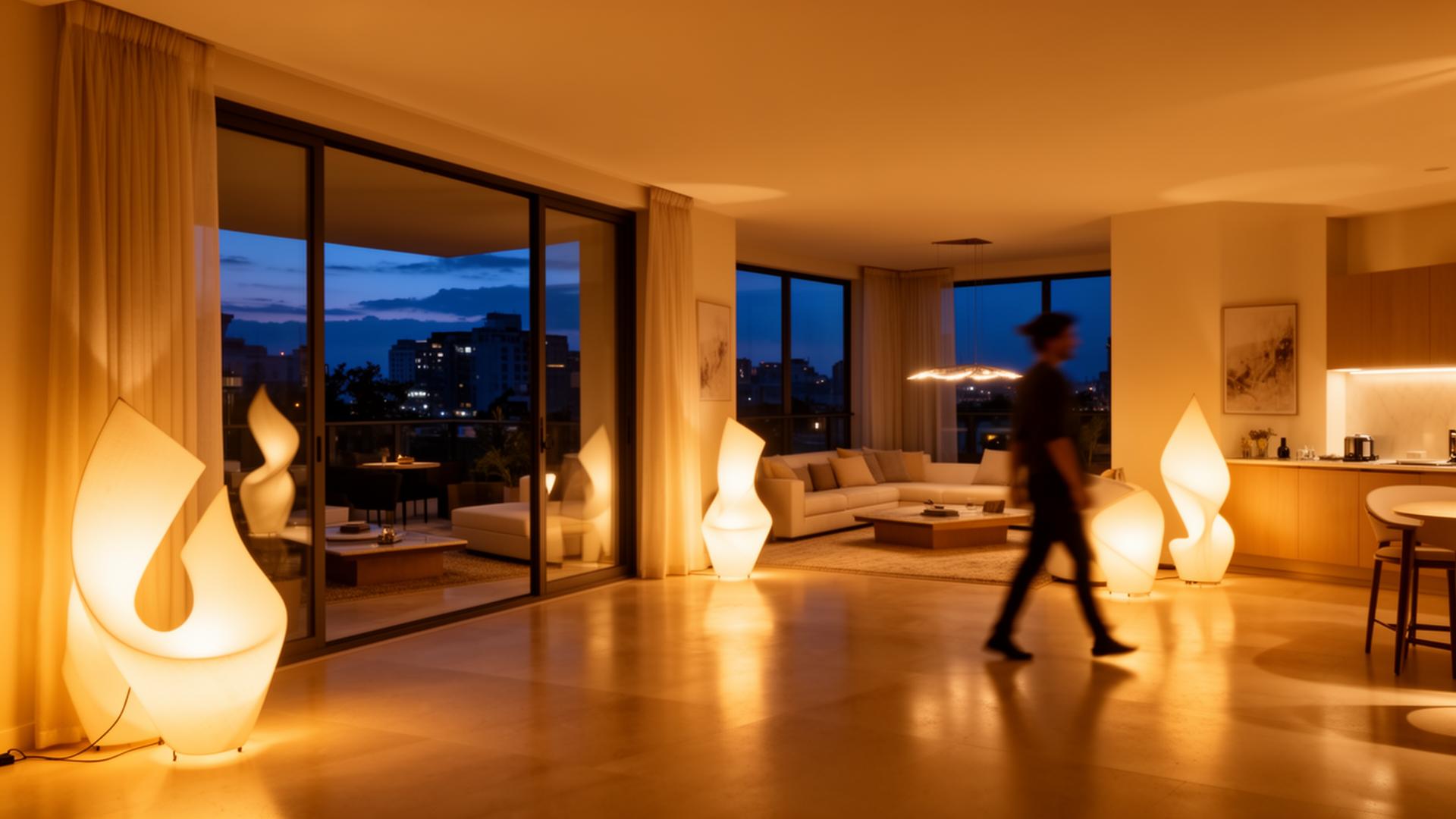
Using Lamps in a Dark North-Facing Room During the Day
Assess the interior of the room during weak daylight, then add useful light where the window does not reach.
By Lumière Light Studio Editorial
A pale window can make the rest of a room look darker by comparison. In a north-facing room with weak daylight, the reading chair or interior table may need a lamp long before evening. There is no reason to wait for sunset if the room is not useful as it stands.
The compass direction is only a starting description. Nearby buildings, trees, window size and the season also affect the view. Work from what your room actually looks like during its occupied hours rather than choosing a lamp from the direction alone.
Assess the interior, not just the window
Keep curtains or blinds in their ordinary daytime position. Stand at the doorway, then sit in the places used during the day. Notice which table edges, objects and room boundaries are difficult to distinguish. Separate those observations from simply disliking an overcast view.
Repeat when daylight is weaker if that is a condition in which you regularly use the room. A single bright afternoon is a poor basis for a space mostly occupied on dull mornings. You need a practical comparison, not a record of weather measurements.
Identify one gap at a time. Perhaps the window-side chair is usable but the console at the back disappears. Perhaps the whole room is visible while a book remains poorly lit. The first calls for a different role from the second.
Add light where daylight leaves a gap
Try a suitable existing lamp in the poorly served interior area, provided its surface and cable route meet the instructions. Compare that position with leaving it close to the window. A lamp next to the brightest part of the room may be less useful than one farther inside.
Look at the surrounding surfaces as well as the glowing shade. Does the light reveal the table and nearby wall, or mainly create a small bright object? The shade, direction and position determine the result together; a decorative silhouette alone cannot establish coverage.
Retain useful ceiling lighting where it helps. The goal is not a lamp-only daytime room. For reading or paperwork, check the actual page and use suitable documented task lighting where needed. Do not expect an atmospheric lamp to prove its value by doing every job.
Compare the lamp’s tone alongside daylight
A lamp that looks subtly warm after dark may look distinctly amber beside a grey window. That can be an appealing contrast or an unwanted cast. Compare familiar wall paint, furniture and textiles with the lamp on and off from the same seat.
Do not use colour temperature as another word for brightness. A warmer-looking source does not necessarily supply more useful light, and a cooler-looking one does not recreate daylight. If a close tonal match matters, consult the published information and leave missing specifications as questions.
Choose the daytime arrangement first, then check it again after dark. You may prefer different combinations of existing sources at those times. Finish by naming the interior position that improved and the activity still needing attention. That gives a new lamp a clear role without turning weak daylight into a promise about mood or health.
The Editor's Notes
Get the Lumière styling notes
One quiet essay a month on layering light and shaping the atmosphere of a room. No noise. Unsubscribe anytime.
The Editor's Notes
One essay. One piece. Once a month.
Quiet dispatches from the studio. Unsubscribe anytime.
For the hour after
For the hour after the overhead light goes off
Shop lamps built for the quiet part of the evening.
Share this guide