A Window-Side Lamp: Check the View After Dark
A window-side arrangement has two appearances. Compare its daylight setting with the reflected evening view from the room.
By Lumière Light Studio Editorial
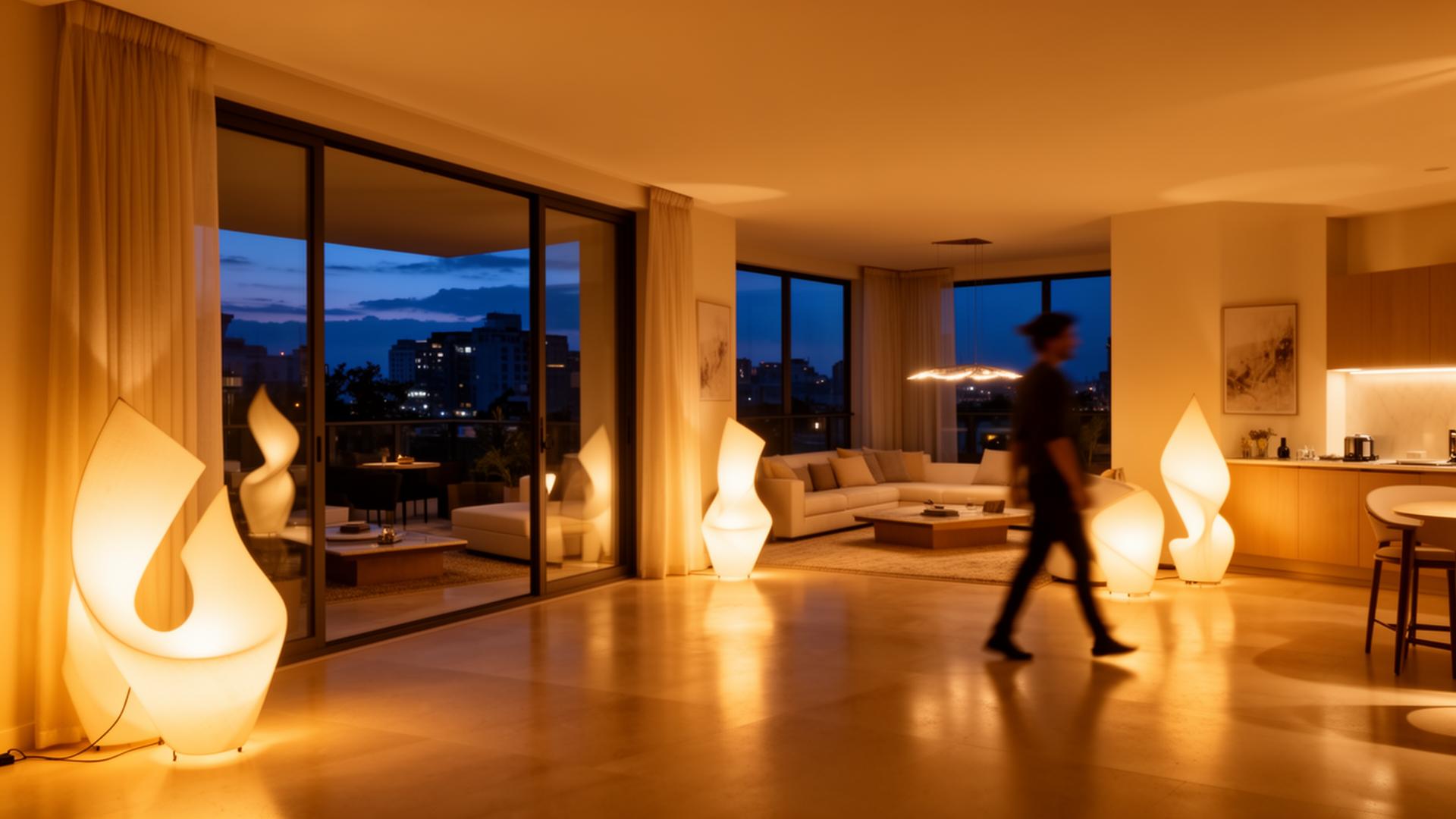
By day, a lamp beside a large window may sit against a view of trees, buildings or sky. After dark, the glass can show a reflection of the room instead. The same lamp may then become a much more prominent part of what you see from the sofa.
That change is not necessarily a problem. You may enjoy the reflected composition or prefer less visible light in the glass. The practical question is whether the evening view suits the way the room is used, not whether the lamp creates an attractive display from outside.
Use the coverings as you normally would
Evaluate the position after dark with the curtains or blinds in their usual evening state. A comparison with all the coverings open is less useful if they are normally closed. If your routine varies, inspect both ordinary arrangements.
Keep the rest of the evening lighting familiar. Otherwise, a change in the window's appearance might come from the whole room being brighter rather than the lamp's location. Begin at the sofa, not beside the glass, because that is where the reflection becomes part of the room's everyday view.
Look from the other regularly occupied seats as well. A lamp reflected directly behind a person across the room may be more noticeable from one chair than another. There is no need to eliminate each reflection; decide which ones actually interfere with the view you want.
Offset the lamp only where the furniture permits
A small shift along an existing table may change the reflected relationship. Compare feasible positions without crowding the edge or sacrificing the objects that surface needs to hold. Measure the full lamp width, including its shade, before choosing a new piece.
Do not treat the windowsill as an automatic alternative. Its depth, support and the manufacturer's placement guidance still matter. Window access and moving coverings may make an apparently spacious location unsuitable.
Keep the lamp and cable clear of curtains and moving parts, following the relevant placement guidance. Check that people can operate the coverings and reach the window without lifting the lamp each time. A position that depends on repeatedly moving it may not fit the routine you are trying to support.
Choose the room view over the display
Return to the sofa with the lamp on. Notice both the actual lamp and its reflection. If the doubled appearance feels busier than you want, try another viable position or use the normal covering arrangement before concluding that the lamp itself is wrong.
Then check daylight appearance separately. The lamp need not be equally prominent at both times. A quiet daytime object that becomes a focal point after dark can be a deliberate preference, provided the practical arrangement still works.
End by noting the curtain position, occupied seat and lamp location that gave the most useful view. Those details are more reliable than a general rule about placing lamps near glass. Measure the selected surface and retain access to the window before considering any new piece.
The Editor's Notes
Get the Lumière styling notes
One quiet essay a month on layering light and shaping the atmosphere of a room. No noise. Unsubscribe anytime.
The Editor's Notes
One essay. One piece. Once a month.
Quiet dispatches from the studio. Unsubscribe anytime.
For the hour after
For the hour after the overhead light goes off
Shop lamps built for the quiet part of the evening.
Share this guide