Bathroom Lighting Ideas for a Clearer Mirror View
Separate mirror visibility from general room light, assess shadows and glare, and leave fixture selection near water to qualified installation.
By Lumière Light Studio Editorial
The bathroom mirror and the room around it ask different things of light. You may want an even view of your face at the basin while also needing to see the floor, storage and doorway clearly. A brighter ceiling light does not necessarily improve both views at once.
Begin with what is difficult to see rather than a decorative style. Is one side of the face shaded? Does a bright fitting reflect in the mirror? Does the room look adequate by day but uneven after dark? A specific observation is a useful brief for a lighting discussion.
Judge the mirror from your normal position
Stand where you ordinarily use the mirror. Notice the light on the front and sides of the face, not only the brightness of the reflection as a whole. Light arriving mainly from above can leave shadows beneath projecting features. More overhead brightness may make those contrasts more noticeable rather than filling them.
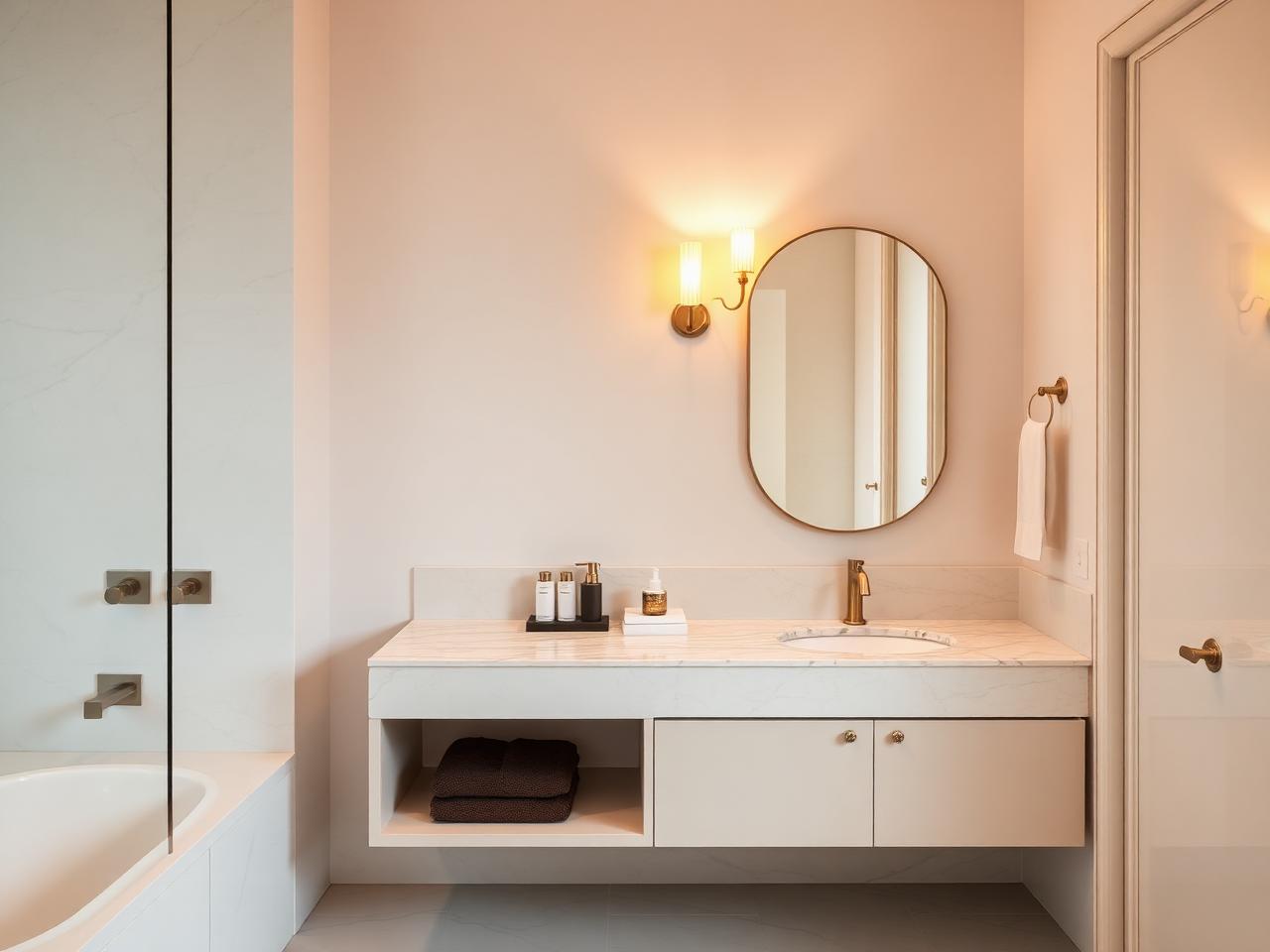
Light from beside the mirror can reach some of the areas that top-down light misses. This is a direction to discuss with a qualified installer, not a prescription for fixture height, spacing or fitting type. The mirror size, existing layout and people using it all affect the plan.
A broad light source may appear less concentrated than a small exposed point, but shade appearance alone does not establish how it will perform. Ask how a proposed fixture lights the face and whether its source will be directly visible in the usual mirror view. Keep glare and overall brightness as separate questions.
Keep colour preference separate from colour accuracy
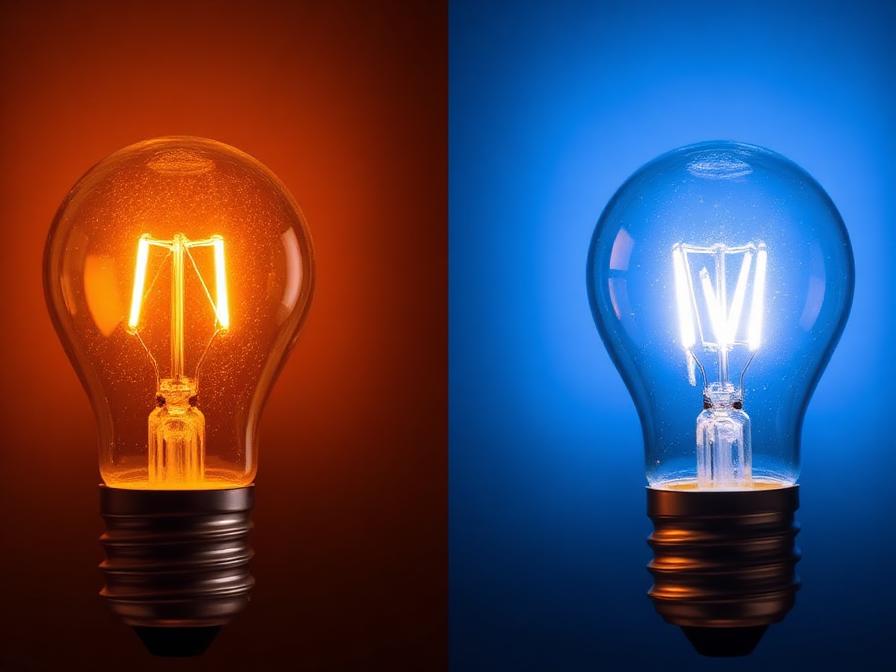
Colour temperature describes the warm or cool appearance of white light. Lower Kelvin reads warmer and more amber; higher Kelvin reads cooler and bluer. The number does not by itself establish accurate colour rendering, and a cooler bathroom light is not automatically a better colour reference.
If you use the mirror for grooming or choosing colours, avoid assuming the reflection will look identical in daylight or another room. Different light can change the appearance of familiar objects. Describe the view you want and ask about published specifications rather than relying on a warm or cool label alone.
Daylight is also variable. A bathroom that seems well lit beside a window can look quite different once that contribution is absent. Assess the artificial lighting after dark as well as during your ordinary daytime routine so the plan is not built around only one condition.
Plan the whole room without improvising near water
Fixed bathroom fixtures and anything near water need products rated for that location and qualified installation; decorative table lamps are not for wet areas. A shelf, basin counter or bath ledge is not a reason to bring an indoor decorative lamp into the plan.
For a quieter evening appearance, ask about an appropriate lighting option within a qualified plan rather than moving a table lamp beside the bath. Preserve useful visibility of the room. A softer-looking setting should still serve the activities and movement the space requires.
Write a short brief with three observations: where shadows interrupt the mirror view, where glare appears, and which parts of the room remain difficult to see. Add when each problem occurs. Take that brief to a qualified installer before choosing fixtures. This keeps the next decision grounded in the room’s actual needs without turning a styling idea into installation advice.
The Editor's Notes
Get the Lumière styling notes
One quiet essay a month on layering light and shaping the atmosphere of a room. No noise. Unsubscribe anytime.
The Editor's Notes
One essay. One piece. Once a month.
Quiet dispatches from the studio. Unsubscribe anytime.
For the hour after
For the hour after the overhead light goes off
Shop lamps built for the quiet part of the evening.
Share this guide